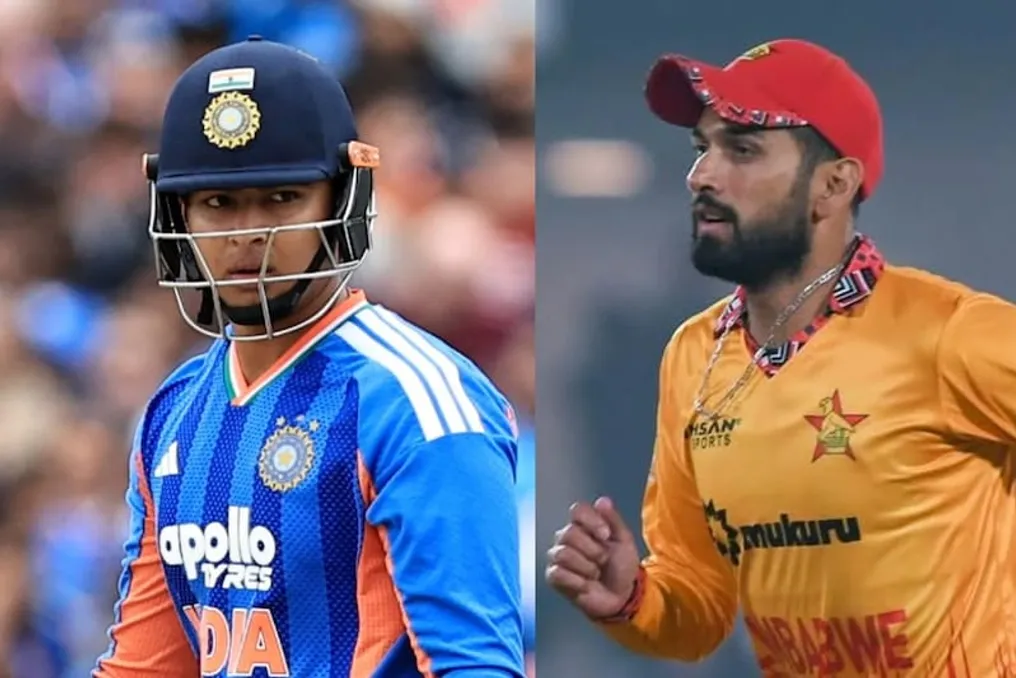
Since his arrival in the IPL, causing a stir, and becoming one of the country's most discussed young cricketers in just a few months, Vaibhav Suryavanshi's journey resembles a movie plot. However, the toughest phase of his career has now begun, as international cricket is assessing not his age, but his level of preparation.
Challenges of International Cricket
Those who believe that Vaibhav Suryavanshi will once again bombard balls with sixes and fours immediately upon arriving in Zimbabwe might be underestimating the upcoming difficulties. Three T20 matches in Harare, even if they are not as fast and bouncy as in England, will be a serious test for him.
Contrast Between IPL and International Matches
Vaibhav's main advantage in the IPL was his fearless batting. He attacked from the first ball, put pressure on bowlers, and unleashed a barrage of sixes. Nevertheless, in international cricket, opponents have video analysts, data, and clear strategies. As shown during the tour of England, as soon as a player's weakness is discovered, the same delivery is used against them.
During his visit to England, Vaibhav scored innings of 14, 13, and 15 runs. Despite these modest scores, he managed to demonstrate his strength against fast bowlers like Jofra Archer and Josh Tongue. However, this tour also showed that aggression alone is not enough to achieve consistent success in international cricket.
Main Obstacles: Patience and Short Balls
The biggest challenge for Vaibhav is not just scoring runs, but developing the patience to play long innings. The style of play that succeeds on flat subcontinent pitches with small boundaries is not applicable in all foreign conditions. There, one must first understand the situation and then play their shots.
The second problem is short balls. In England, he was troubled by balls that bounced twice. This weakness was evident in both the IPL and the three-nation series in Sri Lanka. Now, opponents have a clear strategy against Vaibhav: fast balls into the body and constant bouncers. The question is no longer what his weakness is, but what he has learned from it.
Zimbabwe Cannot Be Underestimated
In Indian cricket, Zimbabwe is often considered an easy opponent. However, the current Zimbabwean team is very different from the past. In recent years, it has fiercely confronted many strong teams and achieved unexpected victories when given the chance.
The added height of Blessing Muzarabani, the pace of Richard Ngrawa, the variety of Brad Evans, and the experience of captain Sikander Raza make the attacking lines quite challenging to test any young batsman. Scoring runs against such an attack will not be easy for Vaibhav.
Not Just Power, But Understanding is Needed
The conditions in Harare are different from those in England, but they are not like India's. Therefore, here Vaibhav will have to rely not only on his power but also on his understanding of the game. If he spends the first few overs studying the speed and height of the ball, and then transitions to his natural aggressive style, his chances of success will increase significantly. But if he tries to send every ball to the stands from the beginning, opponents may take advantage of his haste.
The visit to Zimbabwe is not just another T20 series. It is the next stage in the development of his cricketing skills. Three matches will not define his career, but they will certainly answer a number of questions:
- Is he ready for short balls?
- Can he now play according to the situation?
- Is he just a six-hitting batsman, or a match-winning player?
A Test for the Indian Team
This tour is important not only for Vaibhav Suryavanshi. It is also a test for the management of the Indian team, which wants to prepare young players. One cannot expect big scores from a 15-year-old player in every match. It is more important to observe how quickly he learns from his mistakes and how much trust the team management places in him. The role of captain Shreyas Iyer and interim head coach VVS Laxman will also be extremely significant.