Kunlun Tech has released Mureka V9.5, a significantly updated artificial intelligence-based music generation platform. This version aims to solve the problem of unnatural sound characteristic of AI-generated music.
Kunlun Tech has released Mureka V9.5, a significantly updated artificial intelligence-based music generation platform. This version aims to solve the problem of unnatural sound characteristic of AI-generated music.
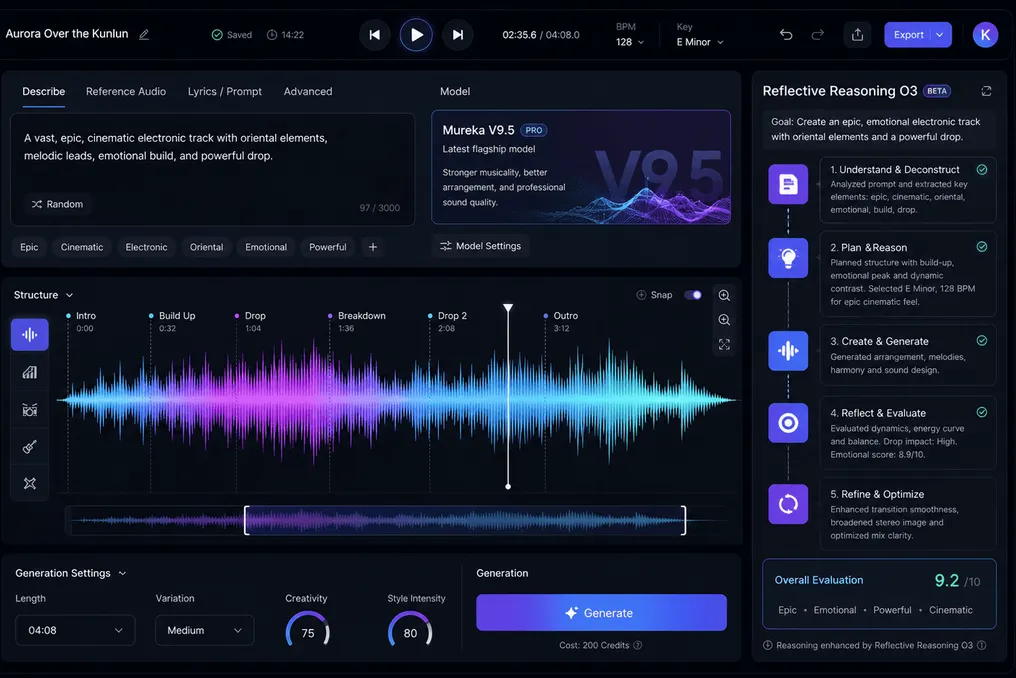
Mureka V9.5 incorporates O3 reflective musical reasoning and the MuCo creation agent. These components enable the generation of professional-level music that sounds as if it were created by a human, not a machine.
The key technical development is MusiCoT. It allows the model to form a structured musical concept before audio generation begins, organizing the composition from overall structure to fine details, instead of sequentially predicting audio frames.
Version V9.5 expands on this concept through reflective thinking. The model first generates a musical fragment, then evaluates it against a given creative brief, identifies weaknesses, and iteratively makes improvements. This O3 approach eliminates a fundamental flaw in older AI systems, which filled every beat with dense arrangements, creating impressive but superficial compositions lacking emotional dynamics and 'breathing'.
The MuCo creation agent transforms the music production process from a one-off event into a structured creative workflow. Instead of generating a fixed result based on a prompt, MuCo manages the creative process like a project with version control. Users can iterate, create branches, compare versions, and refine the track to the desired sound.
This agent-driven approach promotes more nuanced and targeted music creation, where restraint and precision replace excessive layering. The model learns to incorporate pauses, leaving space for dynamics, emotional development, and natural breaks within the musical phrase.
Demonstration examples show a noticeable improvement in emotional conveyance and stylistic accuracy. Chinese pop tracks demonstrate precise capture of emotion with intimate male vocals, ranging from quiet narration to emotional release without melodrama. Compositions in the West Coast G-Funk style exhibit a deep understanding of the genre, including synthesized bass, Moog leads, Talkbox atmosphere, and relaxed drum patterns reflecting authentic regional style.
Each track maintains structural integrity between sections, avoiding the emotional fragmentation and abrupt transitions typical of previous generations of AI music. The improvement is achieved not by increasing data volume or parameters, but by changing the fundamental generation paradigm—from instantaneous to iterative. The commercial prospects are significant, as AI music was previously often unsuitable for commercial use due to its obvious artificial quality. Mureka V9.5 with O3 and the MuCo agent produces music that industry professionals deem worthy of arrangement, potentially opening the AI music market from background filler and prototyping to legitimate products for film, television, advertising, and artist collaboration. Kunlun Tech positions Mureka as the leading Chinese AI music platform globally, and V9.5 represents a strategic shift from quantity-oriented generation to quality-oriented creation.
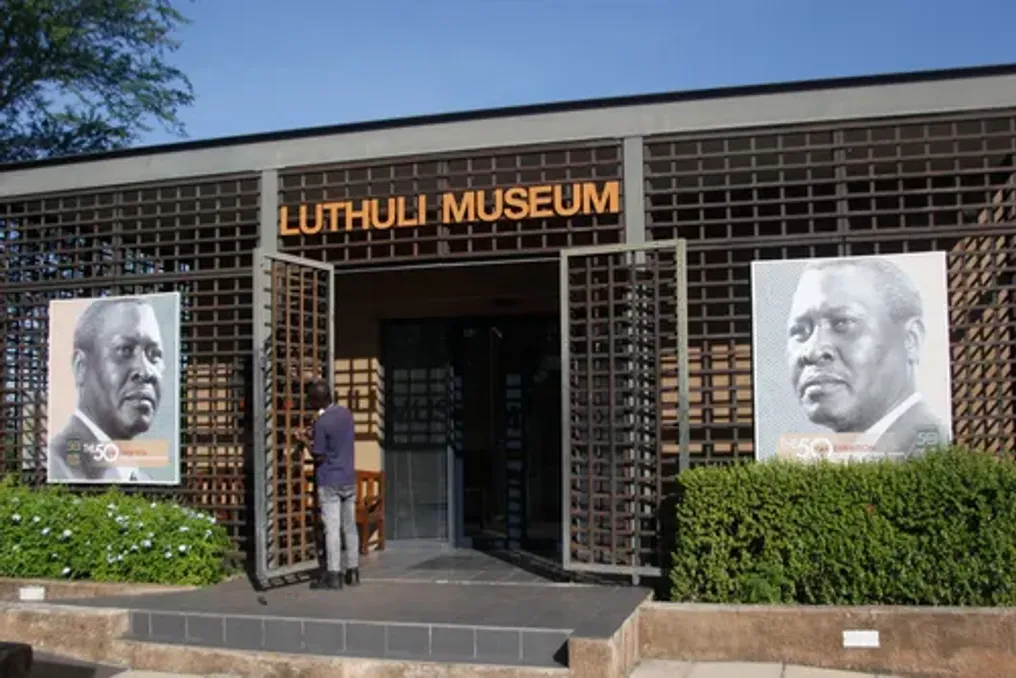
The Luthuli family gathered yesterday at the Luthuli Foundation in Grootville to mark the 59th anniversary of the death of leader Albert Luthuli. The family is now planning a large-scale project aimed at refuting the false depiction of how Nkosi Albert Luthuli died.
The family expressed a desire for the truth to be reflected in new print publications, online articles containing inaccuracies, and museums across the country. Sandile Luthuli, a family representative and grandson of Nkosi Luthuli, emphasized the importance of publicly revealing the truth and correcting the erroneous narrative following the court's decision on the investigation of his death.
The court established that Nkosi Luthuli did not die as a result of falling in front of a train, as previously claimed. This family initiative followed the ruling by the High Court of Pietermaritzburg, which definitively refuted decades of apartheid-era fabrications regarding the railway accident. In October 2025, Judge Nomphumelelo Radabe ruled that Chief Luthuli died due to a skull fracture and cerebral hemorrhage related to the attack.
Luthuli noted that it is impossible to change already published books, but the goal is for future editions to reflect the truth about the death of Nkosi Luthuli. He also mentioned that information on websites will be gradually corrected, as will museum exhibits, warning that this process will take time. He compared this to changes previously made in school textbooks to reflect a more accurate history of leaders like Luthuli.
During the event, which included international guests from the Norwegian government and members of the Nobel Foundation, Sandile Luthuli spoke about the messages from the Norwegian government delegation, which urged the country to address current issues, including illegal immigration, from a position of peace. The family announced that the program would aim to engage national and global structures, as well as foreign states, to remove the false narrative from their official records.
The initiative includes strategic engagement with the United Nations and strengthening partnerships with the judicial system, academic circles, civil society, diaspora, foundations, NGOs, media, youth, and other relevant bodies. Luthuli stated that this turning point in history will lead to a review of all aspects of the memory concerning Chief Albert Luthuli, especially his death. He added that this should automatically trigger a complete revision of historical books, monuments, national archives, and global museum programs, emphasizing that this review is critically important and will require targeted guidance and focused activity, in which the Foundation is ready to participate.
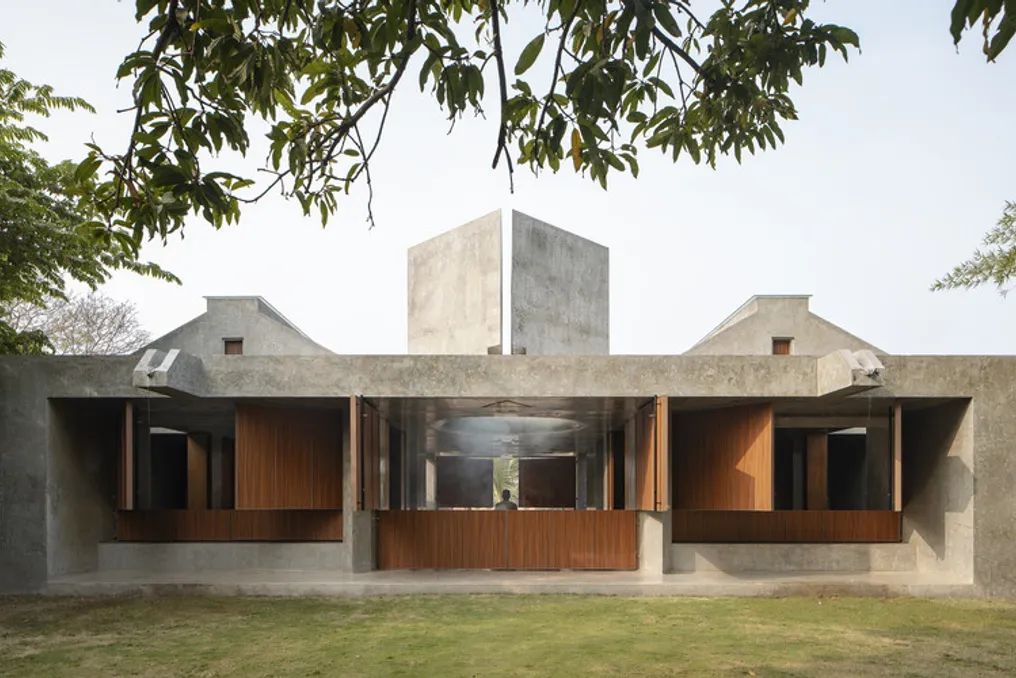
The project team of the Museum of Humanity, in collaboration with the studio apaaar, released a description of a personal journey. This journey addresses themes such as love and the inferiority complex, detailing the process of overcoming these feelings.
The account begins by describing a moment when society imposed a severe view, classifying the expression of love as a 'sin'. The narrative progresses when an external intervention occurs: someone offers a pair of clean glasses, drastically altering the individual's perspective.
This change in point of view culminates in the affirmation that 'love is not a sin; it is a natural feeling'. This new understanding provided the author with a renewed way to value art.
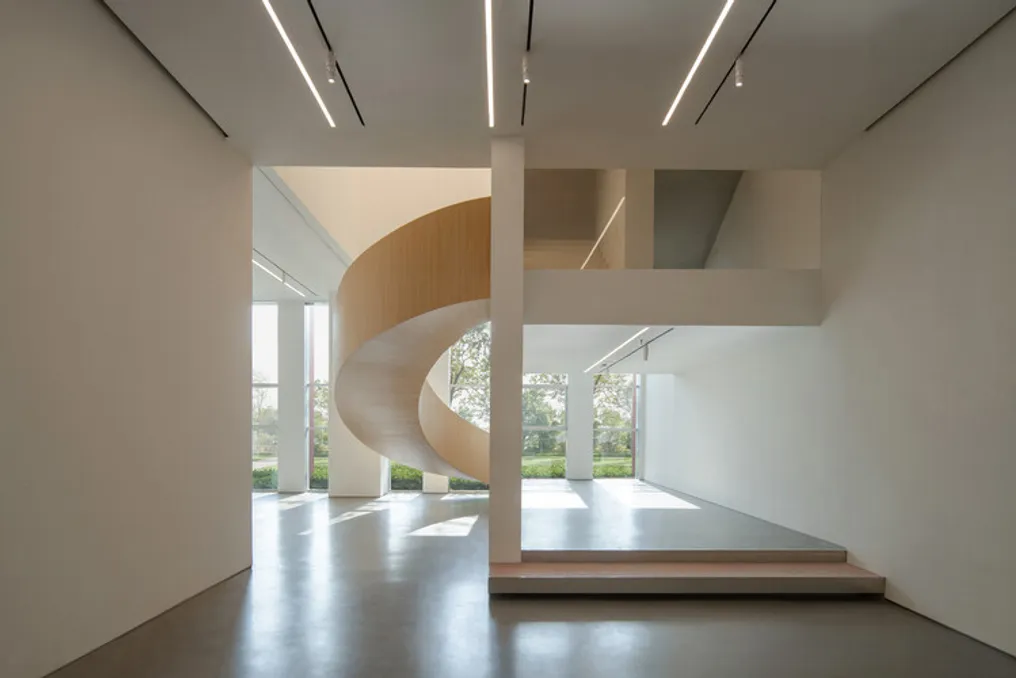
Given the rapid obsolescence of modern buildings compared to cities' capacity to promote their regeneration, the REDGE Contemporary Art Center adopts the concept of adaptive reuse. This approach aims not only to conserve existing structures but also to extend the longevity of recent built environments.
The project was conceived by Atelier Meadow, led by Edoardo Nieri. The REDGE Contemporary Art Center converts the three lower floors of an office tower, completed less than ten years ago, into a public cultural space in the city of Chengdu, China.
This venture was commissioned as part of the development of Chengdu Tianfu International Biotown. It integrates exhibitions, educational activities, open events, and creative production into a rapidly growing innovation sector. Thus, it establishes a new civic landmark, situated between research centers and Yong'an Lake Nature Park.