The progress of artificial intelligence (AI) is at the center of discussions about the professional future. However, a new OECD report indicates that this technology has not yet triggered a wave of unemployment among the organization's member countries.
Global Employment Situation
The document, titled Employment Outlook 2026, from the Organisation for Economic Co-operation and Development (OECD), reveals that the unemployment rate remains at 4.9%, a figure very close to the historical low of 4.8%, reached in June 2023. Projections point to an increase of 0.3% in employment this year and 0.6% in the following year.
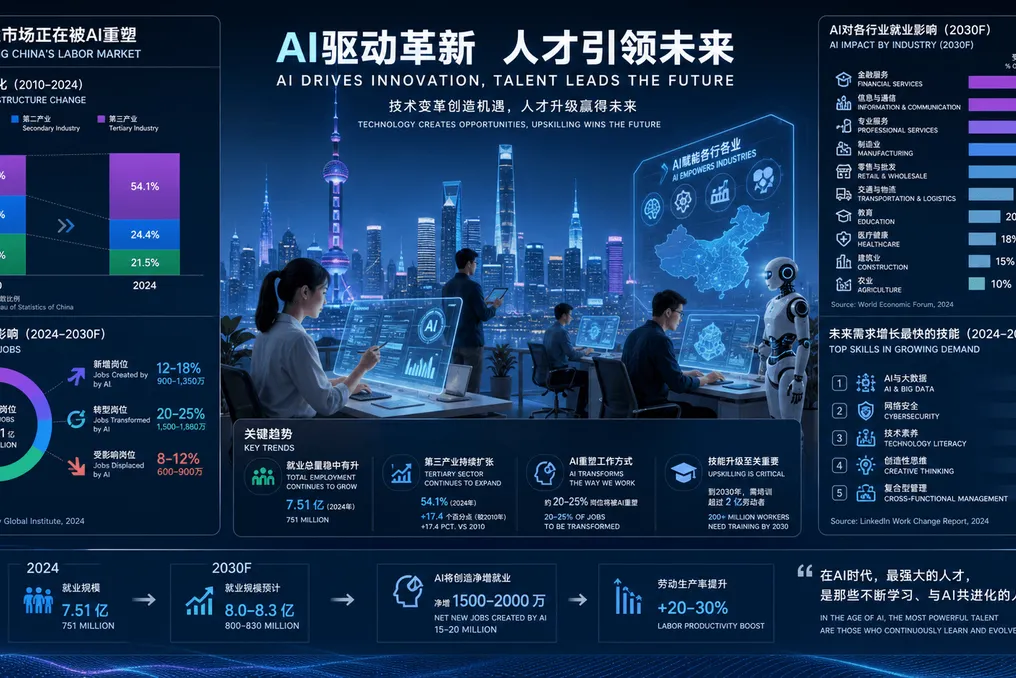
These indicators confirm that AI development, so far, has not reduced job availability in the examined nations. Mathias Cormann, Secretary-General of the OECD, stated during the report's presentation that there is no evidence that intensive use of AI by corporations is causing a broad contraction in labor demand.
Challenges for Young Professionals
Although the overall picture remains positive, young people's entry into the labor market remains more complex. The OECD suggests that recent advances in generative AI contribute to this scenario. Simultaneously, companies are placing greater emphasis on specific skills required for various roles.
The report details several important points: greater valuation of competencies linked to new technologies; modification of skills required by companies; greater difficulty for young people to access the market; and the continuation of job growth despite transformations.
Mathias Cormann emphasized that AI is promoting a metamorphosis in work, not just a reduction, ensuring that the technology has not yet compromised employment expectations for both young people and workers in general.
Market Resilience Despite Conflicts
The study also observed the resilience of the labor market, even in the face of the impact of the war in the Middle East on energy costs. Job creation remained robust, and the volume of vacancies, although lower than the post-pandemic peak, has stabilized since the beginning of the conflict.
Additionally, the report points out that many employees have not yet noticed improvements in their income. In about one-third of OECD countries, real wages remain below levels recorded five years ago. Final data indicate that AI already influences the skills sought by companies, but, according to the OECD itself, there are no signs of a generalized decrease in jobs in member countries.