OpenAI plans to present its future artificial intelligence models to the Trump administration and United States parliamentarians. This meeting takes place against the backdrop of US authorities working on the assessment process for advanced systems.
OpenAI plans to present its future artificial intelligence models to the Trump administration and United States parliamentarians. This meeting takes place against the backdrop of US authorities working on the assessment process for advanced systems.
According to Bloomberg, OpenAI CEO Sam Altman is scheduled to meet with US states next week to demonstrate the company's new generation of systems. These meetings occur during the development of a safety verification model for advanced technologies.
This information was disclosed by Chris Lehane, OpenAI's head of public relations, during a meeting in Washington. He stated that part of the discussion will focus on the company's new line of models and the potential impact of these tools on professional activities.
Lehane said: 'We believe this line of models will have truly interesting capabilities, especially regarding work and expanding work.'
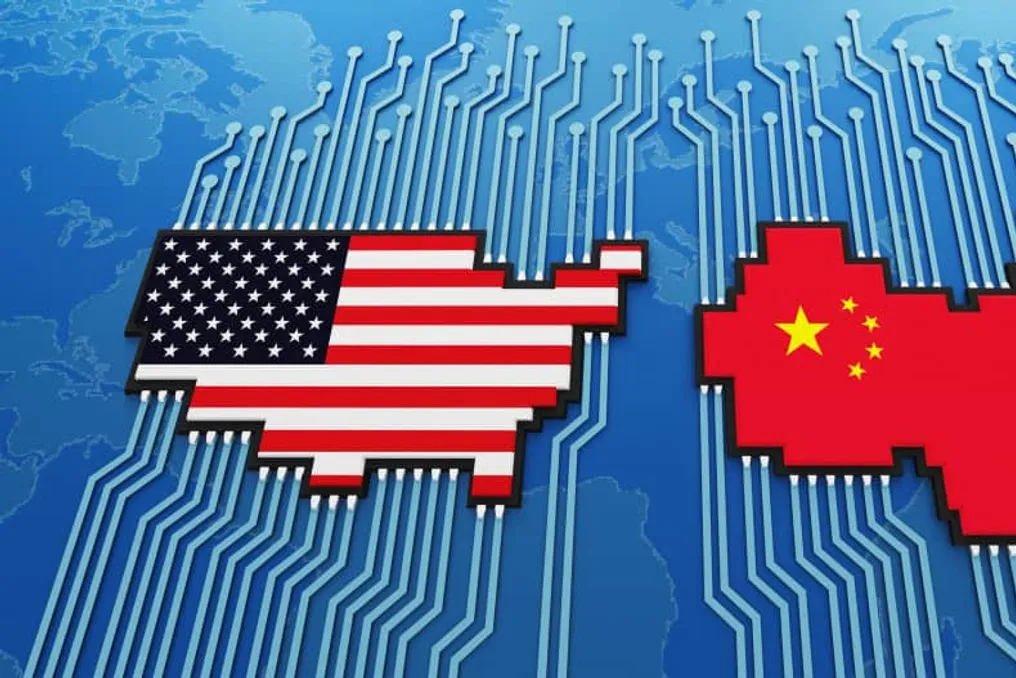
The American government is expected to complete the development of a structure for analyzing advanced systems in the coming weeks. The discussion has intensified following the release of new products from Chinese companies, which has increased pressure on developers from the United States.
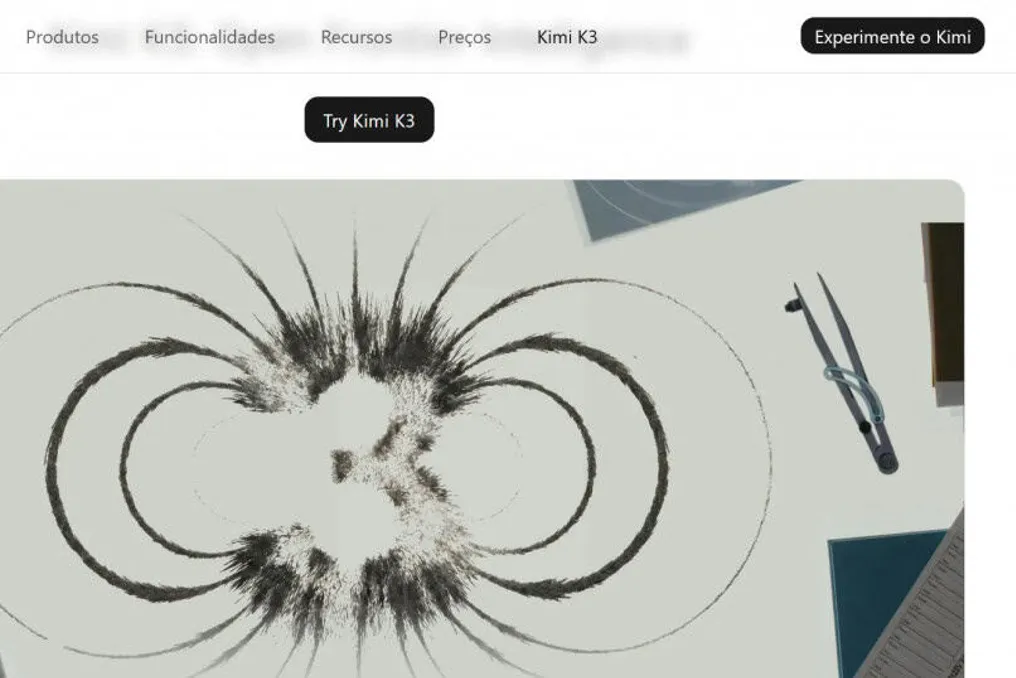
The launch of Kimi K3 by the Chinese startup Moonshot raised questions about the American advantage in the sector. This tool began competing with solutions from companies such as OpenAI and Anthropic.
This move also attracted the attention of investors, who have begun to assess whether large investments in AI infrastructure will yield expected results. For Lehane, this moment underscores the need for more coordinated coordination between the government, companies, and experts.
Among the points advocated by OpenAI are the creation of national standards for assessing AI models, strengthening cooperation between government, business, and specialists, ensuring access for cybersecurity experts to core models, and coordinating across American states to prevent disparate rules.
Chris Lehane, OpenAI's head of public relations, noted that the initiative should include US allies.
The American government is considering establishing an independent body to analyze AI models with industry representatives involved. This initiative aims to give companies greater clarity on how systems will be evaluated before their public release.
The discussion gained momentum after criticism from the tech sector regarding the lack of a clear standard for working with advanced tools. Recently, US export restrictions affected Anthropic's systems, while OpenAI made changes to its models at the request of authorities before releasing new versions.
In the absence of unified guidance, Lehane reported that OpenAI seeks to standardize the rules applied by various American states. The company supports a proposal in Massachusetts that requires major developers to take measures to identify catastrophic risks. The competition for the next generation of artificial intelligence is not only about creating more powerful models; governments and corporations must now determine how these tools will be tested, provided, and used safely.
The Chinese startup Moonshot has introduced the artificial intelligence model Kimi K3. According to the company, this system is capable of processing a significantly larger volume of data per query.
Kimi K3 was developed to perform tasks requiring advanced thinking, complex programming, and intensive operations.
Arthur Igreya explained how Moonshot's new product, Kimi K3, promises to raise the level of artificial intelligence development.
The Chinese startup Moonshot has actively entered the competition for leadership in artificial intelligence with the launch of Kimi K3. The company claims that this open-weights model has 2.8 trillion parameters, positioning it as the largest of its kind in the world.
Kimi K3 was developed with a focus on performing tasks that require sophisticated reasoning, long-term programming, and knowledge-intensive activities. According to Moonshot, it represents the first open-weights model to approach the three-trillion parameter mark. In addition to its size, the model features a context window of 1 million tokens, allowing it to process a significantly larger amount of data in a single request compared to previous versions.
The main attributes highlighted by the company include: 2.8 trillion parameters; a 1 million token context window; focus on complex programming and advanced reasoning; and being an open-weights model, which allows for customization by users. This feature enables developers to download, run, and fine-tune the system for various applications, unlike closed models.
Moonshot reported that Kimi K3 demonstrated competitive performance when compared to Fable 5 and surpassed Opus 4.8, GPT 5.6 Sol, and GPT 5.5 in GPU kernel optimization. This optimization is a technique used to improve hardware utilization and reduce latency.
The results were corroborated by external evaluations. The Arena.ai platform ranked the model in the first position in a specific test on web interface creation. Vals AI ranked it second, only behind Fable 5 but ahead of GPT-5.6 Sol. In sequential complex task tests, Artificial Analysis found performance similar to GPT-5.5 and Claude Opus 4.8.
Despite the progress, there are limitations to consider. Lian Jye Su, chief analyst at Omdia, mentioned that the execution cost could be a fraction of the price charged by OpenAI to its clients. However, he stressed that this does not automatically guarantee the best performance. On the other hand, Ryan Fedasiuk, a researcher at the American Enterprise Institute, warned that running a model of this magnitude locally would require equipment estimated to cost hundreds of thousands of dollars.
Reuters reported that Moonshot, supported by Alibaba and Tencent, continues to expand its financial and technological capacity. As reported by Bloomberg, the startup is seeking to raise $2 billion (equivalent to about R$ 11.1 billion), with a valuation close to $30 billion (approximately R$ 166.5 billion) before a potential public offering in Hong Kong. With the launch of Kimi K3, the company strengthens its strategy to compete in the global artificial intelligence landscape during this period of rapid industry evolution.