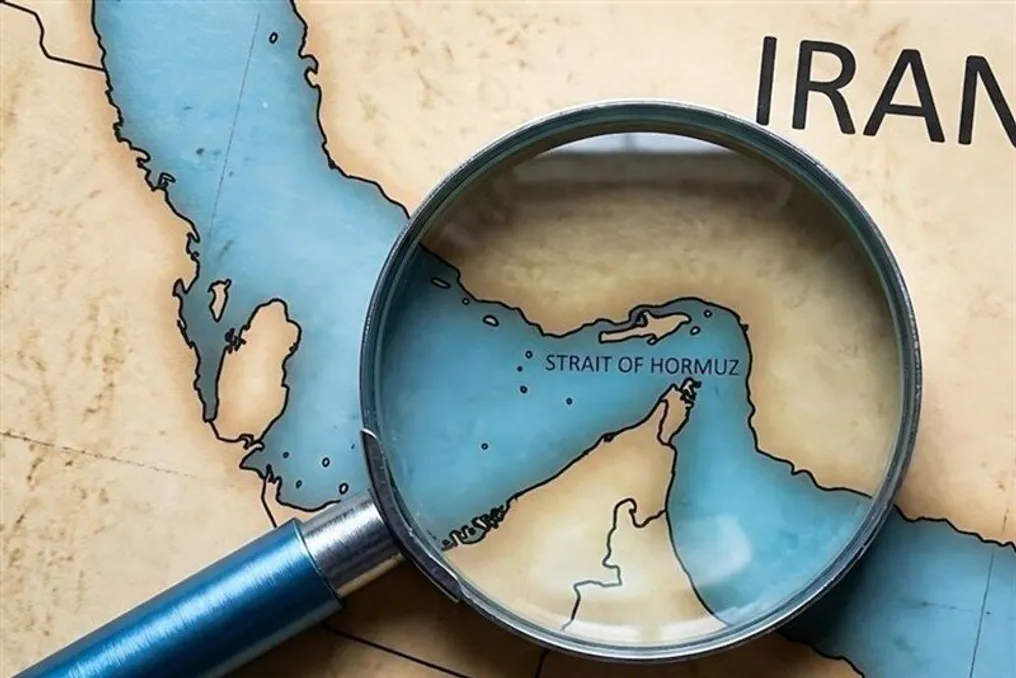
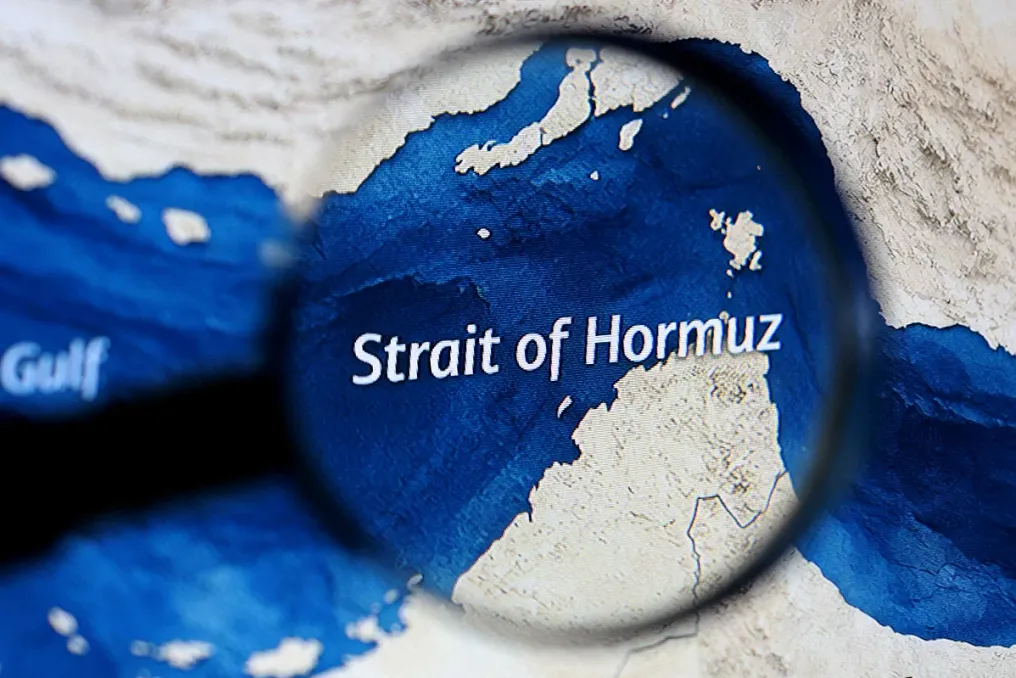
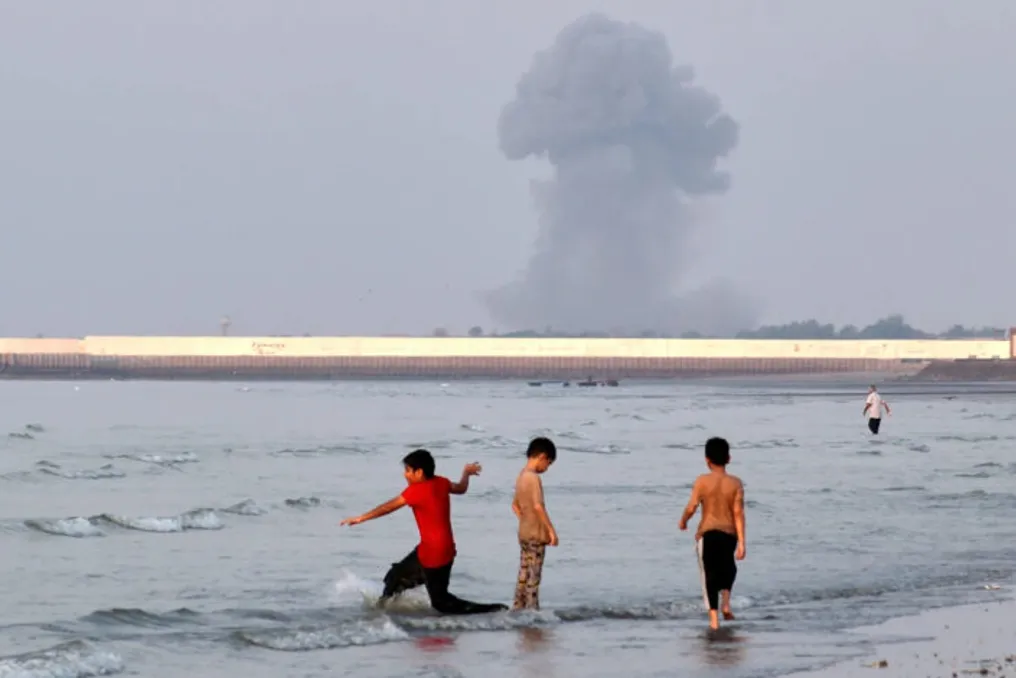
The Strait of Hormuz, a waterway critically important to the global economy, has become a center of tension in the conflict between the US and Iran over the past four months. Its potential closure could trigger a global energy crisis, although many did not realize its significance until February 28th.
Nature of Control Over the Strait
This narrow sea passage is one of the world's most vital maritime chokepoints and is constantly used as a lever of pressure in the escalating confrontation between the US and Iran. Amid exchanges of strikes on commercial vessels, deployment of naval mines, and alternating apocalyptic declarations with attempts at negotiation, the warring states have repeatedly conducted a dual blockade of the strait.
Territorial Position and Legal Aspects
The Strait of Hormuz passes through the territorial waters of both Iran and Oman, connecting the Persian Gulf with the Gulf of Oman. According to the Strauss Center for International Relations, commercial traffic moves along the established Traffic Separation Scheme (TSS) north of the Musandam Peninsula. This scheme is an international maritime route regulating vessel movement in congested waters.
The southern coast of the strait is in Omani territory, which has traditionally maintained a peaceful stance in accordance with the UN Convention on the Law of the Sea. The northern coast belongs to Iran, where the territory is under close observation by the Revolutionary Guard Corps. Since the start of the war, Iran has regularly warned foreign vessels passing through the strait and has struck vessels it believes violate its permission.
Nevertheless, according to the UN Convention on the Law of the Sea, the right of 'innocent passage' applies to straits used for international navigation. Innocent passage means the right of foreign vessels to safely pass through the territorial waters of a coastal state. The UN Convention states that coastal states cannot discriminate against vessels of any state nor can they charge fees simply for the passage of foreign vessels.
Iran's Position Regarding the Convention
It is important to note that Iran is not a party to the 1982 UN Convention on the Law of the Sea, as stated by its representation at the UN in New York. The Iranian mission asserted that it was 'not bound by its contractual provisions.' However, as the primary coastal state whose territorial waters include the Strait of Hormuz, Iran has the legitimate and justified right to take necessary and proportionate measures to eliminate emerging security threats, ensure safe navigation, and prevent the use of the Strait of Hormuz for hostile or military purposes.
Reasons for Increased Attention to Control
Control over Hormuz became a topic of discussion after the US and Israel struck Iran on February 28th. In response, Iran declared control over the Strait of Hormuz. On March 4th, the Iranian Revolutionary Guard Corps announced 'full control' over the strait. Since this waterway carries five percent of global energy supplies, the impact on the world economy since the start of the war has been significant.
Commercial traffic in the Strait of Hormuz sharply declined, with thousands of vessels blocked in the Gulf waters. Oil prices rose rapidly, transportation costs, including airfare, soared due to rising fuel prices, and consumers worldwide felt the increase in prices for basic goods. Although the US Navy stated its readiness to escort tankers along this vital route in the Gulf, traffic remained at critically low levels, leading to supply shortages.
Ceasefire and New Initiatives
On April 8th, after more than a month of fighting, a ceasefire was reached. As part of the deal, Trump agreed to suspend bombings of Iran for two weeks provided Iran fully reopened the vital strait. Iran promised to guarantee the safe passage of maritime transport through Hormuz for two weeks and to use the pause to negotiate with the US to end the war. However, this ceasefire proved fragile, as strikes by the US and Iran continued, albeit with less intensity than in March.
During this period, Iran began allowing passage to countries subject to fee payments. On May 18th, it created a body called PGSA to approve transit through the Strait of Hormuz and collect tolls from vessels. The UAE, Bahrain, Kuwait, Qatar, and Saudi Arabia responded with a statement rejecting the creation of the so-called 'Persian Gulf Strait Authority,' which the UAE claimed was falsely presented as a sovereign governing structure for vessel movement through the Strait of Hormuz.
US Stance on Toll Collection
The US has long insisted that Iran has no right to levy tolls in Hormuz. In April, when the media reported on possible toll collection by Iran from passing vessels, Trump stated: 'they better not do it, and if they do, they better stop now.'
In early July, US Secretary of State Marco Rubio told reporters that 'no country has the right to levy tolls or charges on an international waterway; this is existing international law.'
Although other US officials supported the view that no country could levy tolls, Trump stated that while it was acceptable for the US, it was not for Iran. In June, Trump announced that there would be no tolls in Hormuz during the 60-day ceasefire and afterward unless they were introduced and intended for the US.
Interim Agreement and Escalation
After several rounds of negotiations, a 14-point Memorandum of Understanding was signed between the warring parties on June 12th. Among other points in the MoU were 'complete lifting of the US naval blockade within 30 days' and 'reopening of the strait within 30 days in accordance with Iranian agreements.'
Since then, this temporary agreement has been violated repeatedly: Iran targeted any vessels it deemed to be crossing the strait in an 'unauthorized' manner, and the US responded with bombing numerous Iranian targets each time. In the latest escalation on July 12th, Iran attacked five Arab countries—Bahrain, Kuwait, Qatar, Oman, and Jordan—after the US launched retaliatory strikes against Iranian targets.
Status of the Strait: Open or Closed?
On the same day, the Revolutionary Guard Corps declared the Strait of Hormuz closed until further notice, stating that it would only reopen after the cessation of US military involvement in the region. In response, on July 13th, Trump stated that the waterway was open and 'will remain open, with or without Iran.' He also announced that the US would levy 20 percent as an 'angelic guardian' of the strait on all cargo transported through Hormuz, which he termed 'compensation' for ensuring the safety of other countries.
In response, Iranian Foreign Minister Abbas Araghi sharply criticized Trump, stating that he was 'absolutely right,' and that whoever ensures the safe passage of commercial vessels through the Strait of Hormuz should receive compensation for this service. However, he added that 'Iran has always been the GUARDIAN of the strait and will forever remain so. Twenty percent, of course, is too much. We will be fair.'
In the latest development on July 14th, Trump announced that he was abandoning the collection of the 20 percent commission following 'highly productive talks with Middle East leadership.'
State of the Shipping Industry
The shipping industry has suffered significant economic damage over the past four months, as each round of fighting threatened the safety of maritime vessels and crews. As of July 13th, the number of tankers passing through the strait fell to its lowest level in two months.
In May, Reuters reported that over 20,000 sailors were trapped on about 2,000 vessels in the Gulf, many unable to leave their ships due to a lack of sufficient food and fresh water, as well as fear of an uncertain future at sea. The struggle for power over Hormuz was not without casualties: three crew members died in March after two shells hit the Thai-flagged vessel 'Mayure Naaree.' In June, a US strike on a Palau-flagged vessel off Oman resulted in the death of three Indian sailors. On July 14th, an Indian crew member died after the UAE-flagged tanker 'Mombasa' was hit by Iranian ballistic missiles.
The situation forced countries to seek alternative routes to overcome the crisis. In June, Oman announced the creation of a temporary maritime corridor in the Strait of Hormuz in coordination with the International Maritime Organization to assist in the evacuation of over 11,000 stranded sailors. Iran responded by stating that the only permitted passage was a corridor bypassing its own coast, while Foreign Minister Abbas Araghi warned that any attempt to use alternative routes risked 'escalating tensions' in the region. Iran and Oman have since met in the 'Joint Committee on Hormuz' to discuss the management of the strait.
Meanwhile, the UAE activated alternative trade corridors through the eastern ports of Fujairah and Khorfakkan, created air freight bridges for urgent pharmaceutical and food shipments, launched a 'Green Corridor' with Oman, and developed a new Sharjah-Dammam trade bridge. UAE Minister of Foreign Trade, Dr. Tani bin Ahmed Al Zeyoudi, noted that the ports and facilities in Fujairah and Khorfakkan are attracting great interest, with deals worth billions of dirhams being concluded for the development of logistics, industrial, and export capabilities. The eastern ports of the UAE are strategically important as they provide direct access to the Indian Ocean outside the Strait of Hormuz, allowing trade flows to continue even during periods of heightened maritime risk.