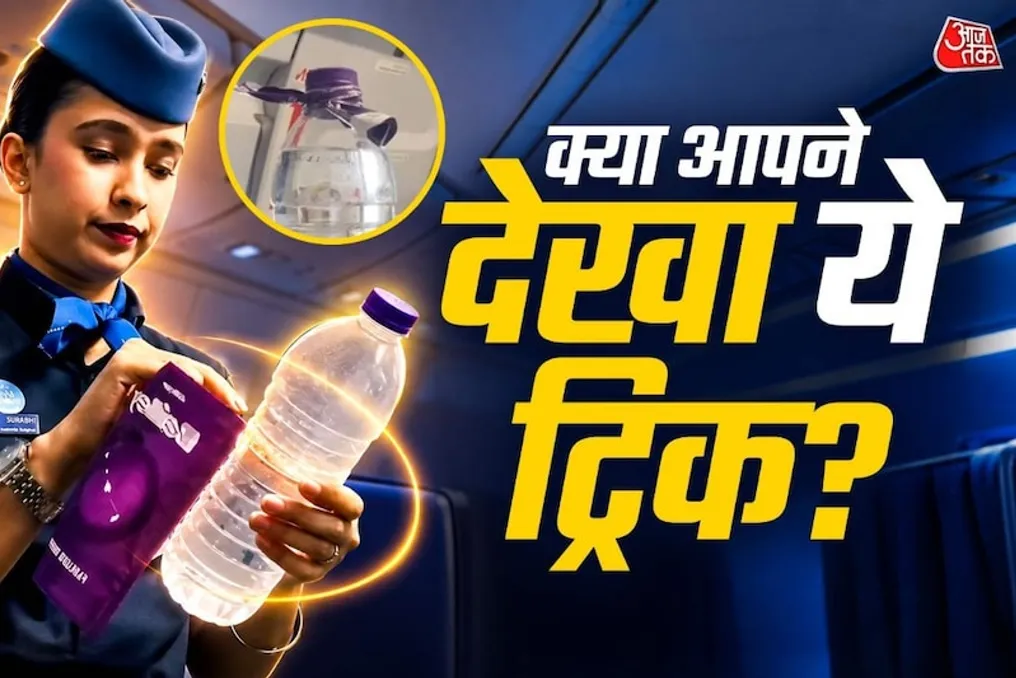
If you have ever traveled by plane, you may have noticed a small detail: flight attendants sometimes leave the plastic wrapping material from a bottle of water or juice tied with a knot. This raises questions for many passengers: is this an airline rule, or is there a specific reason? In fact, it is not related to safety, but rather represents a clever trick to simplify, speed up, and organize work.
Practical Reasons for Using Knots
When flight attendants remove the plastic packaging (seal) from a bottle of water or juice and tie a knot on it, there can be several practical explanations. It is important to note that this is not a universally accepted standard in aviation; different airlines and crews may have their own motives.
Improving Service Process
Firstly, this method helps easily identify the bottle. When serving many passengers, flight attendants need to quickly determine whether the bottle has already been opened or used. The knot on the wrapper allows them to instantly know that it is not a new bottle, which reduces the chance of errors and speeds up the work.
Secondly, it provides a better grip. Sometimes after removing the plastic film, it is left on the bottle with a knot tied. This small knot provides slightly better fixation when holding the bottle. When the crew has to quickly serve drinks to many passengers, this reduces the risk of the bottle slipping out of their hands.
Waste Control and Order
Thirdly, it prevents plastic waste from scattering. The cabin constantly operates an air conditioning system and airflow. If the plastic wrapper were left untied, it could fly up and scatter throughout the cabin. Therefore, many flight attendants secure the wrapper with a knot on the bottle itself so that the trash stays in one place and can be easily thrown away later.
Furthermore, it maintains service organization. During the flight, flight attendants have very little time to serve each passenger. Such small tricks make their job easier. By seeing the knot on the wrapper, they immediately understand which bottle is ready to be served, eliminating the need to constantly check every bottle and allowing service to be completed faster and more orderly.
Status of This Action
There is no universal or global standard in aviation that requires tying knots on bottle wrappers. This is likely an individual habit of crew members, a characteristic of the team's working style, or an internal practice of a specific airline. Thus, if you notice such a knot on your next flight, you should understand that it is more of a small trick to maintain speed, cleanliness, and order in the work, rather than a mandatory safety rule.