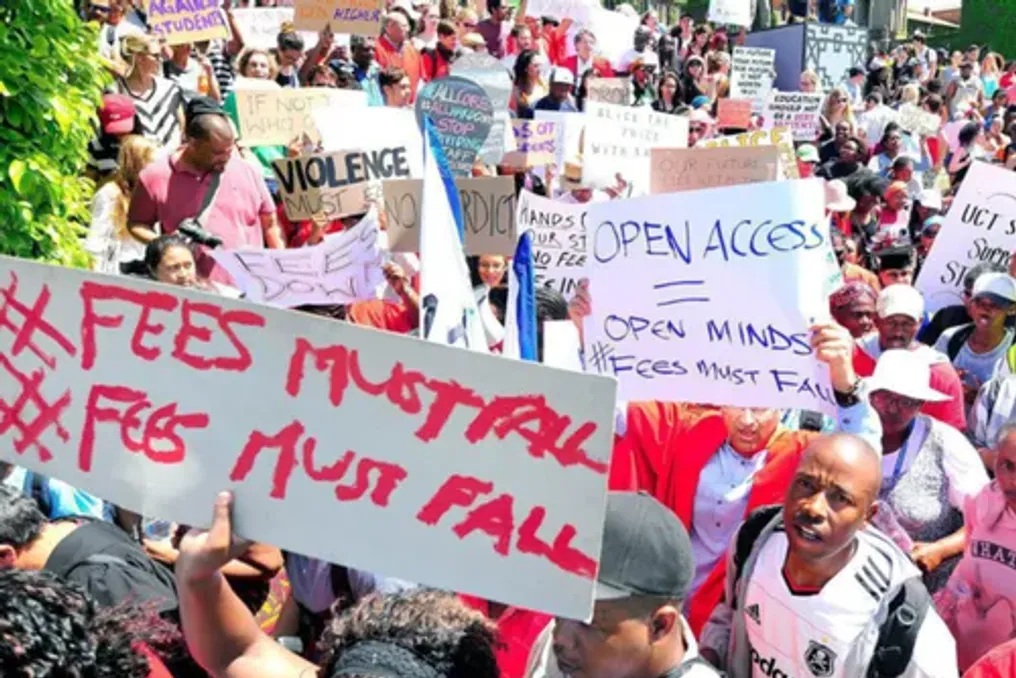
Ten years after the #FeesMustFall protests brought university funding to the center of national debate in South Africa, thousands of students continue to struggle with affording higher education.
Ten years after the #FeesMustFall protests brought university funding to the center of national debate in South Africa, thousands of students continue to struggle with affording higher education.
Despite a decade of discussion and good intentions, many students, especially those from low and middle-income families, remain outside the higher education funding system. The rising cost of living, complex economic conditions, and intense competition for state resources make sustainable and predictable support inaccessible to too many people.
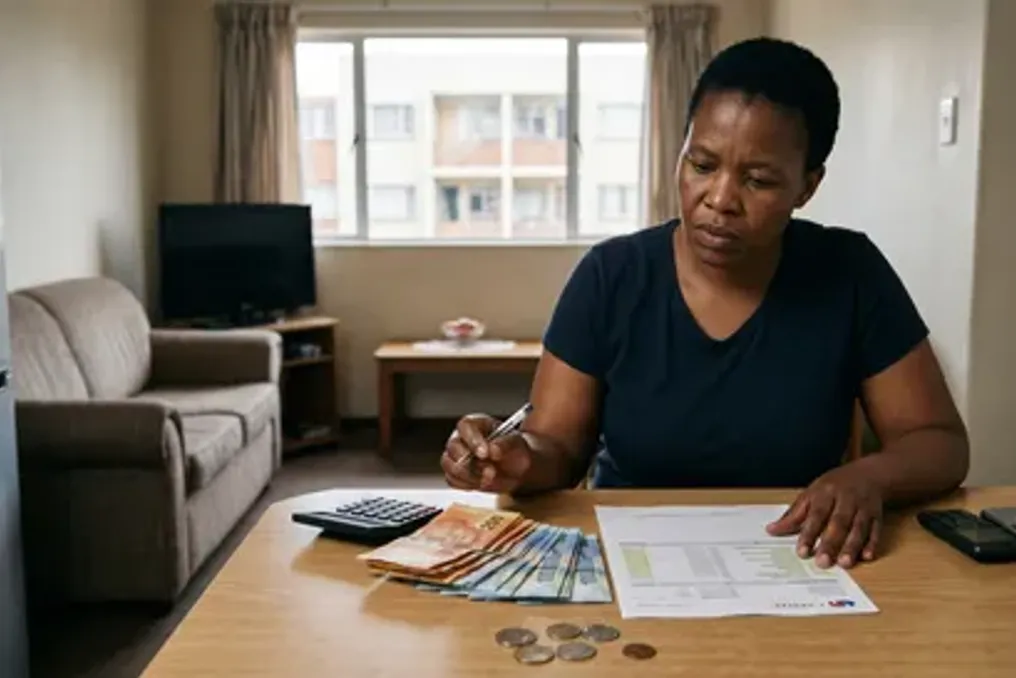
In fact, the need is growing faster than the available support, leading students to bear emotional and financial consequences. While some receive full funding and others can support themselves, a large group falls in between. These students, often termed the 'missing middle class,' frequently come from households whose income is too high to qualify for many traditional forms of aid but too low to realistically cover tuition, accommodation, transport, study materials, and other necessary expenses.
As a result, students are forced to work long hours in part-time jobs, take fewer modules than they could academically, skip meals, or drop out entirely when financial strain becomes unbearable.
ISFAP is at the forefront of efforts to bridge this gap by combining funding with structured comprehensive support. Through partnerships with donors, corporations, and institutions, ISFAP focuses on students from impoverished backgrounds and the 'missing middle class,' particularly in priority fields such as engineering, medical sciences, ICT, and other critical skills.
The program provides not only support for tuition and living expenses but also elements like mentorship, psychosocial assistance, and academic support. These factors play a key role in helping students not just enroll in university, but complete their studies and transition into employment.
Early results demonstrate that this approach can improve retention and graduation rates among funded students, even in a challenging economic environment where families face increasing pressure and labor markets are unstable. Sustainable funding models now involve not increasing expenditure, but leveraging partnerships, improving student performance, and maximizing the return on every unit of currency spent.
During Mandela Month, the question is not whether the country spoke loudly enough about the right to education. Instead, the real question is whether South Africa is organizing its resources, partnerships, and innovations in a way that truly opens doors for those who need it most, a decade after #FeesMustFall.
ISFAP believes that no single organization can solve the student funding crisis. However, by sharing what works and highlighting existing gaps, the organization hopes to contribute to a more honest national dialogue on how to support the next generation of graduates. Werner Abrahams, CEO of the Ikusasa Student Financial Aid Programme (ISFAP), emphasizes that the focus post-#FeesMustFall must be on practical, scalable funding solutions, and calls on potential partners to join in shaping the future of student support.
The South African middle class is facing unprecedented pressure due to the rising cost of living, growing debt, and deteriorating public services, undermining their financial security and optimism. The author explores how economic strain in the country is transforming political views, social behavior, and the future of this segment of the population.
For three decades, the middle class has symbolized a nation recovering from apartheid. It embodied the belief that education could change one's destiny, work would provide dignity, homeownership would solidify identity, and stability could be achieved through discipline and self-sacrifice.
Today, this center is shifting. The middle class is not disappearing or collapsing, but it is slowly disintegrating—a process with both psychological and economic dimensions. There is a gradual erosion of confidence that is altering the national mood, manifesting in household affairs, budgets, conversations, and unspoken anxieties that rarely reach public discussion.
Life for the middle class in South Africa has always rested on a fragile balance: earning enough to stay afloat; spending enough to maintain status; saving enough to avoid catastrophe. This balance has been broken. Now, the middle class is defined less by income and more by fear—the fear of falling, losing, or slipping into a state of instability that feels too close.
This fear is structural, not irrational. The psychological experience of the middle class is shaped by increasing private expenditures on education, healthcare, security, and transport. It is driven by the stagnation of real incomes, which fail to keep pace with inflation among the middle class, as well as dependence on debt, which has become more a means of stabilizing lifestyle than a temporary bridge. Furthermore, it is shaped by state failures, forcing households to independently provide what the government cannot.
The result is a feeling of constant siege. Every bill is perceived as a warning, every fuel price change as a threat, and any municipal failure as a reminder that the state is a burden, not a partner. The emotional economy of middle-class life is perpetual vigilance, a continuous search for the next shock. This vigilance leads to exhaustion, irritability, and a quiet sense of humiliation from hard work coupled with the feeling of constant falling behind. It is chronic stress that becomes the background noise of daily life, representing not only an economic but also a psychological cost of living in a country where stability must be purchased privately.
The middle class is in a precarious politico-economic position: they are wealthy enough not to rely on social welfare, but poor enough not to be protected by assets. This is a class that pays the highest taxes, receives the least direct benefit, and bears the greatest risk due to state dysfunction. They fund the state while simultaneously creating a private version of the state for themselves.
South Africans effectively pay for public goods twice: once through official taxation, and a second time through private substitution. Private education, healthcare, security, transport, and infrastructure are not luxuries but survival mechanisms that constitute a form of self-taxation, draining disposable income and hindering upward mobility. Thus, the middle class funds two states: the one on paper, and the one they create themselves.
Debt has become the pillar supporting middle-class life. Credit cards, personal loans, car loans, and mortgages are not signs of prosperity but symptoms of strain. The political economy is clear: the middle class secures its stability through debt, not income, borrowing funds to maintain the illusion of security. Deteriorating public infrastructure exacerbates this pressure: when logistics fail, businesses raise prices; when municipalities collapse, households pay more; when police forces weaken, private security expands; when Eskom fails, solar panels become mandatory. Every public infrastructure failure turns into a private expense item, and every private expense item into a psychological burden and, ultimately, a political protest against the state they fund.
Economic pressure is breeding cultural shifts. The South African middle class is becoming more conservative, but this is not American partisan or MAGA conservatism; it is sociological—a drive for order, aversion to risk, nostalgia for stability, and suspicion of rapid change.
This conservatism stems from the fear of declining social status, fatigue from state failures, misplaced anger towards those deemed idle, anxiety about crime and social disorder, and disillusionment with the political elite. The middle class is not moving rightward; it is turning inward, retreating into physical, emotional, and ideological enclaves.
Such a retreat has political consequences: it weakens social solidarity, intensifies punitive attitudes toward the poor, sharpens hostility toward migrants, and generates a demand for strong governance. The middle class becomes unpredictable, volatile, a barometer of national anxiety, a group that influences elections, destabilizes coalitions, and alters political narratives, all while remaining opaque to most political parties.
The middle-class dream was simple: work hard, study well, buy a home, raise children, and retire with dignity. However, this dream is crumbling under the weight of structural realities.
Homeownership no longer guarantees stability: loan approval conditions are tightening, interest rates are rising, and property values in many suburbs are stagnating, worsened by municipal decline. The home, once an anchor of identity, now causes anxiety. Education is no longer a guaranteed ladder: private school fees rise faster than wages, university costs are exorbitant, and youth unemployment is increasing, destroying the path from education to employment. The middle class raises children who may not inherit their status. Healthcare is becoming a luxury item: membership in health insurance programs declines, annual premiums rise, while public healthcare remains unreliable, making health once again a class marker. Retirement provision is becoming a mirage: pension savings are insufficient, often requiring withdrawals for emergencies, and the cost of living undermines long-term planning, forcing the middle class to age in insecurity. The dream has not died, but for many, it has become unattainable.
The South African middle class is undergoing a profound transformation, shifting from optimism to vigilance, from striving for high goals to anxiety, and from stability to tension. This transition happens quietly, without loud declarations, and it is reflected not in quarterly reports but in household chores, budgets, conversations, and sleepless nights.
The middle class acts as the nation's emotional indicator: the pressure is mounting. If South Africa wishes to have a stable future, it must restore the conditions that allow the middle class to breathe again. This is important not because the middle class is more important than the poor, but because its decline signals a deeper national fracture. The middle class is not collapsing; it is warning, and the nation should heed this sign.