Every resident of the country, observing the pace of development and modernization, deeply understands one truth: every reform, adopted decree, or decision is aimed primarily at improving people's well-being and easing their daily concerns. These are not just nice words, as the principle of 'Human Dignity' (Inson qadri uchun), put forward by the head of state, has become the basis for practical work.
The Significance of Mahalla in Society
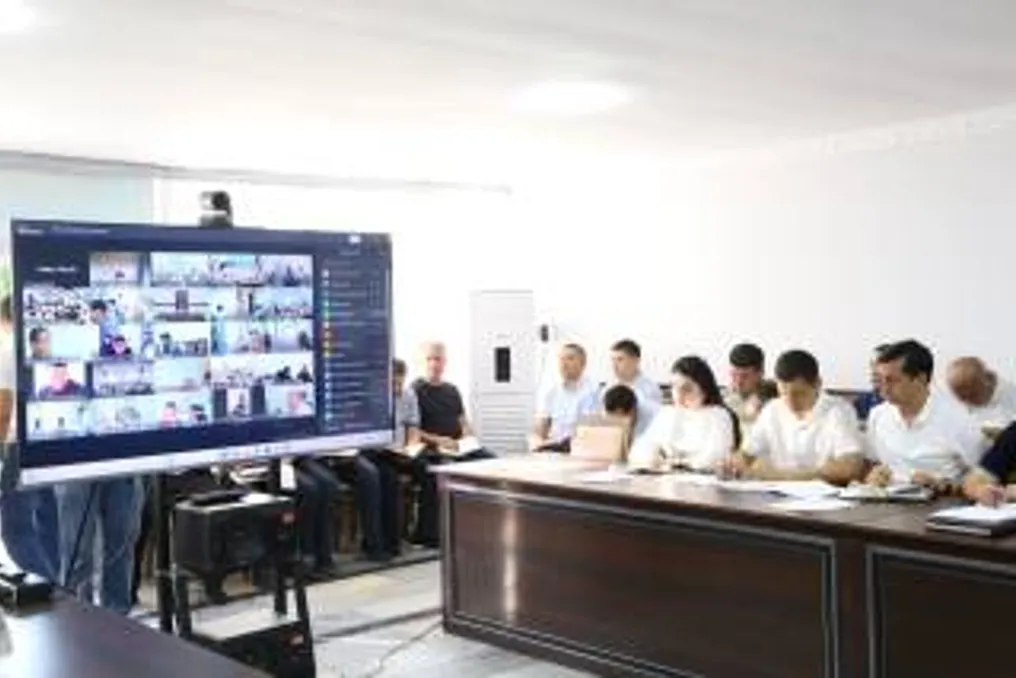
Since human dignity, joy, care, and aspirations are manifested in the place of residence, the mahalla is a unique entity with a thousand-year history, serving as a place of generosity, fellowship, and mutual assistance. A recent video selective meeting chaired by the President, dedicated to introducing a new approach to the mahalla and updating the activities of 'mahalla yettiligi,' marked another major step toward transforming this historical place into a modern and effective management system.
Financial Strengthening of Local Self-Government
In recent years, there has been an unprecedented allocation of financial resources to strengthen the mahalla institution and transform it into genuine local self-government bodies. This year, an average of 250 billion soums was directed to the districts, and 5.5 billion soums to each mahalla to improve infrastructure and create proper conditions for residents and entrepreneurs. This indicates the high attention and trust of the state in this area.
Expansion of Powers and Financial Flows
Furthermore, the powers of district heads and mahalla leaders have been expanded, leading to a twofold increase in additional income in the region. According to statistical data, an average of 22 billion soums in additional funding was formed in the districts, of which the mahallas directly received an average of 150–200 million soums into their own budget.
Problems in Potential Realization
However, studies show that despite the wide opportunities provided, problems are not being resolved promptly due to negligence and the lack of necessary organizational structure in some places. For example, this year, over 200 appeals were received through the Halk reception centers from each of the 87 mahallas, indicating a superficial attitude of local leaders towards their duties.
Criticism of Support Programs
The situation with the 'Initiative Budget' program was also severely criticized: despite the allocation of a huge sum of 7.5 trillion soums, no project was selected among the 2136 mahallas. Meanwhile, although banks launched 110 thousand micro-projects worth 18.5 trillion soums over 6 months, providing jobs for 259 thousand people, only two projects were implemented in 47 mahallas.
New Status of the Mahalla Leader
A recently signed Presidential decree, 'On Additional Measures for Effective Mahalla Management,' aims to fundamentally reform mahalla governance and elevate it to a new level. According to this decree, the mahalla leader ceases to be merely an observer documenting social problems in their district but becomes a true 'economic client' and the absolute manager of their territory.
New Powers and Grant Support
Under the new system, mahalla leaders receive broad powers as de facto managers of their district: they formulate projects to solve socio-economic problems, assign tasks to relevant departments, directly put vacant plots up for auction for private objects, and demand compliance with the plans of 'mahalla yettiligi' employees. Additionally, a grant of 10 million soums is provided for each project from a total fund of 240 billion soums to support initiatives aimed at increasing household income and improving the territory.
Personnel Development and Banking Activities
To systematically and scientifically organize the activities of 'mahalla yettiligi,' enhance qualifications, and find modern solutions to problems, the National Institute for Mahalla Development is being established. This institute will become a true school of mastery and knowledge for 'yettiligi' employees. In the field of entrepreneurship development and increasing household income, the role and approach of mahalla bankers are changing radically. Now, one mahalla banker unites several mahallas. They do not just issue loans; they determine the region's 'growth point,' find entrepreneurs, and increase the number of profitable projects.
Employment Support and Tax Base
The mahalla banker interacts with local entrepreneurs, determines the need for free jobs and professions, and then instructs employment departments to train the unemployed and employ them according to this direction. Special importance is given to an additional preferential resource of 2 trillion soums to support family entrepreneurship, as well as reducing the interest rate on loans for 'difficult' mahallas from 17.5% to 12%. This creates great opportunities for citizens to implement entrepreneurial initiatives.
Financial Autonomy and Incentives
To ensure the financial independence of the mahalla, 5% of the land and property tax collected from non-productive assets is directly distributed to the mahalla itself, leaving an additional 400 billion soums annually. It is planned that 200 mahallas that achieve the highest indicators in entrepreneurship development and employment will be awarded 2 billion soums, and the total mahalla budget will increase to 1.6 trillion soums this year and to 2 trillion soums from next year.
Conclusion on Reforms
Overall, these reforms are evident in the lives of ordinary people, where daily problems are solved quickly and purposefully within the mahalla, rather than remaining insurmountable for higher authorities. Preferential loans for family businesses and the integration of professional training systems right to the doorstep provide a stable source of income for citizens, especially women and youth. Strengthening the mahalla budget and the 'Initiative Budget' capability allows for the development of infrastructural issues, such as roads, water supply, and sports grounds, directly based on public requests. Most importantly, the transparent presentation of social benefits and public services at the mahalla level reduces bureaucracy and strengthens citizens' trust in the state and the future.
In response to such a large resource and trust from every local leader, high responsibility and dedication are required, as the success of all ongoing reforms and the satisfaction of people are reflected first and foremost in changes within the mahalla.