The undefeated boxer from South Africa, Gary van Staden, has stated his intention to deliver a explosive early knockout to his opponent Nicholas Nzengu at the Knockout Chaos 2 event, which will take place in Sandton this Saturday.
The undefeated boxer from South Africa, Gary van Staden, has stated his intention to deliver a explosive early knockout to his opponent Nicholas Nzengu at the Knockout Chaos 2 event, which will take place in Sandton this Saturday.
As one of South Africa's most talented and promising boxing athletes, Gary van Staden not only presents a striking appearance but also promises a brutal knockout against Nicholas Nzengu in their middleweight bout in Sandton this Saturday. During a press conference in North Riding on Tuesday, Van Staden emphasized his determination: 'I will come in with the intention from the first round. Expect big knockouts—that is what the fans want to see, and that is what I intend to give them.'
The 23-year-old athlete maintains his status as undefeated, having secured two knockouts in his nascent career. After debuting in professional boxing just over a year ago, Van Staden is already considered one of South Africa's rising stars. He will compete in the fifth fight of the evening at the Knockout Chaos 2 tournament, organized by Aquila Boxing Promotions with the participation of brand ambassador Kevin Lerena, and this match is one of the most anticipated on the card.
As the event name suggests, fighters are given financial bonuses for knocking out opponents, although the reward decreases with each passing round. Since the scheduled bout with Nzengu is set for six rounds, the 'knockout clock' will heavily influence Van Staden's mindset. Van Staden explained that 'the incentive structure on Aquila Boxing Promotions cards adds serious fire. When the clock ticks for performance bonuses, you won't hesitate to feel out the environment.'
Regarding his opponent, he issued a subtle warning: 'We respect everyone who steps into the ring, but on fight day, respect takes a backseat until the final bell. We have studied the footage, identified weaknesses, and developed a clear game plan. I am not going to leave everything up to the judges. When the gong sounds, the reckoning begins.'
Bultaco, a Spanish manufacturer, has become an icon of world motorcycling, distinguished by its tradition in two-stroke engines despite having a relatively short trajectory.
Although the focus is on motorcycling, Spanish automotive history has deep roots. SEAT, for example, was known in Brazil for models like Córdoba and Ibiza, launched in 1995, although the brand left the Brazilian market in 2002. Before the influence of Volkswagen, Hispano-Suiza elevated Spanish engineering to a luxury level, competing with brands like Rolls-Royce and Bugatti. Later, Pegaso emerged with exotic supercars, such as the legendary Pegaso Z-102.
The true Spanish competitive passion, driven by the culture of racing and two-stroke engines, found its maximum expression in Bultaco. This brand put Spain on the global motorcycling map and redefined sports categories. Bultaco existed for 25 years, from 1958 to 1983, and its success is linked to the dedication of Francisco Xavier Bultó Marqués, known as Paco Bultó.
Paco Bultó was born in Barcelona on May 17, 1912. From an early age, he showed a fascination with speed, signing the British magazine The Motorcycle in 1926, at the age of 14. He began exploring mechanics by dismantling a DKW engine. At 17, after seeing the European Grand Prix of Motorcycling, he decided to race, initially using false names such as 'Francisco Roig' and 'Patek'. In 1935, he won the Amateur Champion title of Spain in a Velocette 90 Plus.
However, his vocation turned to engineering. He graduated in Industrial Engineering and founded Barella y Bultó, specializing in the manufacture of pistons and rings. This company evolved into FISA (Fundiciones Industriales), a main supplier to the Spanish automotive industry, and established a partnership with Mahle.
In 1944, Paco Bultó joined businessman Pere Permanyer to create two-wheeled vehicles. During the post-war crisis, they used a French Motobécane B1V2 engine, which Bultó had borrowed, to assemble the engine and gearbox unit. Thus, in June 1945, Montesa was born, with a 98cc engine, which quickly participated in competitions.
Montesa prospered for more than a decade, but in 1958, a financial crisis and a recession in Spain led the board to close the racing department. Bultó contested this decision, stating that 'The market follows the checkered flag'. In protest, he resigned. A few days later, former collaborators from the competition division invited him to found a new company, resulting in Bultaco, named after his surname and nickname.
The agreement for the new factory was sealed in Masía San Antonio, in Cunit. Bultaco adopted the iconic 'thumbs up' emblem, inspired by gestures of British riders. In four months, the team developed the first motorcycle, the Tralla 101, a 125cc two-stroke single-cylinder. This model, launched in 1959, was technically advanced, offering 12 hp and reaching 114 km/h. Sales were immediate, exceeding 1,100 units in the first year.
The decisive test took place in May 1959, at the Spanish GP, where John Grace piloted a Bultaco in second place. A more striking event happened in Zaragoza, where the Tralla 101s were disqualified from the original category and placed in the top class. On the wet track, the lightness of the Bultacos allowed Marcello Cama to win, surpassing giants like MV Agusta and Ducati, catapulting the brand's prestige.
Driven by this success, Paco Bultó expanded the line in 1960, launching the 155 for touring and the Sherpa N for off-road. The successful strategy resulted in a production jump from one thousand to over 7,000 motorcycles sold in 1961.
Recognizing that the Spanish market was insufficient for growth, Paco Bultó sought the international scene. In October 1960, Bultaco participated in the Montlhéry circuit in France with a 175cc aerodynamic prototype. Maintaining his engineering philosophy, Bultó opted for the traditional cylinder window system, refusing technologies like rotary valves, and the small single-cylinder reached over 172 km/h on the French track.
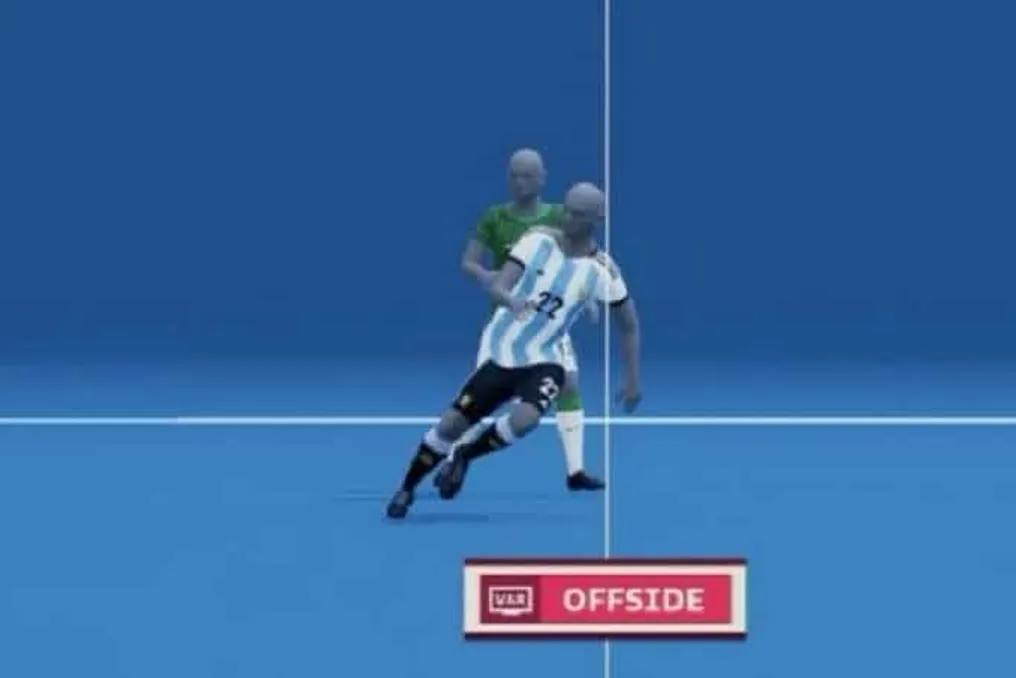
The Brazilian Football Confederation (CBF) announced on Tuesday (21) that the semi-automatic offside system will be implemented in the Série A of the Brazilian Championship starting from the 20th round, marking the beginning of the second half of the competition next weekend.
The sports entity reported that the technology underwent tests in recent weeks, both in youth category games and in matches of the Série A itself, before receiving final approval for official use. This decision was communicated to the clubs during a meeting held Tuesday morning at the CBF headquarters in Rio de Janeiro (RJ).
Although the CBF had already planned to introduce this novelty in the 20th round, as scheduled in May, the confirmation date was postponed to prevent any unforeseen issues during the long implementation process, which lasted approximately eight months.
The CBF assures that all stadiums belonging to Série A clubs are properly prepared to operate the new semi-automatic offside system. Additionally, the Crefisa Barueri Arena, used by Palmeiras when Nubank Park hosts events, will also adopt the technology after the club contracts the service.
The system's operation requires the use of about 30 mobile phones installed in the stadium, which need an electrical power source and internet access. The technology is provided by the company Genius, which also uses it in other competitions, such as the Premier League, the Mexican Championship, and the Belgian Championship. Currently, 65 stadiums globally have the semi-automatic offside installation.
The devices are responsible for recording the entire game in 4K resolution and at 100 frames per second, which allows for the creation of a complete digital replica of the match.
Based on data collected from the operation of the technology in the three leagues that already use it, the CBF points out that the semi-automatic offside can reduce the time dedicated to analyzing offside calls by about 33%. The system is named Semi-Automated Offside Technology and abbreviated as SAOT.
In case of any technical failure during the games, the refereeing team will notify coaches, team captains, and the public about the unavailability of the technology. In these scenarios, the refereeing body will revert to using the conventional VAR analysis method, resorting to the manual line check to verify offside calls, following the same protocol used in the first 19 rounds of the Brazilian Championship.
Initially, the CBF intended to start the 2026 edition of the Brasileirão with the semi-automatic offside active. However, it was necessary to postpone the implementation so that technical visits could be conducted to all stadiums that would receive the new technology before its activation.
In recent years, esports have evolved drastically, moving from small and restricted competitions to large events that fill stadiums and reach millions of views online. This growth does not depend only on the athletes, but also on a vast audience that follows the events without necessarily playing the games, which helps explain the 640.8 million views recorded in 2025 and demonstrates that esports transcend mere game mechanics.
There is a common misconception that it is essential to play to appreciate esports events. However, this is not true; it is analogous to a football fan watching the sport without practicing it. The broadcasts are designed to entertain, relying on commentators who explain everything in a didactic way and inject energy, turning matches into a spectacle.
Even for those who do not know the game, esports broadcasts function as entertainment. The main focus lies in the tension generated by decision-making under pressure. Crucial moments, where every choice can determine the outcome, are intense, especially when professional players compete for high prizes and recognition.
Following the changes in leadership during tournaments and the intense rivalries is captivating. Additionally, informal conversations from commentators, interviews, and behind-the-scenes reports enrich the narrative, making these chronicles more tangible and closer to the viewer. This happens regardless of detailed technical knowledge of the game; it is enough to perceive the impact of each instant, such as the cheers of the crowd, the reactions of the competitors, and the emotion conveyed by the narrators, highlighting the most emotional aspect of the sport.
Professional esports players are more than just competitors; they often act as influencers, noted for their style, tactics, or simply their charisma. They build emotional bonds with the audience by following their journeys, rooting for their comebacks, and celebrating their achievements.
For those who do not play, this aspect serves as an entry point. Seeing a young person turn a hobby into a successful career, or hearing them on podcasts discussing the pressure and stress, can be more interesting than analyzing strategies or rankings. Understanding these professionals is enough to follow the scene, even without mastering the game's details.
Esports have established themselves as true cinematic spectacles, characterized by vibrant lights, grandiose presentations, and high-quality broadcasts. Such elements initially attract the audience, while the energy and emotion capture viewers, including on social media and streaming platforms.
Esports championships are highly accessible, mainly through platforms like YouTube and Twitch. This allows anyone to watch every moment for free and live. Furthermore, short content, such as TikTok clips and Instagram reels, promotes the best moments and tells the stories behind the teams.
It is not necessary to watch the entire broadcast to have fun. Many competitions produce specific videos for each match, influencers create analyses and highlights, and the teams themselves share their behind-the-scenes, goals, and inspirations. Thus, there is a vast amount of material, including short formats, focused on both the sporting and human aspects.
In terms of viewership, esports registered 640.8 million views in 2025, a significant increase compared to 435.7 million in 2020, representing a 47% growth. Specifically, the League of Legends World Championship 2025 reached a peak of 6,752,585 concurrent views and a total of 136,433,724 hours watched.
In-person numbers are also notable. The Esports World Cup 2025, held in Saudi Arabia, exceeded the mark of 100 thousand tickets sold, as did the event held in Paris that year. Moreover, the BLAST Austin Major 2025 (Counter-Strike) sold 70 thousand tickets in just six hours, attracting audiences from all over the United States. Globally, ticket sales generated $450 million in revenue, corresponding to 14% of the total global esports market revenue.
Esports demonstrate continuous growth and impressive figures. A key factor for this is the ability to present events that are not only grand but also engaging and charming. This illustrates that, more than an imposing vertical structure, the organic nature and the momentum of passionate communities are what truly drive esports and its events.