The financial company One97 Communications, which owns the Paytm brand, has announced plans to inject 100 crore rupees into its wealth management technology division—Paytm Money. This information was presented in the company's regulatory filings.
The financial company One97 Communications, which owns the Paytm brand, has announced plans to inject 100 crore rupees into its wealth management technology division—Paytm Money. This information was presented in the company's regulatory filings.
According to Paytm's statement, the additional funding will be carried out through a subscription to the equity capital of its wholly-owned subsidiary, Paytm Money Limited (PML), via a rights issue of up to 100 crore rupees, subject to obtaining necessary approvals.
The company expects to complete this transaction by September 30. The document also emphasizes that the issuance of up to 10 crore additional shares of PML, with a nominal value of 10 rupees each, will not change the company's stake in PML, which remains at 100 percent.
Founded in 2017, Paytm Money provides wealth management and investment services. These services include stock brokerage, mutual fund distribution, and other financial services. PML's reporting shows a turnover of 212.95 crore rupees for the fiscal year 26.
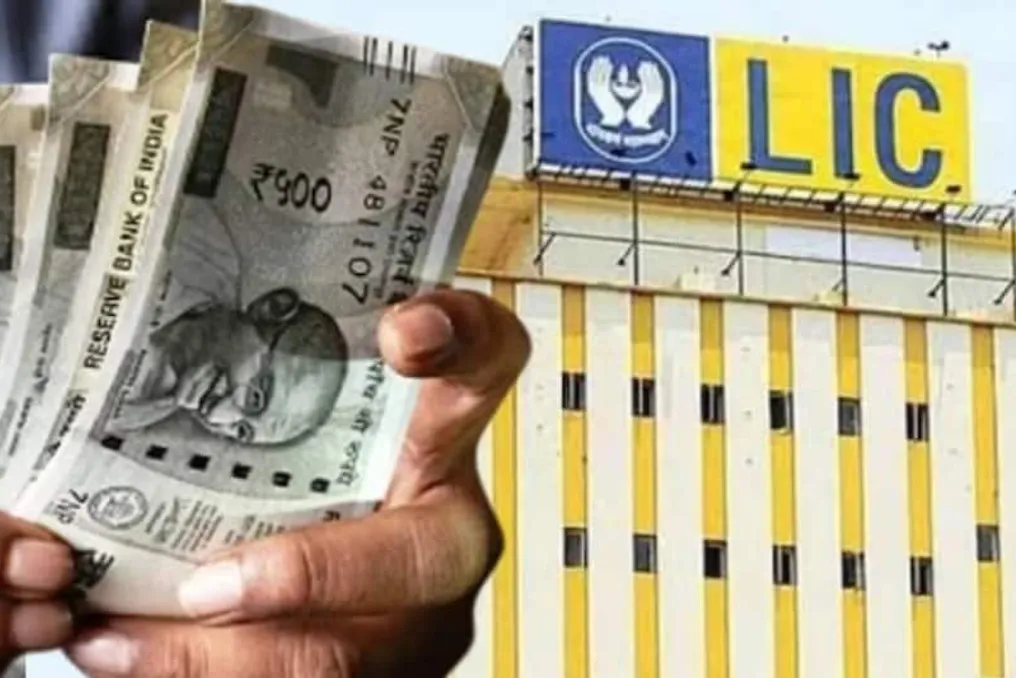
The Life Insurance Corporation of India (LIC), the country's largest insurance company, offers various plans for all age groups, including children, seniors, and women. These plans are particularly popular among those planning for life after retirement to avoid financial difficulties.
One such product is the LIC Smart Pension Plan, which guarantees a lifelong pension. This plan was launched last year, in 2025, and is a product that provides income simultaneously with investment. From the perspective of receiving regular income after retirement, it can be an optimal choice.
The LIC Smart Pension Scheme falls under the category of immediate annuity plans. This means that policyholders start receiving a pension immediately after making a lump-sum contribution, and this payment continues throughout their lifetime. This plan is designed for people who prefer low-risk investments, avoiding stock market fluctuations, and are looking for a stable guaranteed income.
This LIC plan is Non-Linked and Non-Participating, which eliminates any risks associated with the stock market. The pension rate is fixed at the time of policy issuance and remains unchanged throughout the entire term. The minimum amount to purchase an annuity under the Smart Pension Plan is set at 100,000 rupees, while there is no limit for maximum investment, allowing for a higher pension upon increased contributions.
This scheme is especially useful for retired employees, individuals working in the private sector, and senior citizens wishing to receive a regular monthly income. For example, to receive a monthly pension of 20,000 rupees under the Smart Pension plan, an investor would need to make a lump-sum investment of 3.5 million rupees. With such an investment, an annual income of 2.87 lakh rupees is guaranteed, equivalent to a monthly amount of 23,940 rupees.
The Indian hospitality company Indian Hotels Company (IHCL), a subsidiary of the Tata Group, reported a net profit growth of 20.8% in the first quarter of the 2026-27 financial year (April-June), reaching ₹357.9 crore compared to ₹296.4 crore the previous year. Revenue for this period amounted to ₹2,339.19 crore, which is 14.6% higher than the same period last year, marking the seventeenth consecutive quarter with the company's best performance.
Chief Executive and Managing Director Punit Chhatwal warned that various macroeconomic difficulties, primarily geopolitical tensions in the Middle East, have led to increased fuel prices, reduced air capacity, and rising airfare tariffs, which slows down travel demand on international and long-haul routes. He noted that these factors may continue to exert pressure in the coming quarters.
Chhatwal highlighted the direct link between the Middle East crisis and Dubai, as well as the impact of this crisis on the company's international business in the Maldives. He explained that since significant traffic to the Maldives, Sri Lanka, London, and Cape Town passes through Emirates, the psychological fear among people about visiting the region is leading to a decline in flow. Furthermore, the Middle East crisis has negatively affected the restaurant business.
The decrease in international and domestic flights during April-June resulted in a reduction in earnings before interest, taxes, depreciation, and amortization (EBITDA) in the TajSATS aviation catering segment. Growth in this segment slowed to 3% compared to 13% the previous year. Although the company holds a 55% share of all airline meals procured in India, both domestically and internationally, it managed to partially compensate for this through institutional catering, which only provided 3-5% growth.
Senior management stated that the hospitality segment is showing rapid growth and is helping to mitigate any weaknesses in the aviation catering business, expecting to reach double-digit figures within three to six months. The company, which is the largest hotel company in the country by number of rooms and market capitalization, noted the recovery of its international business. Occupancy at three of the company's hotels in Dubai improved after a sharp drop caused by the conflict in the Middle East.
Chhatwal reported that total revenue in Business Bay could be around 80% of the previous level, and in Jumeirah Lakes Towers—around 60%, although leisure travel is still under significant pressure. Meanwhile, Taj Exotica on The Palm is generating revenue that is less than 50% of previous figures. Occupancy at the property in San Francisco has also recovered following the completion of renovation works.
The hospitality company, which had gross cash reserves exceeding ₹4,400 crore at the end of June, announced the signing of contracts for 20 hotels and the opening of 11 new properties in the first quarter of the 2027 financial year, bringing its operational portfolio to over 380 hotels. New properties include Taj Frankfurt, SeleQtions properties in Ayodhya and Mumbai, as well as hotels in emerging markets, including Bharatpur, Tiruchirappalli, Sindhudurg, Jawai, and Wayanad. Revenue in the hospitality segment and Revenue Per Available Room (RevPAR) grew by 17% and 14% respectively. Absolutely, RevPAR reached ₹8,400 per night in the quarter ending in June, compared to ₹7,300 per night in the same quarter last year.
Compared to the fourth quarter of the 2025-26 financial year (January-March), net profit decreased by 40.3% (from ₹599.9 crore). Operating revenue also fell by 15.4% (from ₹2,765.29 crore). The company attributed this to the seasonality of the hospitality business, as revenue and profits are typically shifted to the second half of the financial year due to wedding season, government visits, and other events.
Fintech company Paytm announced that its cash balance reached 13,529 crore rupees in the first quarter of the fiscal year 2026-27 (Q1 FY27). The company stated a priority for organic investments while remaining open to acquisitions provided the valuation is suitable.
By accumulating free cash flow, Paytm intends to use these funds primarily within its current operations, although it maintains the possibility of acquisitions if a 'right valuation' is achieved. The balance of the Noida-based company increased by 657 crore rupees compared to the same period last year, reaching the mentioned amount by the end of the first quarter of fiscal year 2026-27.
Madhur Deora, President and Chief Financial Officer (CFO), noted that the search is primarily focused on organic opportunities that provide high returns within the existing business. Nevertheless, the company will consider an acquisition deal if the valuation meets the requirements. Deora informed analysts that they previously pointed out that MTF (Margin Trading Facility) is part of the funds generating very good Return on Investment (ROI). He added that they are constantly looking for new opportunities, mainly organic, and possibly some inorganic ones if a suitable opportunity arises at a fair price.
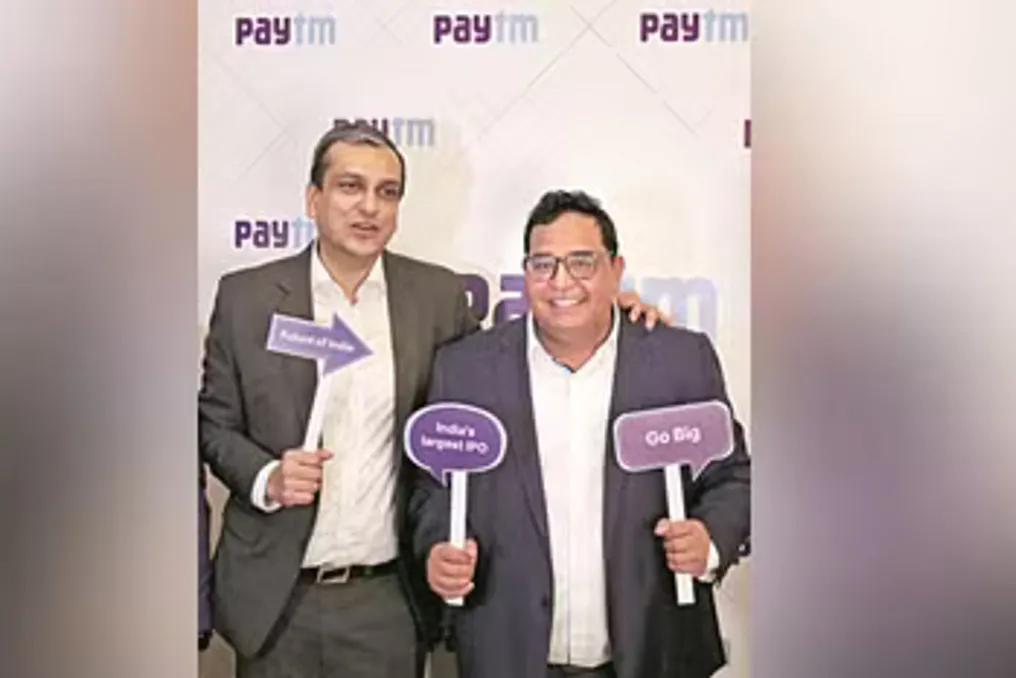
Vijay Shekhar Sharma, Founder, CMD, and CEO, emphasized the critical importance of a strong balance sheet. He noted that fintech companies in the ecosystem face difficulties in both funding markets: going public creates one set of pressures, while remaining private presents another. Commenting on the use of reserves, Sharma suggested that people should feel more pressure for further discounting to occur, and then the cash and activity will improve.
Amidst intense competition in the Indian fintech market, where large companies compete for customers of all sizes, including small and medium businesses, while maintaining low margins, Sharma reported that the company is considering monetization based on Artificial Intelligence (AI) in the current fiscal year. He clarified that some early use cases have already started generating revenue. These scenarios relate to 'non-payment' and 'non-financial services' segments for the firm and are intended to serve the merchant side of Paytm's business. Sharma explained that they are building their own model on their own infrastructure, which ensures low latency and low token and inference costs. They eliminate call center and other external expenses by optimizing and adding their own skills, which will then be sold to external clients.
Paytm reported a consolidated net profit of 220 crore rupees for Q1FY27, which is 79% higher than 123 crore rupees in the corresponding quarter last year (Q1FY26). Compared to the previous quarter, net profit grew by 19.5% compared to 184 crore rupees in Q4FY26. For Q1FY27, the Noida-based fintech company generated 2,448 crore rupees in operating revenue, representing a growth of 27.6% compared to 1,918 crore rupees received in Q1FY26. Quarterly, this figure increased by 8.1% compared to 2,264 crore rupees.