Chinese scientists conducted clinical studies and concluded that fecal transplantation can improve sleep efficiency and reduce nocturnal awakenings in people suffering from chronic insomnia. This report was published in the Journal of Internal Medicine.
Characteristics of Insomnia
Chronic insomnia is defined as a condition where difficulties with falling asleep or maintaining sleep occur for at least three nights a week for more than three months. This condition is often accompanied by excessive daytime sleepiness, an increased risk of accidents, and numerous associated physical and mental problems. Although lifestyle modification is an effective approach, it is not suitable for all patients. Furthermore, long-term use of sleeping pills or sedatives often leads to side effects, dependence, and tolerance development, highlighting the need to find alternative treatment methods.
Potential of Microbiota as a Treatment Target
One promising area for therapy is the correction of the intestinal microbiota composition, as there is a proven causal link between this composition and chronic insomnia.
Clinical Trial Methodology
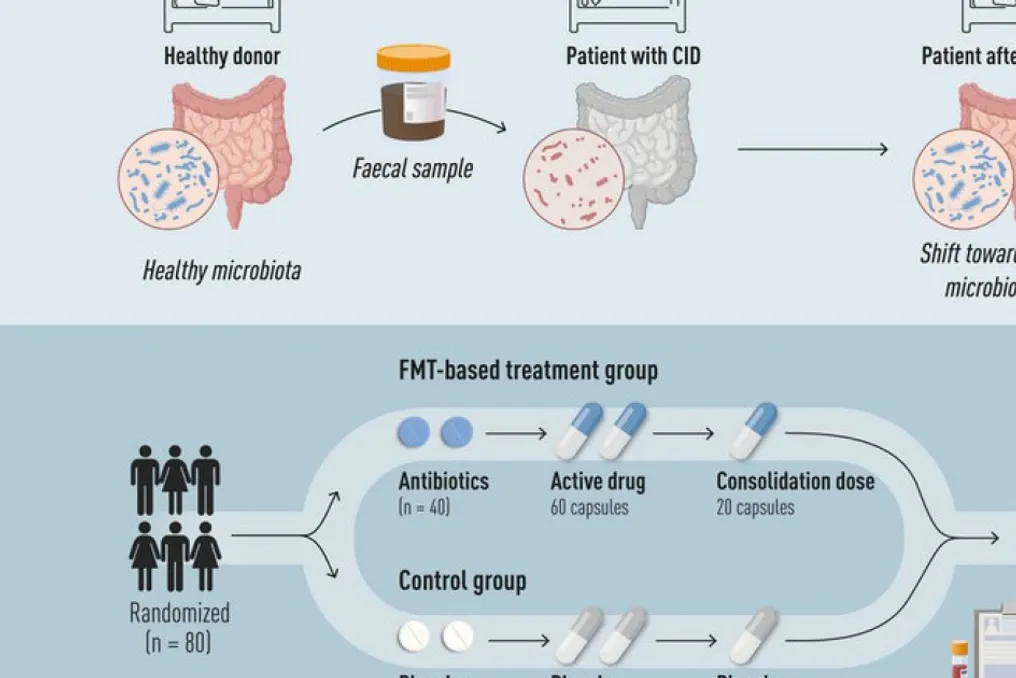
Zhe Wang from Shandong First Medical University, along with his team, organized multi-center, double-blind, randomized controlled trials. Forty adult patients officially diagnosed with chronic insomnia syndrome participated in the study. After a course of antibiotics, participants were orally administered either feces from a healthy donor (at a starting dose of 60 and a maintenance dose of 20 enteric-coated capsules) or placebo, following a similar scheme. Additionally, participants from both groups were randomly assigned to take a synbiotic dietary supplement or placebo to gather further information. Sleep parameters before and after the intervention were recorded using polysomnography.
Impact of Transplantation Results
One month after completing the therapy, sleep efficiency, adjusted after fecal transplantation, exceeded the figures after taking placebo by 13.9 percentage points (p = 0.003), and the number of awakenings during sleep significantly decreased. Objective improvement, defined as an increase of at least 20%, was achieved in 55.0% of participants in the main group compared to 17.5% in the control group (p = 0.001). Subjective improvement was 55.0% versus 30.0% (p = 0.041), and combined improvement was 30.0% versus 7.5% (p = 0.020); moreover, any positive response was recorded in 80.0% versus 40.0% (p = 0.001). Taking synbiotics did not have a significant effect on sleep quality. The improvement in insomnia severity scores according to the ISI scale and sleep quality according to the PSQI scale remained stable from two to six months after fecal transplantation.
Safety and Microbiome
The treatment was well tolerated, and any side effects were mild and resolved spontaneously; no serious adverse events were observed. After the procedure, activation of microbial richness and diversity in the gut microbiota, as well as changes in its structure, were noted, which was confirmed by stool analysis. Although both responders and non-responders showed similar changes in beta diversity after treatment, their initial microbiota composition differed.
Prospects and Other Applications
The pilot trials demonstrated that fecal transplantation can provide sustained improvement in both sleep efficiency and continuity, as well as subjective perception of sleep. It is possible that the response to this therapy depends on the initial composition of the gut microbiota, which requires further study. Initially, fecal transplantation was developed and used to treat pseudomembranous colitis caused by the bacterium Clostridioides difficile. In experiments, it was also tested to help patients with diabetic enteropathy, people with Parkinson's disease, to prevent 'transplant versus host' reactions, alleviate symptoms of autism spectrum disorders, improve microbiota after cesarean section, and reduce alcohol cravings.
Long-Term Observations
It is worth noting separately that a retrospective study conducted by American scientists showed that stimulating the glossopharyngeal nerve in patients with obstructive sleep apnea reduced the probability of developing diabetes and hypertension two years after using the method. This analysis included about 7,200 people, and the results were published in JAMA Otolaryngology — Head & Neck Surgery.