Uzbekistan holds a significant position in global nuclear science, as evidenced by the work of the Institute of Nuclear Physics of the Academy of Sciences of Uzbekistan (IYAF). IYAF specialists produce over 80% of the world's supply of iodine-125 radioisotope, which is widely used in modern medicine. The scientific school established about seven decades ago continues to influence not only Uzbekistan but also global science.
70th Anniversary and Achievements of IYAF
This year, IYAF celebrates its 70th anniversary. For this key scientific institution, it is a time to summarize achievements: from launching the first research reactor and forming its own school of radiochemists to creating radiopharmaceuticals, developing unique nuclear technologies, sterilizing medical devices, and participating in the establishment of Uzbekistan's atomic industry.
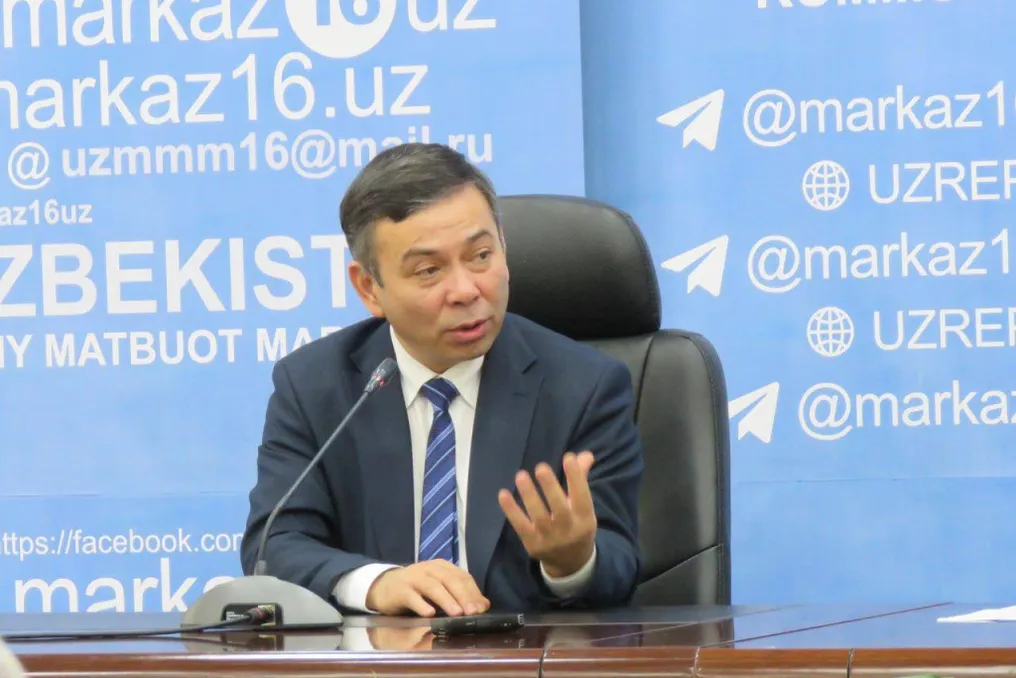
A correspondent from Podrobno.uz interviewed the director of IYAF, Academician Ilham Sadikov, to learn about the institute's results, the reasons why some of its work remains unnoticed by the public, and the factors determining the future of atomic science in the country.
Global Leadership in Production
Sadikov emphasized the uniqueness of the situation at the institute, noting the presence of a strong school of radiochemists. He stated that IYAF produces 80% of the world's iodine-125 volume, supplying nearly the entire world with this radioisotope. Furthermore, the institute is responsible for more than half of the world's production of phosphorus-32 and phosphorus-33. According to Sadikov, the extremely high quality of the products, such as the purest iodine-125, places them above competitors whose analogues lag behind in purity by ten thousand times.
History and Current State of the Center
The Institute of Nuclear Physics was founded in 1956, and in 1959, a 2 MW VVR-SM research reactor was launched on its grounds, which was later upgraded to 10 MW. This transition allowed IYAF to engage not only in fundamental research but also to develop applied fields, including the production of radioisotopes, radiopharmaceuticals, as well as materials and services for medicine, industry, and security.
Today, IYAF serves as the largest research center of its kind in Central Asia. Six unique nuclear physics facilities operate on its territory, along with three subsidiary enterprises: GP 'Radiopreparat', a design bureau with a factory, and the Republican Radioactive Waste Storage Center.
Development of Radiopharmaceuticals
The most well-known area of IYAF's activity is radiopharmaceuticals—the creation of drugs and substances based on radioisotopes necessary for high-precision diagnosis and treatment of serious diseases, including oncology. These technologies are an integral part of modern nuclear medicine.
Annually, IYAF brings one or two new radiopharmaceuticals to the market. The institute produces over 60 radiopharmaceutical drugs and substances based on 15 radioisotopes, about 40 of which are ready for direct application. Key among these radioisotopes are iodine-125, phosphorus-32, phosphorus-33, technetium-99m, iodine-131, and lutetium-177.
The institute's work is conducted both domestically and for export. Over 90% of all products are sent abroad, to approximately 15 countries in Europe, Asia, North, and South America. However, the situation with finished medicines is more complex than with raw materials. Many foreign partners are interested in purchasing finished drugs due to their high quality and low price, but they face a problem: drugs produced in Uzbekistan can only be used within the country because applying them in other states requires a long and expensive registration process in each of those countries. Therefore, foreign companies often purchase substances, while producing finished medicines themselves.
Domestically, the demand for these drugs is also growing. According to Sadikov, over the past four years, the supply of radiopharmaceuticals to clinics in Uzbekistan has increased fivefold, indicating the development of national nuclear medicine.
Lutetium-177 and Technological Niches
A separate success for IYAF has been the production of lutetium-177, which began in 2017. Initially, it was exported, and then scientists began releasing finished drugs for the domestic market. In 2022, the first drug based on lutetium-177 for treating prostate cancer metastases was registered in Uzbekistan, and later a drug for neuroendocrine tumor therapy was developed.
Current demand for this drug significantly exceeds the institute's production capacity; customers request volumes tens of times greater than current levels (up to 40 times). Scientists note that even a full conversion of the VVR-SM reactor to lutetium production would physically not allow reaching such volumes. The advantage of IYAF's product remains its high purity and specific activity, which increases interest in it on the global market.
Among the less known areas of the institute's work is the radiation sterilization of medical devices (syringes, gloves, etc.) using electron accelerators. Sadikov reported that this is the only production site of its kind in the country, operating almost continuously. The advantage of the method is that the devices are sterilized in sealed packaging without opening, heating, or using chemical gases.
Another little-known area is neutron radiography and tomography. A special facility was launched in May 2020. According to Sadikov, there are three such facilities in the post-Soviet space (in Russia, Kazakhstan, and Uzbekistan), but only the one in Uzbekistan is actually operational. This method allows for the examination of the internal contents of an object without destroying it, which is critically important for both metals and complex mechanisms, as well as for archaeological finds previously studied at IYAF.
Additional Sources of Income
A stable source of revenue for IYAF is the enhancement of natural stones. Using the institute's technologies, colorless topaz acquires colors ranging from light blue to dark blue after irradiation, increasing its market value by 5–30 times. This is an export service that generates stable income.
Cobalt-57 is also produced at the U-150 cyclotron, accounting for about 20% of global production, and this product is also exported. Additionally, the institute develops installations for water purification, desalination, and disinfection of various configurations. A significant portion of the components of these installations is localized: casings are manufactured in local factories, while sorbents and internal elements are created in the institute's laboratories. Furthermore, IYAF produces silver nanoparticle solutions for disinfection in the water, food, perfume, paint, soap, and cream industries.
VVR-SM Research Reactor
The VVR-SM research reactor, launched in 1959 and repeatedly modernized, is the core of IYAF's production and research system. Sadikov considers it one of the most efficient reactors of its type in the world. After reaching a power of 10 MW, it operated for 5–6 thousand hours per year, and in the 1990s and 2000s, for over 6,5 thousand hours over almost 11 months without interruption, which surprises foreign colleagues whose productivity rate was 1.5–2 times lower.
The reactor's durability is due to both economic and human factors. Since reactor fuel is very expensive, the state ensures its procurement, which prevents unnecessary consumption. However, the institute does not receive budgetary funding for the purchase of equipment and materials, so it generates all funds for the reactor's operation itself. These revenues are used for equipment renewal and modernization.
Currently, VVR-SM uses low-enriched uranium fuel. Since November 2009, the reactor has switched to IRT-4M fuel with a uranium-235 enrichment level of 19.7%, supplied by the fuel company TVEL (a division of Rosatom). In 2022, TVEL and IYAF signed an agreement to supply modified nuclear fuel for VVR-SM, which will extend the fuel campaign compared to standard IRT-4M cassettes. The first tests of these experimental fuel assemblies are planned to be conducted at this reactor.
Several years ago, the reactor underwent inspection with local experts and IAEA specialists. The research commission concluded that the installation is capable of functioning safely for another 50 thousand hours before replacement is required.