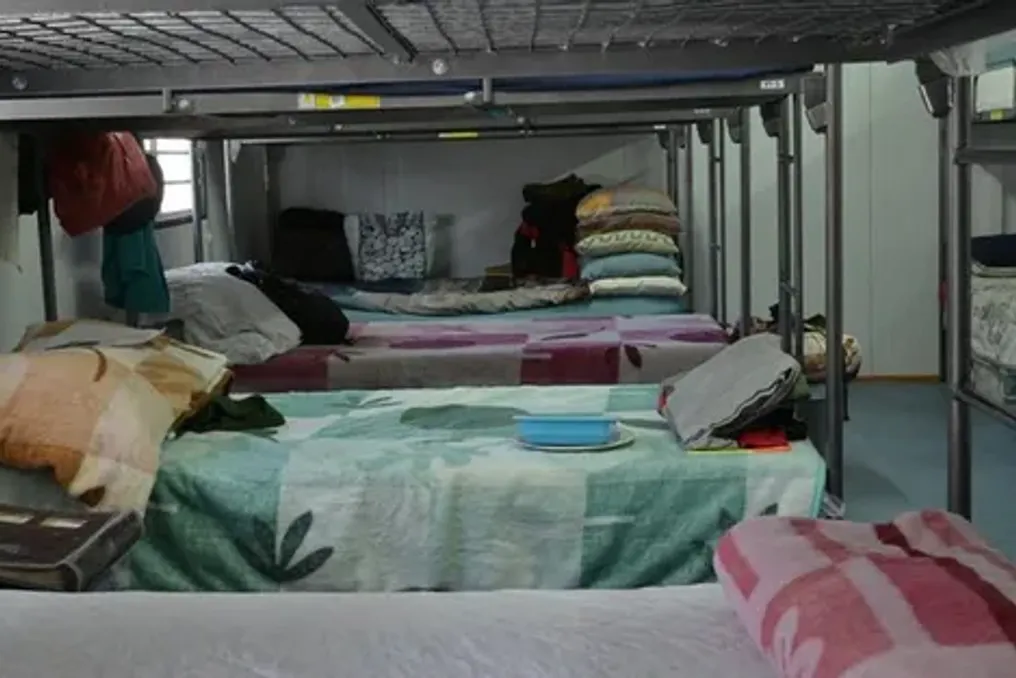
The city of Cape Town has allocated almost 100 million rand in the 2026/27 financial year to strengthen support for people living on the streets, increase the number of shelter beds, and activate assistance programs for vulnerable residents.
The city of Cape Town has allocated almost 100 million rand in the 2026/27 financial year to strengthen support for people living on the streets, increase the number of shelter beds, and activate assistance programs for vulnerable residents.
This funding package includes 87 million rand designated for homelessness interventions and services, as well as over 10 million rand for housing infrastructure projects. These projects are part of a broader three-year investment plan valued at 62 million rand.
According to the City, the majority of the funds will be directed towards the operational activities of four Safe Spaces centers, after-hours interventions, the annual Winter Readiness Program, support for Non-Governmental Organization (NGO) shelters, opportunities under the Expanded Public Works Programme (EPWP), and services provided by the Street People Programme Unit.
The City emphasized that its approach to solving homelessness is focused on providing shelter, medical care, social services, and pathways to long-term reintegration.
The Street People Programme Unit reported the scale of the issue: over the last year, it screened 10,127 people living on the streets and conducted 22,843 follow-up visits. Thanks to these measures, 2,115 people were able to receive shelter or other support, and 163 people were reunited with their families.
10.125 million rand has been allocated for five projects to increase accommodation options in the current financial year, which will be completed over the next three years. These include the construction of a new Safe Space Center in Kuils River, the renovation of the Paint City Safe Space in Bellville, the expansion of homeless facilities in Wynberg and District Six, and the modernization of the Oasis shelter.
Member of the Mayoral Committee for Social Services and Health, Councillor Francine Hayam, stated that these investments reflect the City's commitment to a comprehensive and human-centered approach to homelessness. She noted that solving this complex social problem requires more than just emergency shelter.
Hayam stressed that this funding strengthens the City's human-centered approach by expanding housing, supporting aid groups, and collaborating with NGO partners to connect vulnerable residents with shelter, healthcare, social services, and life recovery opportunities.
The City also announced that it will continue to collaborate with shelters and social development partners, providing services ranging from document assistance and social grants to addiction treatment, family reunification, skills training, and employment support.
Cape Town's image as a model city of governance is being questioned, indicating the need for dedicated leadership to address the metropolis's growing problems.
For many years, the Democratic Alliance (DA) party presented Cape Town as an example of good governance in South Africa, using it as a showcase for its political success. However, over the past two weeks, this carefully constructed image has begun to crack. Several authoritative South African institutions have expressed serious concern regarding the governance of Cape Town City.
It is important to note that these remarks are not political attacks from the opposition. They are based on findings from independent constitutional institutions, oversight bodies, and verified journalistic investigations. For instance, the Public Protector found that residents of township communities face issues due to persistent shortcomings in the provision of basic municipal services. Furthermore, the Auditor-General confirmed the city's loss of clean audit status after discovering significant deficiencies in supply chain and procurement management, undermining one of the city's main achievements in administrative excellence.
The Constitutional Court delivered a landmark ruling in the Tafelberg case, stating that both Cape Town City and the Western Cape Government failed in their constitutional obligations to provide affordable housing in well-located areas, thereby cementing rather than eliminating the spatial inequality of the apartheid era. Moreover, an extensive investigation by Daily Maverick raised alarming questions about the management, independence, and alleged capture of the Cape Town Municipal Planning Tribunal, asserting that a small group of long-standing members exerts disproportionate influence on planning decisions with insufficient accountability.
These events cannot be viewed as isolated incidents; they demonstrate a widening gap between Cape Town's reputation and the real-life experience of its residents. They also serve as a reminder that even South Africa's most successful metropolis is not immune to scrutiny, and good governance is not a brand to be defended, but a standard that must be proven daily. Proponents of Cape Town often respond to criticism with the phrase: 'Compared to the rest of South Africa, we are still better.' However, this benchmark cannot be set based on the failures of municipalities elsewhere or on statistics showing that 45% of South Africa's 257 municipalities adopt unfunded budgets. The standard cannot be that low.
Cape Town should compare itself not to municipalities suffering from corruption and dysfunction, but to the best cities in the world—those defined by excellence, accountability, inclusivity, and opportunity. The question is no longer whether DA-led Cape Town surpasses the ANC, but whether Cape Town serves every resident. The Constitutional Court's decision in the Tafelberg case is particularly thought-provoking for every Cape Town resident, as the Court clearly established that 'both the City and the Province failed in their obligation to realize the right to adequate housing,' and that affordable housing projects remain 'confined to the urban periphery, perpetuating long and costly commutes and failing to overcome the pattern of exclusion from well-located, opportunity-rich areas.'
The city cannot claim superiority while township residents continue to face constant disruptions in basic service delivery. No administration can ignore the concerns of the Auditor-General or investigations that call into question the transparency and accountability of key planning institutions. Governance is measured not only by whether trash is collected in certain suburbs or whether balance sheets are stronger than those of other municipalities. It is measured by who benefits, and whether every community receives the same level of urgency, professionalism, and commitment from its government.
Today, many Cape Town residents ask a different question: can they afford to live here? Transport consumes an increasing share of household income, while young professionals struggle to buy their first home. Working families are forced to move further away from workplaces and opportunities. Retirees watch as they are displaced from neighborhoods where they have lived for decades. Cape Town remains one of South Africa's most attractive cities, but this also imposes the burden of being the most expensive city.
The next chapter of Cape Town must be built on tangible administrative successes while addressing the affordability crisis that defines the daily lives of hundreds of thousands of residents. None of this will change without leadership fully focused on the current task. Yet, Cape Town is led by a partially engaged mayor, while the city's problems demand full dedication. Employment as the leader of the official opposition in South Africa and a coalition partner in the GNU has become an increasingly full-scale national political project. Between managing the national party's affairs and responding to constant controversies surrounding it, Cape Town inevitably competes for attention. The city's residents deserve more than scattered attention; they need a mayor whose sole job is Cape Town. A mayor whose first question every morning concerns not his party's internal politics, but events in Khayelitsha, Mitchells Plain, Gugulethu, Bonteheuwel, Lange, Philippi, Atlantis, Dununn, CBD, and every other part of this city. Cape Town's reputation as South Africa's best-governed metropolis will only become meaningful when this standard is felt equally by everyone.
The National Treasury has suspended the transfer of equivalent share funds exceeding 115 million rand to three Western Cape municipalities as part of measures to ensure compliance with municipal financial management laws.
Over 115 million rand in equivalent share distribution has been withheld by the National Treasury to ensure compliance with the Municipal Finance Management Act (MFMA) and its regulations. Among the 69 municipalities nationwide that have been fined for persistent and serious non-compliance with the MFMA, Liesburg, Beaufort West, and Tiuaterskloof are listed, despite repeated support and consultation from the National Treasury.
The largest amount is affected in Tiuaterskloof, where 65.8 million rand was frozen after the Treasury found no evidence of adequate management of consequences related to allegations of financial misconduct and unauthorized, irregular, fruitless and wasteful expenditure (UIFWE). Beaufort West lost 39.9 million rand, and Liesburg will be deprived of 9.86 million rand until it demonstrates sufficient progress in resolving similar issues.
Current outstanding balances for UIFWE amount to 397 million rand for Tiuaterskloof, 190 million rand for Liesburg, and 62 million rand for Beaufort West.
Deputy Director General Ogalaletseng Gaarekwe stated that the purpose of withholding funds is to encourage compliance, and this should not affect service delivery. He specified that the funds will be released once the municipalities show measurable progress in rectifying the deficiencies identified by the Treasury.
The Western Cape Provincial Minister of Finance, Deidre Bartman, acknowledged concerns regarding the financial pressure this withholding may place on municipalities with limited reserves. She reported that the Provincial Treasury will work closely with the National Treasury and the affected municipalities to achieve the required 30% reduction in UIFWE as soon as possible, which will allow their local government share to be fully released.
Municipalities that achieve a 15% reduction in UIFWE by the end of August will receive 50% of the withheld amount, with the remaining funds being released after achieving a further 15% reduction by the end of September. Bartman added that the Provincial Treasury will enhance monitoring and technical support to meet these goals, and joint training sessions with the National Treasury on UIFWE compliance and reporting are scheduled for July. She also noted that Knysna and Clanwill have already met the necessary targets with provincial support.
Tiuaterskloof Mayor, Alderman Lincoln de Bruyn, stated that the municipality views this matter as urgent. He emphasized that the primary responsibility is ensuring the sustainable provision of services to communities, and they are committed to taking action to secure the release of these funds. De Bruyn reported close engagement with the National and Provincial Treasuries to resolve all issues promptly.
Meanwhile, Beaufort West Acting Municipal Manager, Gerald Esau, reported that the municipality has begun addressing the issues identified by the Treasury. He explained that the main difficulty in dealing with UIFWE was the absence of Municipal Public Accounts Committee (MPAC) meetings due to elections. The MPAC has now convened, and the report has been submitted to the council for adoption, which will completely clear this balance from the municipal books. Esau also mentioned that other compliance issues are being resolved, related to staff registration on the Treasury portal and councillor training, and expects a positive response from the National Treasury next week. Liesburg Municipal Manager, Jaftha Buysen, did not respond to questions by the deadline.
Residents of Cape Town can now purchase digital vouchers to donate to people experiencing homelessness as an alternative to handing over cash.
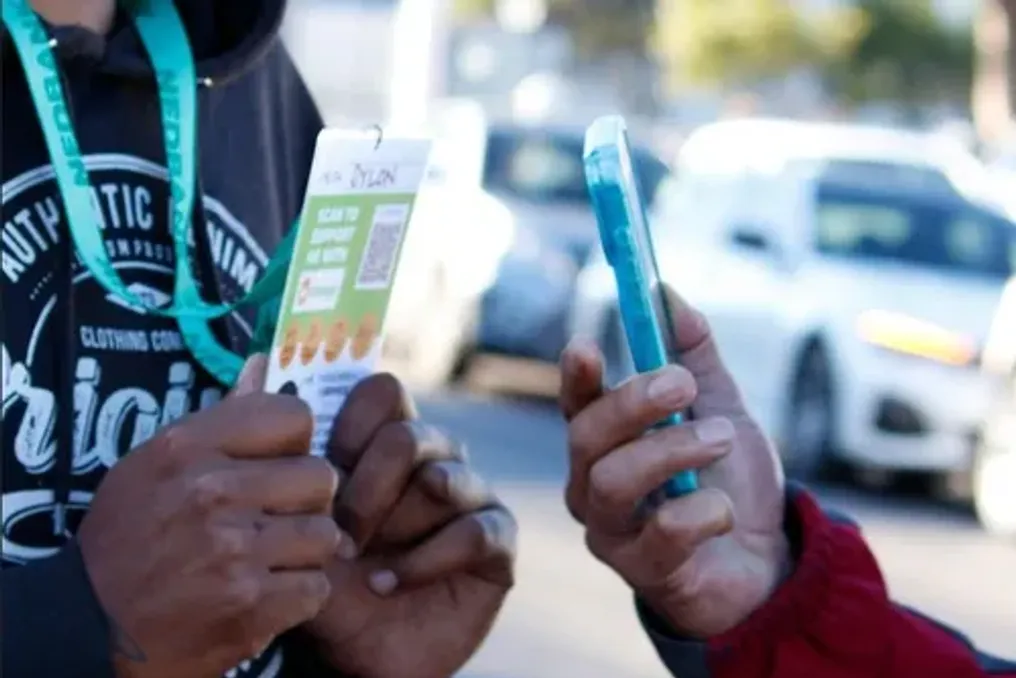
The local non-profit organization U-turn Homeless Ministries, in collaboration with Mould Empower Serve (MES), has implemented the Mi-change voucher system. The public can buy a voucher worth 15 South African Rand by scanning the SnapScan QR code, which is linked to a registered participant.
Cape Town Mayor, Jordyn Hill-Lewis, expressed his support for this cashless system, urging citizens to donate digitally. Hill-Lewis noted: 'Mi-change is exactly the innovative solution our city needs.' He added that 'every digital voucher is a step forward, and every person who donates becomes part of this recovery.'
Carmen Dickenson, National Manager of Mi-change, explained that the digital vouchers are designed to meet basic needs while connecting people with long-term rehabilitation programs. Since the vouchers are digital, they cannot be exchanged or sold on the streets. Dickenson emphasized: 'Our main goal is to provide people a way out of homelessness.' She also noted that using Mi-change digital vouchers helps ensure a safe and practical way to meet needs, reducing street begging and limiting the presence of cash on the streets.
Dickenson reported that the organization chose SnapScan, an established mobile payment application in South Africa, to provide a reliable and familiar platform for donors. When using any voucher, the participant must interact with staff from the program support service. These vouchers can be used to receive food, showers, clothing, or a bed at designated U-turn centers and MES shelters in Cape Town.
Mi-change was selected globally to receive funding of US$500,000 (R8.2 million) for a two-year period, which will help expand the program's reach and accessibility.