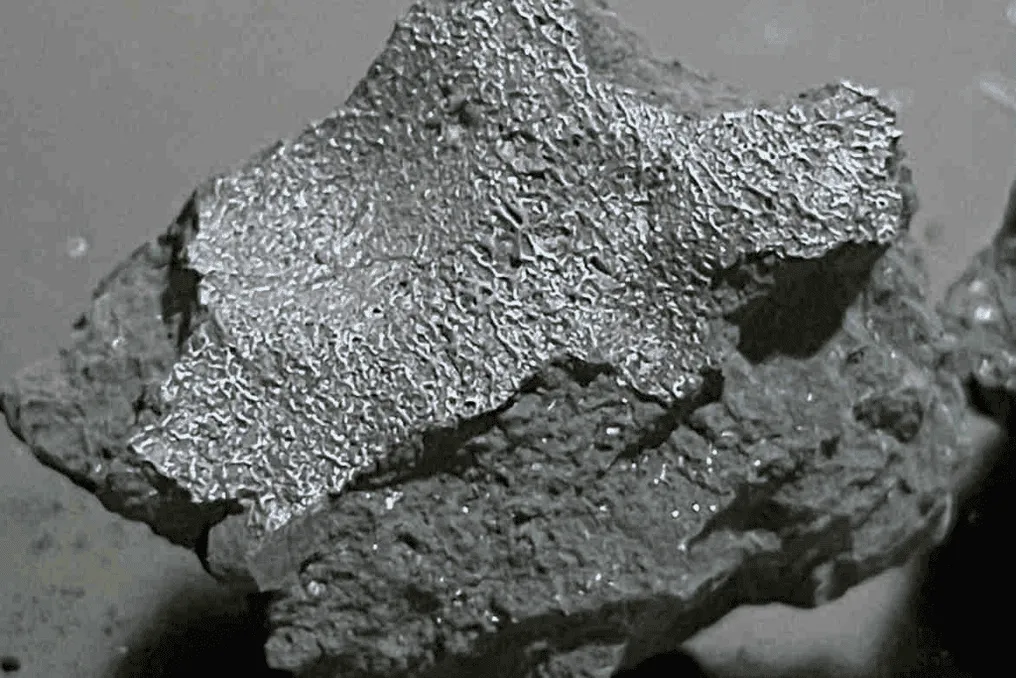
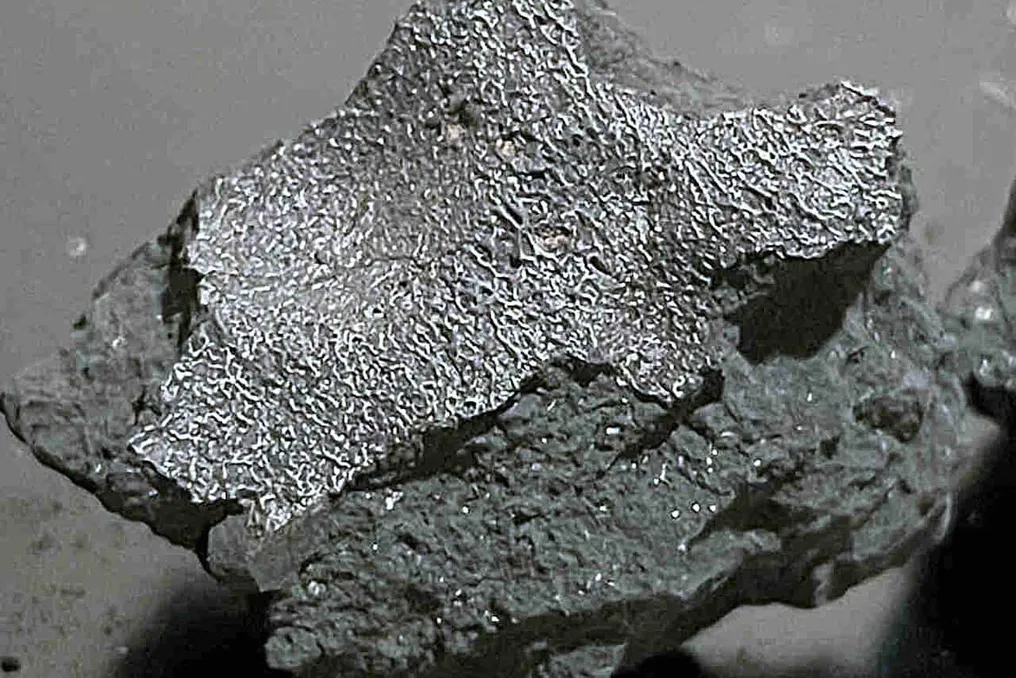
A small meteorite that reached Earth on July 16, 2024, passing through a house roof in New Jersey, USA, caused significant interest. Analysis of this carbonaceous meteorite, known as Hillsborough, revealed an even more surprising finding: evidence of trapped saltwater was discovered in its minerals.
Similar stories
Popular
Significance of the Discovery for Science
This discovery helps scientists reconstruct the chemical conditions that existed in the early bodies of the Solar System and may provide important clues regarding one of science's most enigmatic questions: how life originated on Earth, or perhaps how it arrived here.
The Search for the Origins of Life
The question of the origin of life remains one of the greatest scientific mysteries. In recent decades, knowledge about the chemical processes that could have occurred on early Earth has advanced significantly. Experiments show that simple molecules are capable of forming amino acids—organic compounds that can form proteins. Furthermore, small structures resembling cell membranes have been created in the laboratory, which is an important step toward the formation of the first cells.
The theory of evolution also provides a very reliable explanation of how single-celled organisms gave rise to the vast diversity of plants, animals, and even supposedly intelligent beings. Nevertheless, there remains a huge gap between chemistry and biology. The process by which organic molecules transformed into something capable of reproduction, evolution, and giving rise to what we call life today is not precisely known.
Panspermia Hypothesis
It is in this gap that the fascinating hypothesis known as panspermia arises. Its idea is simple, but its implications are extremely complex: perhaps life did not originate here on Earth. Perhaps it appeared elsewhere and was naturally transported cosmically to find a favorable environment to thrive.
It is important to understand that panspermia does not solve the problem of the origin of life; it merely relocates this source to another place in the Universe. The question remains open, only changing its address. The panspermia hypothesis gained great resonance in 1996 when researchers announced that the Martian meteorite ALH 84001, found in Antarctica, contained microscopic structures that might be fossils of ancient Martian bacteria.
This news generated global excitement and was even presented by the then-President of the United States. For a time, it seemed that we had finally found evidence of extraterrestrial life. However, subsequent analyses showed that these structures were created by abiotic methods, meaning exclusively geological and chemical processes unrelated to living organisms. Nevertheless, this episode was hugely significant: it demonstrated how meteorites preserve valuable information about the history of chemistry in other worlds.
Possibility of Interplanetary Travel
But can a living organism really travel through space inside a meteorite? At first glance, this sounds like a science fiction scenario, but physics does not forbid this possibility. It is known that strong impacts can eject rock fragments from a planet. There are Martian meteorites found on Earth precisely because large collisions ejected parts of Mars into space. If any microorganism was protected inside these rocks, it could theoretically embark on this completely involuntary journey.
Obstacles on the Way to Earth
Even if there is a vehicle, for life to be delivered from another world, it must arrive alive. This entails a number of difficulties. The first obstacle is surviving the initial impact, which subjects the rock to immense pressure and colossal acceleration. Therefore, when speaking of panspermia, we are always talking about microbial life. A Martian rabbit would not survive the impact, even if its burrow were completely ripped out.
Next is the journey, which can last thousands or even millions of years in space. In this environment, there is no atmosphere, radiation is intense, temperatures fluctuate enormously, and there is practically no available liquid water. Nevertheless, some terrestrial microorganisms are astonishing in their resilience. Bacterial spores and even extremely resistant organisms, such as the famous tardigrades, are capable of withstanding harsh conditions while in a dormant state. This does not mean that a tardigrade could make such a journey naturally, but it shows that the idea is not absolutely impossible.
With the right impulse and direction, the rock could reach Earth. Then the tiny cosmic travelers would face the final test. Atmospheric entry causes intense heating, but only in the outer layers of the rock. The interiors of larger meteorites remain relatively protected. After that, it would be necessary to withstand the impact with the surface and find a suitable environment to resume biological activity. This is an impressive sequence of obstacles. Each stage is extremely difficult in itself, and together they make the process extraordinarily unlikely.
Pseudo-panspermia
Nevertheless, many researchers today consider a more plausible version of this idea—pseudo-panspermia. Instead of delivering ready-made living organisms packed in meteorites and comets, the Universe might have delivered only the fundamental ingredients of life. Organic compounds, amino acids, sugars, and other complex molecules are often found in carbonaceous meteorites, such as the one found in New Jersey.
This is akin to receiving a kit with basic building blocks of life from Space. But the final assembly would happen here, using the special conditions of early Earth. It is a true 'do-it-yourself' project, only on a planetary scale.
The Hillsborough Meteorite
This is why the Hillsborough meteorite is of such great interest. The presence of preserved saltwater inside it helps reconstruct the chemical environment that existed in small bodies formed at the beginning of the Solar System. The better we understand this primary chemistry, the higher our chances of understanding what ingredients were available when life began, whether here or elsewhere.
Perhaps we will never know with absolute certainty where and when the first spark of life ignited, separating chemistry and biology. But studying these meteorites is like discovering a small time capsule providing information about the times when planets were still forming. Each one adds another detail to this cosmic puzzle. It is interesting to realize that the more we try to understand the origin of life on Earth, the more it forces us to look into space.
On July 16, 2024, a meteorite landed in a house in New Jersey. Analysis of the fragments of this meteorite revealed signs of saltwater and organic molecules originating from a primitive asteroid.
Explanation of the discovery
In the 'Olhar Espacial' column today, Marcelo Zurita explains in detail the significance of this recent scientific discovery.