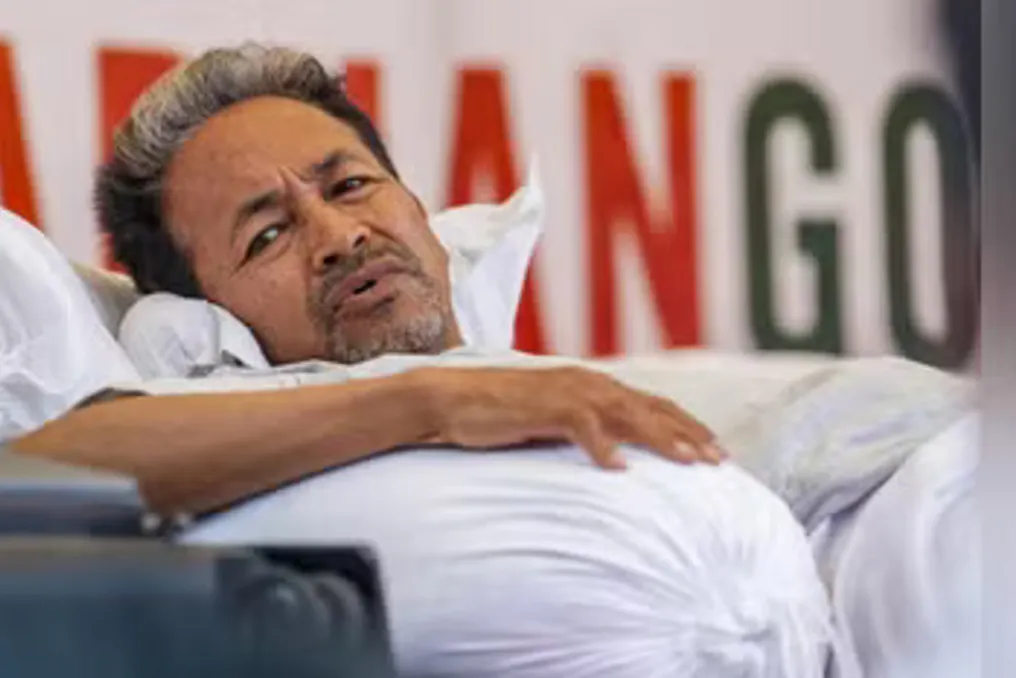
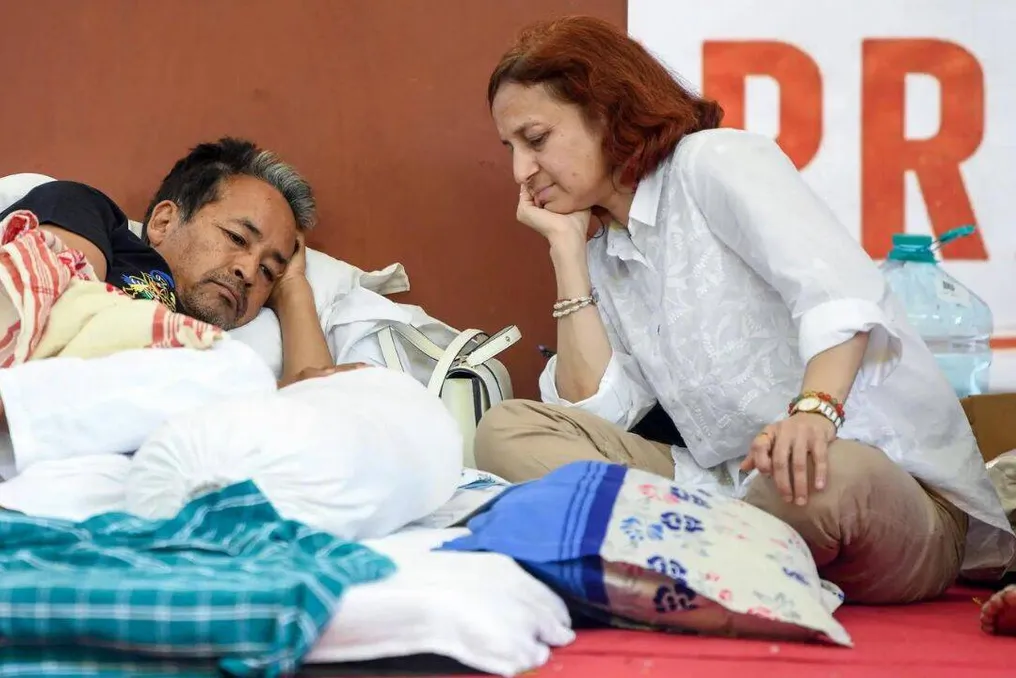
The Delhi High Court confirmed on Sunday the Central Government's decision to transfer climate activist Sonam Vanchuk to Safdarjung Hospital. The court noted that the government's actions were not arbitrary, given the deterioration of Vanchuk's health after several weeks of fasting.
Court Decision and Petition
Judge Mini Pushkarna rejected the petition filed by Vanchuk's wife, Dr. Gitanjali J Angmo, who requested his discharge from Safdarjung Hospital and transfer to a private clinic. The court did not grant any interim relief but directed the Centre to submit a report on the situation within three days.
The court emphasized that since the government decided on hospitalization due to medical condition, the court does not consider this action arbitrary. It was noted that doctors at Safdarjung Hospital were closely monitoring Vanchuk's health, and no coercion was exerted on him regarding treatment.
Government Stance and Health Condition
Judge Pushkarna took into account the government's statement that Vanchuk is not under arrest. The court ruled that the government had the right to take such measures since Vanchuk did not voluntarily go to any hospital. During the hearings, it was reported that Vanchuk's potassium level had dropped to dangerously low levels, and IV fluids were not administered because he did not consent to treatment.
The court recorded that Vanchuk would cooperate with doctors if they deemed any medical intervention necessary. Additionally, Judge Pushkarna clarified that he was not coercing him nor issuing directives, but merely noting Vanchuk's option to choose.
Family Access and Medical Monitoring
The court also considered the government's assertion that Vanchuk's wife and brother were granted unrestricted access to him. The court noted that Vanchuk's family members have been allocated a separate room and can spend time with him. Given this, an interim order is not required at this stage.
Speaking on behalf of the Centre, Additional Solicitor General Chetan Sharma stated that Vanchuk's health was deteriorating after 18 days of fasting under current weather conditions. Sharma added that prolonged fasting can lead to ketosis, shock, hypoglycemia, and kidney dysfunction. He stated that Vanchuk was receiving treatment in the emergency department under the supervision of two senior doctors and referred to recent medical reports.
Defense Arguments and Proposals
ASG informed the court that Vanchuk agreed to take electrolytes but requested them without sugar. When the court asked if he suffered from diabetes, Sharma explained that he did not. Citing the College order of July 16, which mandates continuous medical monitoring, Sharma argued that doctors should be allowed to provide reasonable medical intervention if Vanchuk's condition worsens. He also defended the authenticity of the medical reports, stating that they were conducted at Safdarjung Hospital, AIIMS, Mahajan Imaging, and a private laboratory.
Regarding the petition for unlimited access for family and legal consultants, Sharma stated: 'This is a hospital, not a courtroom.' When asked about providing accommodation for companions, the doctor informed the bench that a separate room had been arranged. The ASG also proposed transferring Vanchuk to AIIMS if necessary.
Grounds for Filing the Petition
The petition was filed after Vanchuk was taken to Safdarjung Hospital by Delhi police on Saturday, on the 21st day of his hunger strike. His wife claimed there was no medical emergency requiring him to be removed from the protest site and accused the authorities of using the 'cover advantage' of a previously issued High Court order on medical monitoring. The petition stated that the forcible removal was neither medically necessary nor legally justified and constituted a clear violation of Shri Sonam Vanchuk's fundamental rights.
Angmo also mentioned discrepancies in Vanchuk's potassium test results. The petition alleged that the blood sample was provided to the petitioner at 10:30 PM after an unexplained delay of almost 10.5 hours, and the test results showed a potassium level of 3.6 mg, significantly higher than the previously stated level of 2.9 mg.