
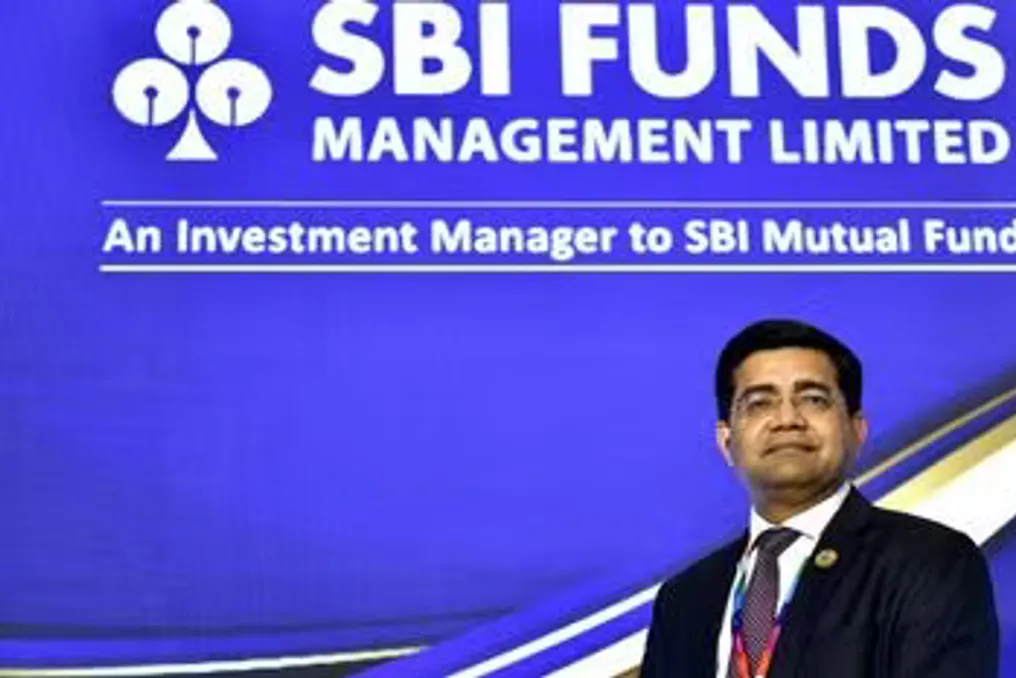
SBI Funds Management demonstrated a more modest debut in the stock market on Tuesday, July 21. Despite high demand for the company's Initial Public Offering (IPO) worth ₹9,812.91 crore, the shares were listed with only a 7 percent premium.
Stock Market Debut
The shares of India's largest asset management company (AMC) were listed on the NSE at ₹613.30, representing a premium of ₹39.30 or 6.85 percent above the issue price of ₹574 per share. On the BSE, the shares debuted at ₹610, which is ₹36, or 6.27 percent higher.
This debut was below the expectations of 'grey market' participants. Before listing, the company's unlisted shares were trading around ₹669.50, suggesting a premium of ₹95.50 per share, or 16.64 percent over the issue price, according to sources tracking unofficial market activity.
Emkay Analysts' Recommendations
Brokerage firm Emkay Global began covering SBI Funds Management with a 'Buy' recommendation and set a target price of ₹750 for June 2027, implying a potential growth of about 31 percent from the IPO allotment price. The broker values the company based on a projected Price-to-Earnings (P/E) multiple of 39 for FY28.
Analysts Avinash Singh and Mahek Shah noted in their research that the target multiple aligns with major competitors such as ICICI AMC and NAM. They believe that the SBI brand, extensive distribution network, and low penetration among SBI Bank customers give SBI AMC scope for higher long-term growth, justifying the premium valuation.
Three Key Growth Drivers
According to the broker, the positive outlook is based on three main pillars. Firstly, the SBI brand, vast distribution network, and significant underutilization of SBI mutual funds within the SBI Bank channel—around 5.5 million customers compared to 21 million salary accounts—allow the company to benefit from the long-term growth of Indian mutual funds, especially in the Bharat region, including B-30 level towns and villages. Secondly, the ongoing shift in asset structure towards higher-yielding products like equities and Alternative Investment Funds (AIF/PMS) is expected to support revenue growth. Thirdly, economies of scale are likely to improve operating leverage, with EBITDA projected to grow at a Compound Annual Growth Rate (CAGR) of about 17 percent from FY26 to FY29.
The broker noted that as Indians' needs for savings and investments evolve, the middle class is increasingly using mutual funds as a primary investment tool, and SBI AMC possesses all the necessary elements to become the 'asset manager for every Indian,' similar to how its parent company became the 'bank for every Indian.'
Risks and IPO Details
However, the broker warned of significant risks to the stock, including loss of market share within SBI, persistently low scheme efficiency, prolonged weakness in equity markets, and adverse regulatory changes.
The Initial Public Offering (IPO) worth ₹9,812.91 crore consisted exclusively of an Offer for Sale (OFS), with promoters State Bank of India (SBI) and Amundi India Holding selling a total of 171 million shares. The offering was priced in the range of ₹545–₹574 per share, the lot size was 26 shares, and the subscription period was from July 14 to July 16, 2026.
According to NSE data, the IPO was subscribed 41.66 times overall. The Qualified Institutional Buyer (QIB) portion was subscribed 140.11 times, and the Non-Institutional Investor (NII) category was subscribed 22.51 times. The retail investor segment was subscribed 3.60 times. The basis for allotment was approved on July 17, and the issue price was set at ₹574 per share. Since the offering was entirely an OFS, SBI Funds Management will not receive funds from the IPO; net proceeds after deducting offer-related expenses and applicable taxes will go to the sellers.