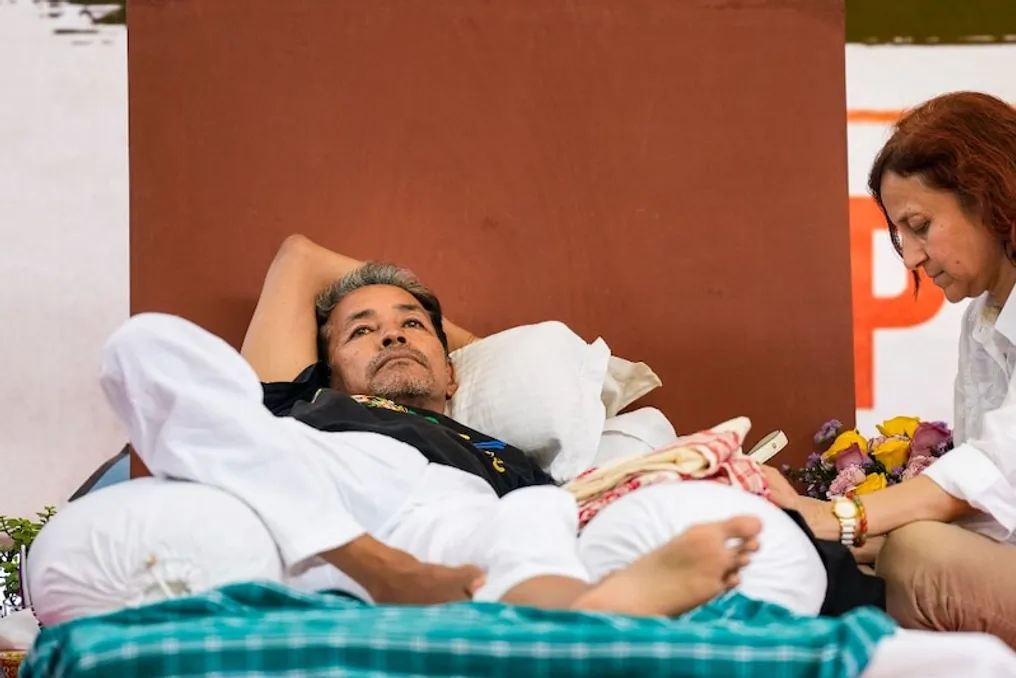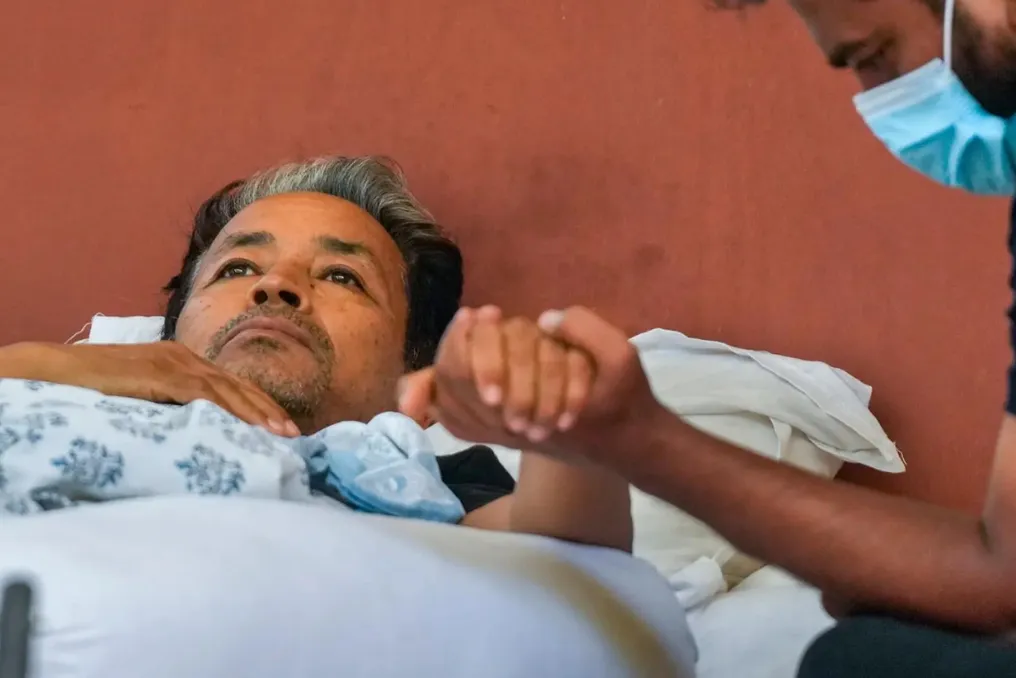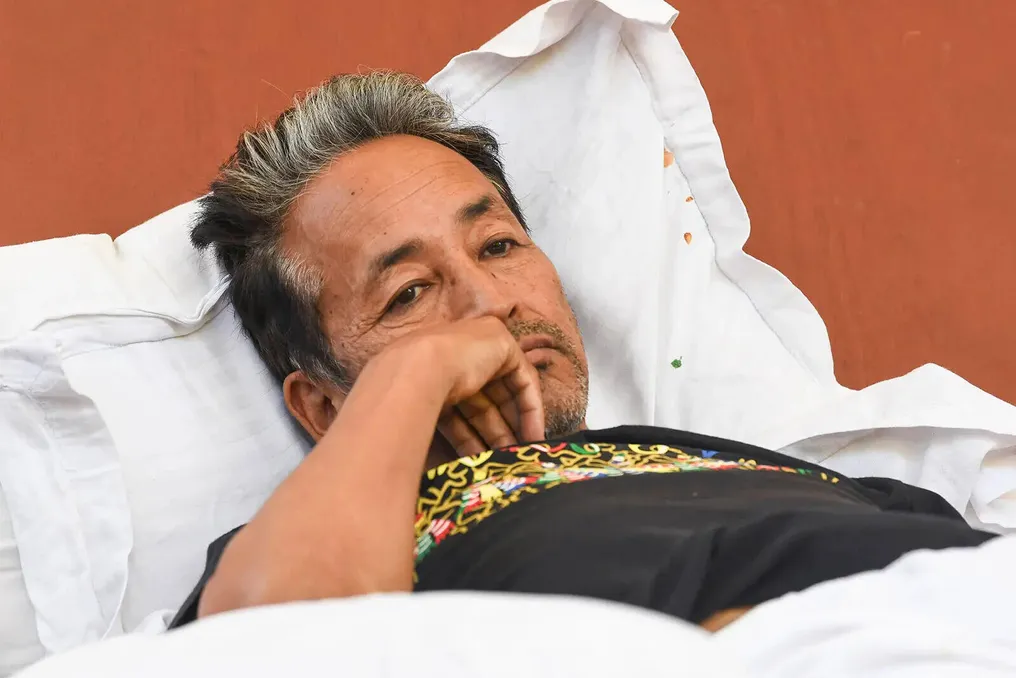
Climate activist Sonam Wangchuk continues to reject medical recommendations regarding the intake of intravenous fluids and glucose. Meanwhile, his sugar levels remain low, and his serum potassium level has dropped to 3.2 mEq/L.
Climate activist Sonam Wangchuk continues to reject medical recommendations regarding the intake of intravenous fluids and glucose. Meanwhile, his sugar levels remain low, and his serum potassium level has dropped to 3.2 mEq/L.
According to the latest bulletin released by VMMC & Safdarjung Hospital on Tuesday morning, laboratory tests revealed persistent pancytopenia—a condition characterized by a decrease in blood cell count. Despite this, Wangchuk's vital signs remain stable.
Doctors note that Wangchuk is currently receiving therapy with oral rehydration salts (ORS) and supplementary internal potassium intake. Nevertheless, he stubbornly refuses intravenous fluids and glucose, despite repeated warnings from medical staff.
Due to ongoing mild or moderate dehydration, persistent deviations in laboratory parameters, and physiological stress associated with prolonged fasting, constant clinical monitoring and medical observation remain critically important for his recovery and the timely detection of any possible complications.
Wangchuk is under close observation by a multidisciplinary team of specialists from VMMC & Safdarjung Hospital and AIIMS, New Delhi. The hospital confirmed that all necessary medical care is being provided, and his clinical condition is constantly being assessed. Further treatment will be determined by his progress and the results of sequential laboratory tests.
Encouraging information has emerged regarding the condition of Sonam Wangchuk, who is receiving treatment at Safdarjung Hospital in Delhi. According to an update published by the hospital on Monday evening, the patient's main vital signs have stabilized completely.
Although her blood sugar level remains below normal, there is an improvement in other important blood indicators. Doctors continue to monitor her condition closely. Sonam Wangchuk's treatment is taking place at VMMC and Safdarjung Hospitals. Following the administration of ORS solutions and potassium syrup, blood test results have improved, although the sugar level remains low.
According to news agency PTI, a special team of doctors from Safdarjung and AIIMS is continuously monitoring her health. The goal of this team is to prevent medical complications by addressing dehydration. Medical staff asserts that the patient is receiving all necessary care, and further treatment will be determined based on recovery and laboratory results.
Meanwhile, Sonam Wangchuk has stated that her fast will continue. In a handwritten note released by Safdarjung Hospital, she explained her decision to continue the protest based on how young people participating in peaceful demonstrations were treated. She emphasized that the fast will not end until the young representatives are granted permission to meet with parliamentarians in the parliament building or are allowed access to them in the hospital. Furthermore, she expressed hope that the government will hold the education minister accountable by then.
Sonam Wangchuk has been at Safdarjung Hospital since July 18. She was brought from Jantar Mantar to the hospital by Delhi police after a 21-day fast. Supporters claim she was detained illegally, but the administration denies this accusation.
Activist Sonam Wangchuk was hospitalized at Safdarjung Hospital in Delhi on Saturday following a 20-day fast. Medical staff are closely monitoring his condition and urgently requesting the family to allow treatment to begin without further delay, according to sources.
Subsequently, his wife, Gitanjali J Angmo, approached the hospital requesting that no procedures be performed without her consent and demanded discharge, citing insufficient transparency in medical care.
The hospital reported in a medical update that Wangchuk was brought to VMMC and Safdarjung Hospital by Delhi police at 7:40 AM after completing a 20-day fast during which he consumed no solid food. Upon arrival, he exhibited general weakness but was conscious, with stable pulse, blood pressure, and oxygen saturation. However, doctors noted signs of dehydration.
Blood tests showed a compensated acidotic reaction and low serum potassium levels. Blood sugar was 78 mg/dL, and a repeat test confirmed a persistent decrease in serum potassium. Urine ketones, which were 1+ upon admission, increased to 3+ by noon. A source stated that Wangchuk remains under close observation at Safdarjung Hospital due to dehydration, low potassium, and elevated ketones, which, if significantly increased along with dehydration, can threaten kidney function and other metabolic complications.
Despite the hospital's recommendation for intravenous fluids, Wangchuk refused IV treatment, oral rehydration solutions, and all other medications. He continues to be monitored, and he is being advised regarding accepting treatment in the interest of his health.
Meanwhile, Wangchuk's personal physician, Dr. Nitin Dighe, questioned the hospital's assessment of the activist's condition and accused it of lack of transparency in medical services. He stated that his team had conducted examinations over the past 20 days, but he and his lawyers were not allowed to meet the patient while his wife was present. When he asked about the reason for hospitalization, he was told he had potassium deficiency. However, as Dighe noted, when a blood sample was taken yesterday at 3 PM, the potassium level was normal—4.8, which is above the normal range of 3.5. Now, he is being informed of this drop in the indicator. Furthermore, the hospital refuses to provide reports to Wangchuk's wife, which he finds suspicious, so he is taking blood for his own analysis because he does not trust the government laboratory.
Dighe added that Wangchuk's wife officially requested the hospital to discharge him as soon as possible and allow him to transfer to another medical facility. She also mentioned that the march to Parliament scheduled for July 20 will take place, and he plans to participate, but if he cannot attend, his wife will join. Previously, on Friday evening, Wangchuk expressed his determination to continue the fast despite his deteriorating health, stating that he had lost '20% of his body' during the hunger strike. Wangchuk's fast has been ongoing since June 28 in support of a protest led by CJP against alleged irregularities in the NEET exam and reports of student deaths related to the scandal. The Delhi High Court is monitoring his health condition and has directed authorities to conduct regular medical assessments and provide necessary assistance.