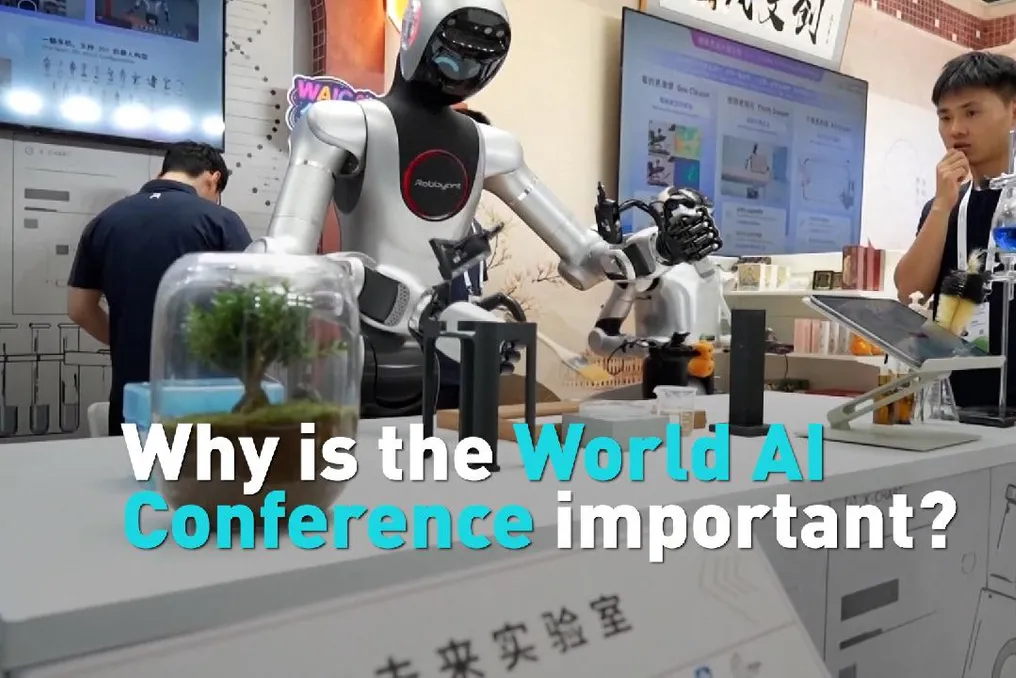
As the World Artificial Intelligence Conference in Shanghai concluded on Monday, July 20, CGTN journalist Zhang Yinzhe spoke with Yagos Hajiyannis, Director of Chief Experience at the Multimodal Media Lab in Vancouver, Canada.
As the World Artificial Intelligence Conference in Shanghai concluded on Monday, July 20, CGTN journalist Zhang Yinzhe spoke with Yagos Hajiyannis, Director of Chief Experience at the Multimodal Media Lab in Vancouver, Canada.
The conversation covered the importance of the conference itself, as well as the speech by Chinese President Xi Jinping.
The Minister of Science, Research and Technology, Hossein Simai-Sarraf, arrived in Islamabad on Tuesday to participate in the sixth meeting of the Organization for Economic Co-operation (ECO) Ministers of Science and to hold talks with high-ranking Pakistani officials.
Upon arrival at Islamabad International Airport, Simai-Sarraf was met by Ambassador Reza Amiri-Mokaddam, as well as representatives from the Ministry of Science and Technology of Pakistan, according to the IRNA agency. During his visit, the minister intends to participate in the meeting of the ECO Science Fund Board of Trustees and deliver a keynote speech at the sixth ECO ministerial meeting.
The agenda also includes the issue of electing the next president of the ECO Science Fund, which is currently headed by Kamel Tayebi from Iran. Over the three days of his stay, Simai-Sarraf plans to meet with the Pakistani Minister of Science and Technology and the Chairman of the Higher Education Commission (HEC), visit several leading universities in Islamabad, tour the ECO Science Fund, and hold discussions with Persian language professors.
In parallel with the seventh Turkish Educational Technology Summit (TETZ 2026), held in Istanbul from June 26 to 28, the Pakistani State Minister for Federal Education and Professional Training, Wajeeha Kamar, met with Simai-Sarraf. She proposed that the two countries establish a joint scientific working group.
According to Kamar, recent achievements of Iran on the international stage serve as a source of inspiration for many countries, including Pakistan. The official representative emphasized the emotional, spiritual, historical, and cultural ties between the two states, stating that Pakistan will support Iran's initiatives and actions, and that relations between Tehran and Islamabad will remain strong and stable based on these commonalities. She added that both sides need to develop cooperation to fully utilize each other's potential.
Wajeeha Kamar noted that deep linguistic, religious, and civilizational ties contribute to the development of interaction, and Pakistan can benefit from Iran's valuable experience in areas such as skills training, agriculture, construction, and manufacturing. For his part, Simai-Sarraf stated that the current scientific, academic, and technological cooperation between Iran and Pakistan does not meet the potential of both sides. He also highlighted the need to establish departments for Persian and Urdu languages in the respective countries.
The Minister of Science announced the readiness of the Sistan-Baluchistan University to accept Pakistani students, emphasizing the university's scientific opportunities. Furthermore, on the sidelines of the 43rd Session of the UNESCO General Conference in Samarkand, Uzbekistan, from October 30 to November 13, 2024, Simai-Sarraf met with Wajeeha Kamar. During this meeting, the parties emphasized cultural and civilizational bonds and called for the expansion of scientific, academic, and educational cooperation. The Pakistani minister highly praised Iran's achievements in technology and digital transformation, while Simai-Sarraf expressed the country's readiness to share scientific and technological experience with Pakistan.
For those planning to replace an old television with a more updated model, this is an opportune time to make the switch. Three options of 4K Smart TVs available on Amazon have been selected, standing out for their good combination of features and cost-benefit. All models presented feature advanced connectivity, high image definition, and integration with voice assistants.
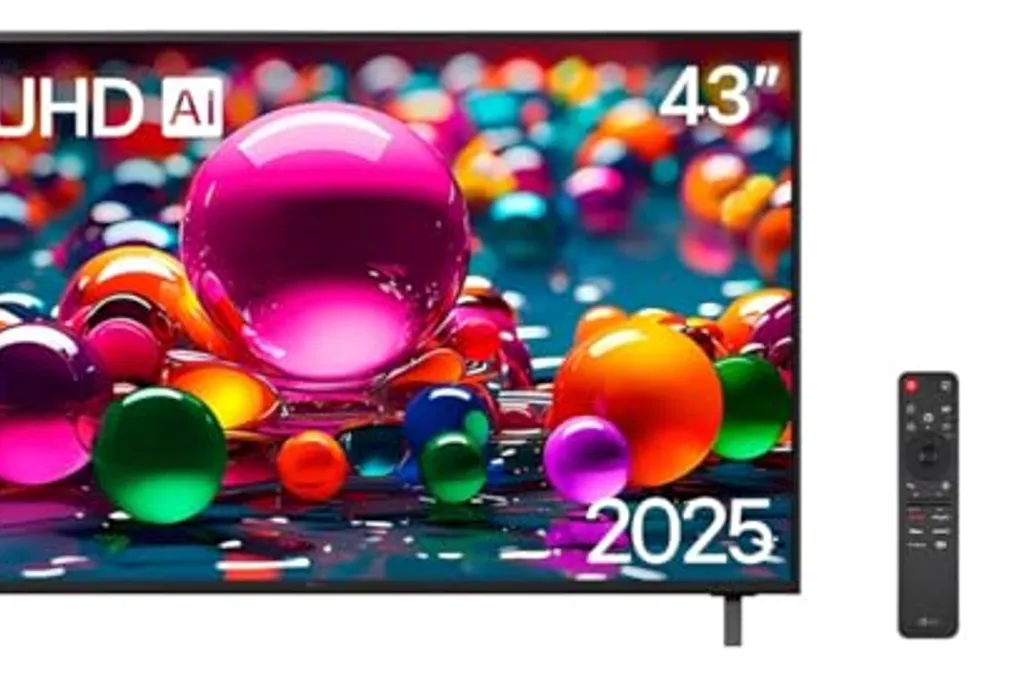
Among the suggestions, the LG 43AU801C0SA is a 43-inch Smart TV with 4K UHD resolution and uses the webOS system, providing an easy-to-use interface and quick access to streaming services. This model supports HDR and has upscaling technology, which enhances the quality of content played in lower resolutions, making it ideal for those looking for a compact TV with modern features.
Another mentioned option is the Semp 43S62, which operates natively with Google TV. This ensures access to the Google Play Store, integration with Google Assistant, and built-in Chromecast support. Its 43-inch HVA LED panel displays 4K image with HDR10+, and the audio system features Dolby Audio. In terms of connectivity, it offers Wi-Fi, Bluetooth, and three HDMI ports, forming a robust set for its category.
The LG 50UA85 stands out as the most complete model in this selection. It is equipped with the 8th generation α7 AI processor, which uses artificial intelligence to automatically adjust sound and image quality according to the displayed material. Furthermore, the Super Upscaling 4K feature enhances videos regardless of their resolution, while webOS 25 brings a renewed interface, integrated Google Cast, and Alexa compatibility. Navigation becomes simple thanks to the Smart Magic remote.
It is important to note that promotions like these can frequently change the conditions offered by Amazon. If any of the models attract the consumer's interest, it is recommended to check availability immediately before stock or offers change. Buying a good television can significantly improve daily life, and this may be the ideal time to make that purchase.
Meta has initiated a program in Brazil aimed at developers, students, researchers, and professionals interested in creating new applications for its smart glasses. This initiative seeks to expand the range of functionalities available on the device.
In collaboration with CEIA-UFG, the program offers training, a hackathon, and cash prizes. Furthermore, it fosters a crucial debate accompanying the launch of these glasses: the issue of user privacy.
After reaching millions of users, Meta's smart glasses are entering a new phase where the company aims to increase the number of compatible applications, betting on Brazilian talent to accelerate this process. The AI Glasses Brazil Program, developed in partnership with the Center of Excellence in Artificial Intelligence of the Federal University of Goiás (CEIA-UFG), invites participants to design new applications using features such as camera, audio, voice commands, and artificial intelligence.
Proposals can cover various areas, including health, education, accessibility, tourism, productivity, and creativity. The program is structured in several phases: online technical training; a virtual idea marathon with mentoring and lectures; an in-person hackathon held at Meta's headquarters in São Paulo for selected teams; and finally, cash prizes and the delivery of smart glasses to the winners.
Registration remains open until July 30th. Teams advancing to the in-person phase will have their transportation and accommodation costs covered by the company. The main winners will receive US$3,000 (approximately R$15,000), while second and third place winners will be awarded US$2,000 (about R$10,000) and US$1,000 (about R$5,000), respectively. All finalists will also receive a pair of Meta glasses.
The device's capabilities go beyond simple photography and video recording. For example, it is possible to send images via WhatsApp using only voice commands or view data directly on the lenses and perform actions through gestures. Despite these functionalities, the application offering is still limited, motivating Meta to provide a development kit to attract new solution creators.
With the increase in functions, concerns grow. A notable example was the development by Harvard students of a facial recognition system for Meta glasses, capable of displaying internet information about filmed people. Additionally, there have been reports of the equipment being used by United States immigration agents during operations, intensifying the debate on surveillance.
Another sensitive aspect relates to media storage; photos and videos are kept in Meta's cloud and can be used to train its AI models, including with the help of human reviewers. The company also had to respond to attempts by users to disable the recording LED. Currently, the glasses stop recording if this indicator is damaged. Although the program opens doors for innovation, it is expected that these new applications will evolve alongside mechanisms that reinforce privacy protection.