On the island of Ithaca, the mythical hero Odysseus was revered in a sanctuary by the Greeks. Odysseus, the central character of Christopher Nolan's film, originates from Homer's epic poem, written in Ancient Greece around the 8th century BC.
On the island of Ithaca, the mythical hero Odysseus was revered in a sanctuary by the Greeks. Odysseus, the central character of Christopher Nolan's film, originates from Homer's epic poem, written in Ancient Greece around the 8th century BC.
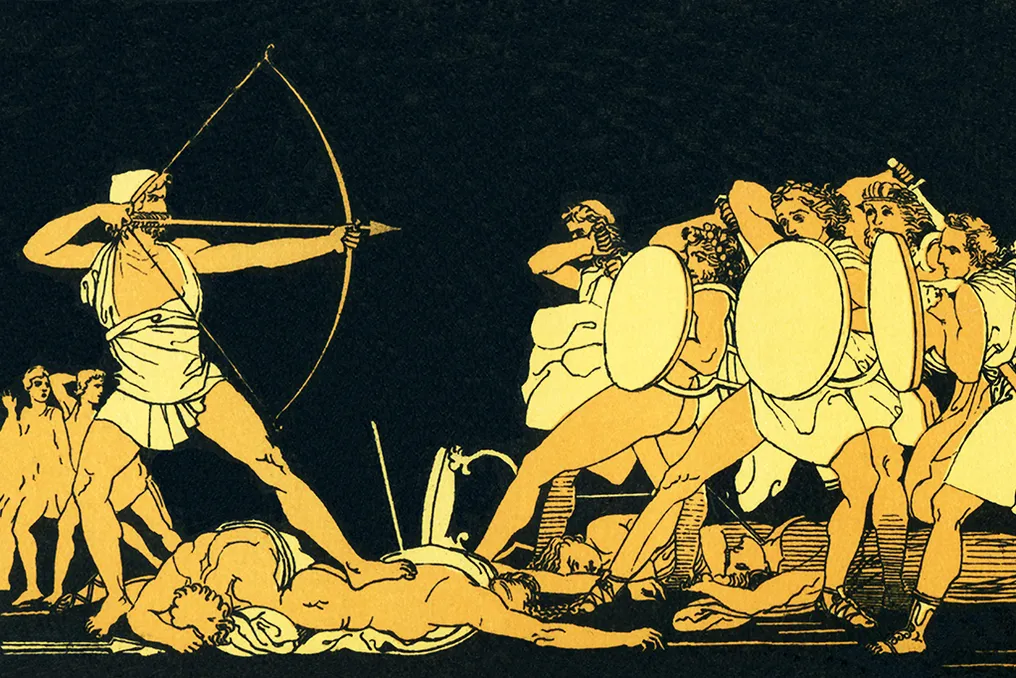
In this work, the hero traverses gods, monsters, and various obstacles during a ten-year journey to return to his native island after the Trojan War. Although the events are fictional, they intertwine with real aspects of the society of the time, leading researchers to debate whether Odysseus had a real existence, with most evidence pointing to him being a purely literary creation.
Despite his fictional nature, Odysseus's relevance to the Greeks extended beyond the literary sphere, entering the civic and religious life of the population. New discoveries indicate that the ruins of Mount Exogi, located on Ithaca, were used to honor the hero. Approximately 2,400 years ago, the island's inhabitants venerated him as a figure of devotion.
This site, known as the Homeric School, consists of two towers connected by stairs. In addition to serving as a central point in the region, it was responsible for managing water resources. The site has been studied for decades, revealing over one hundred coins (suggesting long-distance travel to Ithaca), as well as cups, jewelry, thousands of ceramic fragments and vessels, some with seals and inscriptions, including names of deities.
However, it was only through a series of excavations initiated in 2018 that researchers located Odysseus's name engraved on three distinct tiles, situated in an area dedicated to religious rituals. Two of these tiles contained the inscription 'for Odysseus,' while the third read 'of Odysseus.' These inscriptions suggest that the sanctuary was dedicated to the hero and that visitors left offerings in his honor. Additionally, a small bronze bust representing Odysseus was found.
Some scholars speculate that Penelope, Odysseus's wife, was also an object of worship at the site. This theory arose due to the discovery of several weaving tools during the excavations, which could be an allusion to the character, famous for her loom. Archaeologists estimate that the cult of the hero began around the 9th century BC, when his narrative was still transmitted orally, remaining active for about a thousand years until the 8th century BC, the time when Homer recorded the story in writing.
Furthermore, a document previously found in Turkey mentions the existence of a sanctuary dedicated to Odysseus, which likely refers to the same site on Ithaca. This case is not isolated; other heroes of Greek mythology, such as Jason and Hercules, have also had their places of worship and sanctuaries identified by archaeologists.
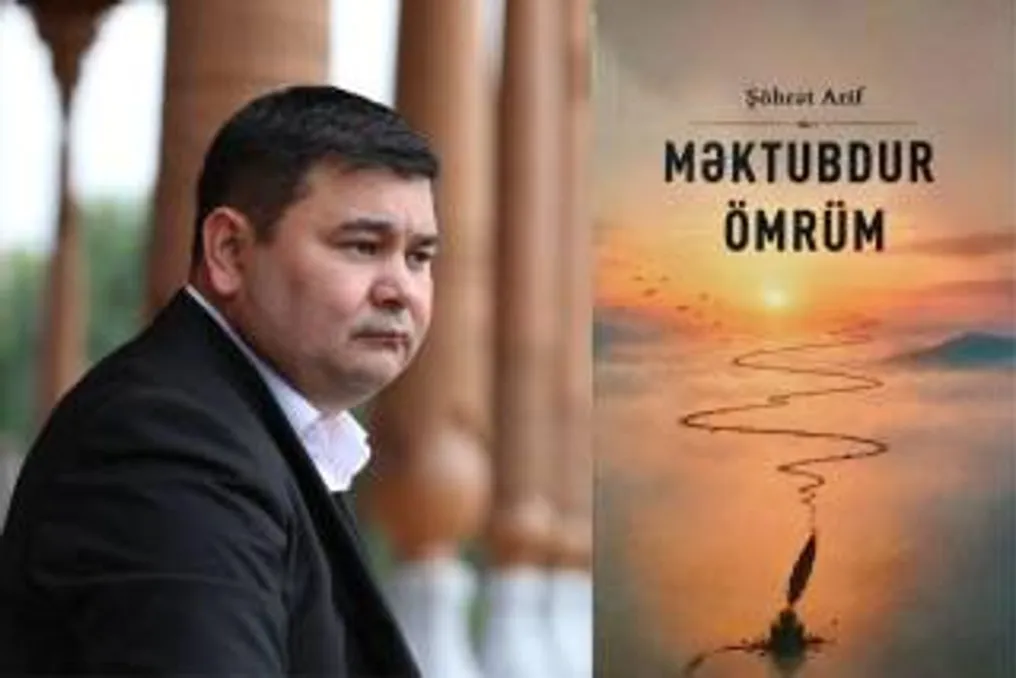
The renowned Uzbek cultural figure and recipient of the 'Dostlik' order, Shuhrat Orif, has released his book titled 'Maktubdir Umrim' in the Azerbaijani language in Baku.
According to information from the press department of the Union of Writers of Uzbekistan, well-known representatives of literature and culture from Uzbekistan and Azerbaijan were involved in the editorial board. The book was translated into Azerbaijani by the poet-publicist and member of the Azerbaijan Writers Union, Shokhmamed Tog'larugli, as well as by Akbar Qo'shali, a laureate of the International Literary Prize 'Alash.'
A presentation of the book is planned to be held in the city of Shusha. Shuhrat Orif's works have already been translated into more than ten languages worldwide, reaching international readers. The publication of 'Maktubdir Umrim' in Azerbaijani has become one of the literary processes strengthening literary ties between Uzbekistan and Azerbaijan.
The uniqueness of Shuhrat Orif's work lies in his ability to combine delicate feelings and experiences with deep life observations and philosophical reflections. His poems and epics, taken from collections such as 'Shom tovushi', are filled with life conclusions and a desire to deeply understand the world and human nature. In his work, Uzbek traditions of high poetic art are skillfully connected with modern literary and aesthetic needs and new interpretations.
The poet's lyricism comes from the heart, rich in bright colors and fiery motives. He reveals the most hidden and tender facets of the human soul through sincere confessions and suffering. The author expresses the complex human soul and inner experiences with simple, yet very touching, lively, and figurative words.
In Tashkent, in a small courtyard located behind the blue gates of house No. 84 on Shokhjahon Street in the Yakkasaray district of the capital, the landscape exhibition by artist Bekzod Abdullaev titled 'Watercolor is Jazz' is being held.
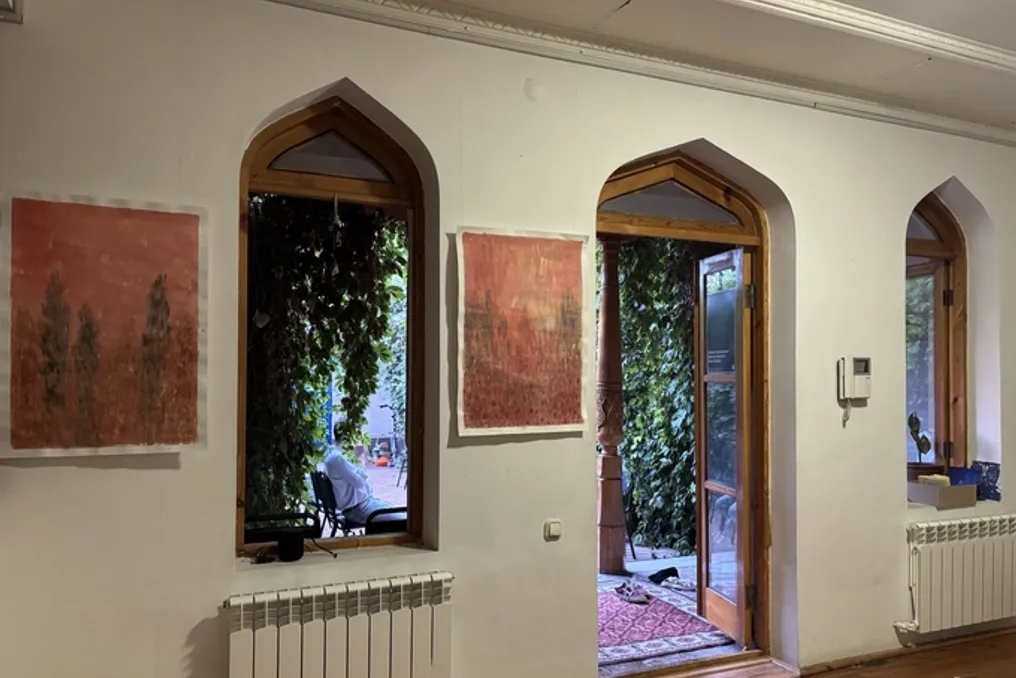
This courtyard is lush with greenery, and a narrow path leads to an old two-story mud-brick house whose walls and balcony are covered in ivy. The house, which has been rented by the 'Shams-i-Kamar' theater studio since last autumn, now functions as a co-working space for creative people, where film screenings, master classes, and various exhibitions are held. Within this intimate space, known as the 'Shokhjahon 84' House of Creativity, young artist Bekzod Abdullaev presented his exposition 'Landscapes. Watercolor Series' over the weekend.
Visitors are asked to remove their shoes before entering, creating the feeling of visiting a home rather than attending a traditional gallery. About twenty A3 watercolors without framing are hung on the plain white walls. The artist deliberately refrained from titles so that the viewer can interpret the works independently, without being constrained by the author's meanings.
Bekzod Abdullaev explains his approach by stating that it was important for him simply to paint and enjoy the process itself, allowing the viewer to see in the paintings what resonates with them personally.
At first glance, the watercolors may appear to be abstract landscapes, showing outlines of trees, a sunset sky, as well as circles imitating the sun or moon through the foliage. However, upon closer inspection, the image transforms into spots, strokes, swirls, and soft gradients, reminiscent of fading memories.
These works were created over the past six months and combine images from the author's memories of summer holidays at his grandmother's village, evening walks near the 'Cosmonauts' metro station, and quiet moments among trees in city parks. Abdullaev describes his watercolors as evocative and fleeting, emphasizing that they convey mood and atmosphere rather than striving for realism, leaving room for personal associations for each viewer.
The artist uses watercolor not only as a technique mastered during his studies in book graphics at the Kamoliddin Bekzod Institute of Arts and Design but also as a preferred tool for landscapes due to its unpredictability and freedom. He notes that unlike oil, where control over the process is high, watercolor always leaves room for chance. Although working with watercolor requires high precision due to the difficulty of corrections, it is precisely in this unpredictability, according to Abdullaev, that its charm lies. He compares oil to music recorded in a studio, and watercolor to jazz, which demands improvisation and trust in feeling.
This improvisational nature is evident in every work: part of the composition is determined by the author, while another part is shaped by the properties of the watercolor itself—its fluidity, transparency, and ability to suddenly change shape. The artist believes that the intimate setting enhances the personal connection between the viewer and the works, allowing them to immerse themselves in a state of silence contrasting with the city noise.
The series of watercolor landscapes by Bekzod Abdullaev can be viewed until August 18th. The 'Shokhjahon 84' Creative House is located at Shokhjahon Street (Shahjahkhan), 84, and welcomes visitors daily from 09:00 to 21:00. Entry to the exhibition is free.
An author who had not previously played Splatoon described the franchise as a fun paintball-style battle where it is easy to hit targets. After the announcement of the single-player game from Nintendo, the author decided to try this new experience.
Splatoon Raiders will be released on July 23rd as an exclusive for Nintendo Switch 2 at a price of $279.90 in digital version. This game is the first spin-off of the series, and its concept is quite bold: transforming a popular multiplayer phenomenon into an adventure with elements of exploration and treasure hunting. The question arises as to how successfully this approach will suit those encountering the franchise for the first time.
The Splatoon franchise has already sold over 25 million copies on the Switch platform, with only Splatoon 3 exceeding the 10 million mark. These figures make the series a cultural phenomenon in Japan. The release of the first spin-off as an exclusive for Switch 2, which concluded the last fiscal year with nearly 20 million console sales, is not coincidental. Nintendo is leveraging an established intellectual property to drive sales of the new console while simultaneously expanding the brand to an audience that traditionally avoids competitive multiplayer. This is a dual move in the portfolio and audience attraction, explaining why this 'niche' solo adventure received its own Direct presentation and a major advertising campaign.
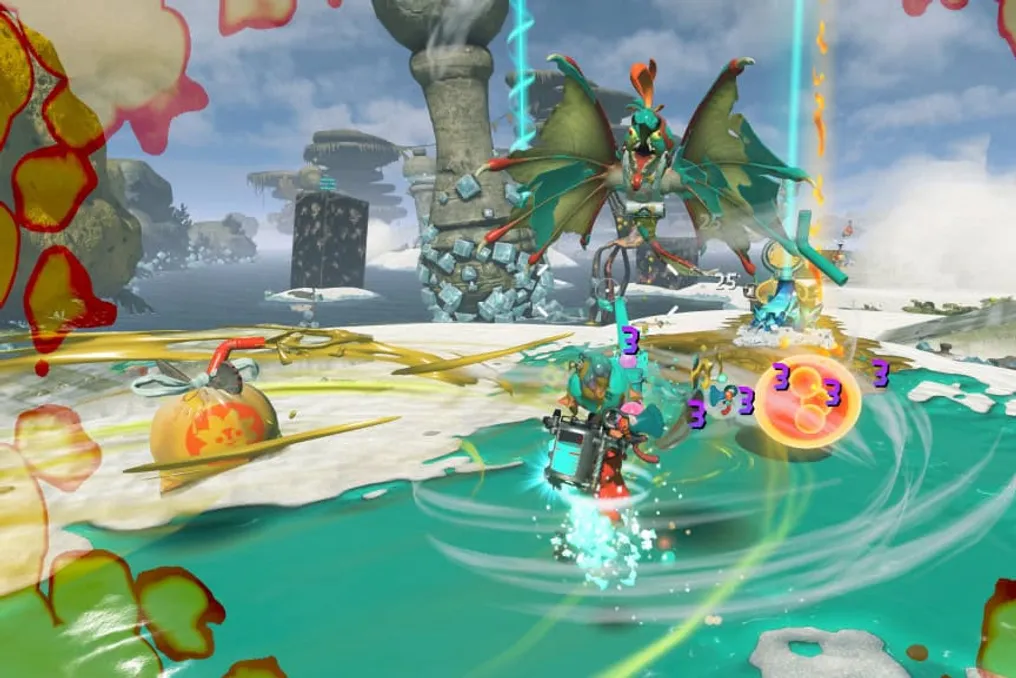
Splatoon Raiders is an exploration-focused adventure game where the player acts as a mechanic traveling with the Deep Cut trio across seas and islands in search of treasures. The action begins on the introductory island of Leehlo Island, specifically Pantree Beach, which serves as a tutorial zone for meeting the first Salmonids and mastering gameplay mechanics. For those unfamiliar with the franchise, the learning curve feels pleasant. The narrative is concise, which is acceptable since depth is not required here. The atmosphere is light, almost childlike, featuring cute and charismatic characters who communicate not through words, but only through growls, which the author believes is part of the game's charm. The game includes post-credits content that the author has not yet had time to check.
Among the game's merits are the engaging exploration with a pleasant pace, the presence of options and tools that simplify gameplay without giving everything away immediately, and the captivating character progression system. Among the drawbacks are the lack of Portuguese language support (neither interface nor subtitles), and the fact that gyroscope control can create difficulties depending on how the console is held. Furthermore, finding items other than crystals can sometimes be difficult.
The main appeal of the game is the feeling it evokes during play: the desire to see the next island. Exploration occurs by collecting Spirhalite shards, which are crystals that power upgrades, with the ultimate goal being the search for treasures. However, the levels become increasingly difficult. An important point is that falling into the water on the islands causes damage, and recovery requires submerging in paint. This, combined with the paint replenishment mechanic, creates a system that prevents combat from becoming automatic. The player does not undertake this journey alone: a satellite robot enhances jumps and, frankly, saves the player more often than one would like to admit during battles. It also functions as a drill for extracting crystals stuck in the ground, making it a true partner.
One of the most engaging aspects was character development. In addition to crystals, various materials—buckets, pots, wheels—are collected, which are used to gain experience and invest in specific upgrades. As progress is made, areas open up where weapons and gear can be upgraded, as well as the platform and the ship itself. A distinctive feature of the design is that even if the player fails in raids, they do not leave without a reward, continuing to gain experience and level up, which is critical for obtaining upgrades and further growth. The author notes that even after getting stuck on a level, they continue to 'farm' to become strong enough to proceed to the next stages. A special highlight was the creation of gadgets, each with its own function and amusing appearance, which brings pleasure from resource gathering and creation.
In addition to resources, the game offers options aimed at increasing accessibility. The game is generous to newcomers, offering three difficulty levels: Tourist, Raider, and Survivalist, allowing players to tailor the challenge to their preferences. Even in Tourist mode, the author encountered serious difficulties when completing high-level raids. Nevertheless, for experienced franchise players, it will be easy. If there is an urgent need, reinforcements can be called via the Call for Help function, and the Go Help function allows players to assist those who have called for support. Co-op supports up to four players, both online and locally, with the game automatically balancing each participant's strength for general enjoyment.
Testing was conducted only in handheld mode (not checked on the dock), and the experience was smooth from start to finish: no freezes, no noticeable frame rate drops, fast loading times, and no detected bugs. It should be noted that there are special camera settings for different modes (TV or tabletop mode), allowing the game to be adapted to the playing environment.
Although nothing ruins the enjoyment of the game, there are points that cause discomfort. The main drawback for the Brazilian audience is the complete absence of Portuguese language, including the interface and subtitles. For a game with a light, action-based atmosphere, this can be overlooked, but it creates a barrier for younger audiences, especially considering the 6-year age rating. Another point is the camera control via gyroscope. While the idea of turning the camera by moving the console is interesting, depending on how the console is held, it is more of an impediment than a help. The author ultimately disabled this function and played in the 'old school' manner. Finally, item collection: while collecting crystals is simple, other materials needed for upgrades are harder to find. There is sometimes a feeling that a specific item is missing, and it is unclear where to find it, which slightly slows down the progression pace.
Splatoon Raiders meets expectations, offering a balance between fun and challenge. The core idea is enjoyable, the mechanics are clever, and the game suits both fans of the series and those who have never tried it. Drawbacks, such as the lack of Portuguese language and sometimes an unclear path of evolution, do not overshadow the brilliance of this adventure. For those who have watched Splatoon from afar for a long time, this is an invitation to start playing.
The price is $279.90 (digital version; physical price depends on the seller). The developer and distributor is Nintendo. Release is scheduled for July 23, 2026. Genre — Adventure. Platform — Nintendo Switch 2 (Exclusive). Portuguese language — Not available. Multiplayer — Co-op up to 4 players (online and local). File size — 13.1 GB. Age rating — 6 years.
>