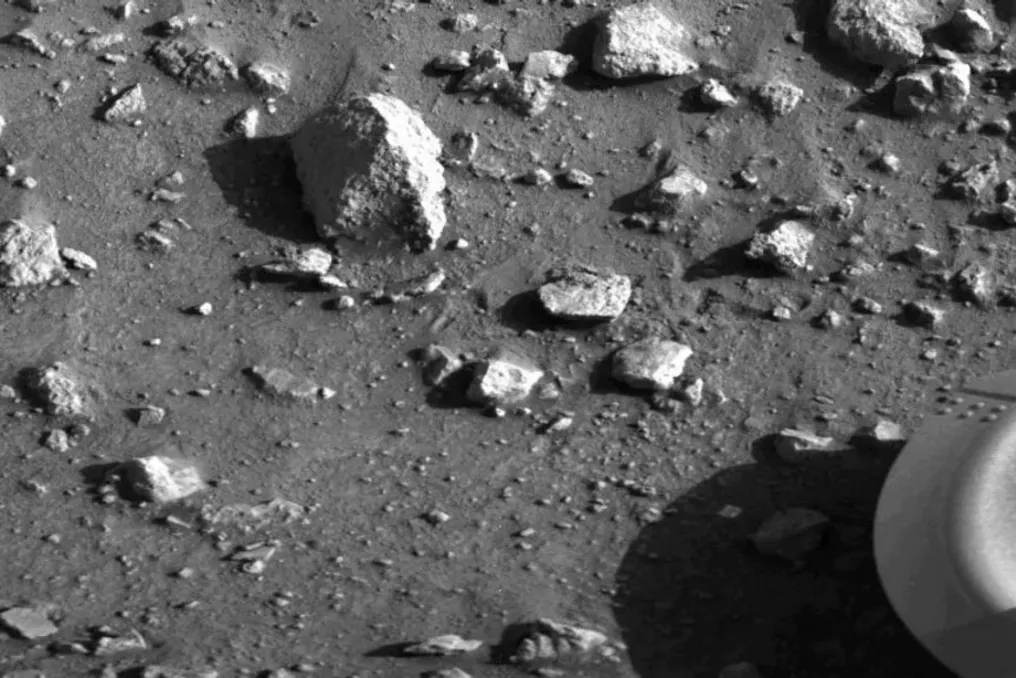
Fifty years ago, on July 20, 1976, humanity received its first visual record of the surface of Mars. This image was captured by a spacecraft that landed on the red planet, sent by NASA.
The Viking 1 Landing
The photograph came from the Viking 1 probe, shortly after its successful landing. The event took place at the NASA Jet Propulsion Laboratory in the United States, where mission controllers monitored the reception of the first signals emitted by the module. The image revealed terrain characterized by rocks and fine dust, as well as showing one of the equipment's own structures.
Objectives of the Viking 1 Mission
The Viking 1 mission initiated robotic exploration of the Martian surface by the American space agency. One of its central purposes was to investigate the planet's environment for any signs of life within the Solar System.
Details of the Visual Record
The Viking 1 landing occurred at 5:12 AM Pacific Time. Controllers confirmed that the module had successfully overcome Mars' thin atmosphere and reached the ground. Approximately 40 minutes later, the first photo began to appear on the team's monitors, being assembled progressively, line by line.
The initial image presented an unprecedented scene for humanity: a soil covered with stones and dust, with long shadows cast by rock formations near the module. In the bottom right corner of the record, one of the support bases of the Viking 1 itself was visible, visually confirming the presence of the craft on Mars.
Reaction of the Scientific Team
Thomas Mutch, a scientist and leader of the team responsible for the mission's imaging system, shared his anticipation while waiting for the record. According to him, the screen, which was initially dark, began to display the first traces of the photograph until the details of the Martian landscape became evident.
Mutch reported: 'I studied the black screen, waiting for that narrow band that would indicate the first lines of the first image. And it appeared. [...] Rocks and sand are visible, and finally, on the right, one of the bases of the space vehicle, a symbolic artifact that confirms our conquest with the signal of reality. I say it again and again: 'It's incredible.' '
Legacy of Martian Exploration
Viking 1 remains a milestone in space exploration as the first NASA robot to operate directly on the surface of Mars. Six weeks after its touchdown, its sister unit, Viking 2, landed in another area of the planet to expand the studies conducted by the mission.
In addition to the two landers, the orbiters that transported the probes to Mars continued to collect data from space, assisting in maintaining communication between the devices on the planet and Earth.
Five decades after this historic landing, the Viking mission remains linked to NASA's legacy of research on Mars. The data obtained by the equipment was crucial in increasing human understanding of the red planet and the chances of finding signs of life beyond Earth.