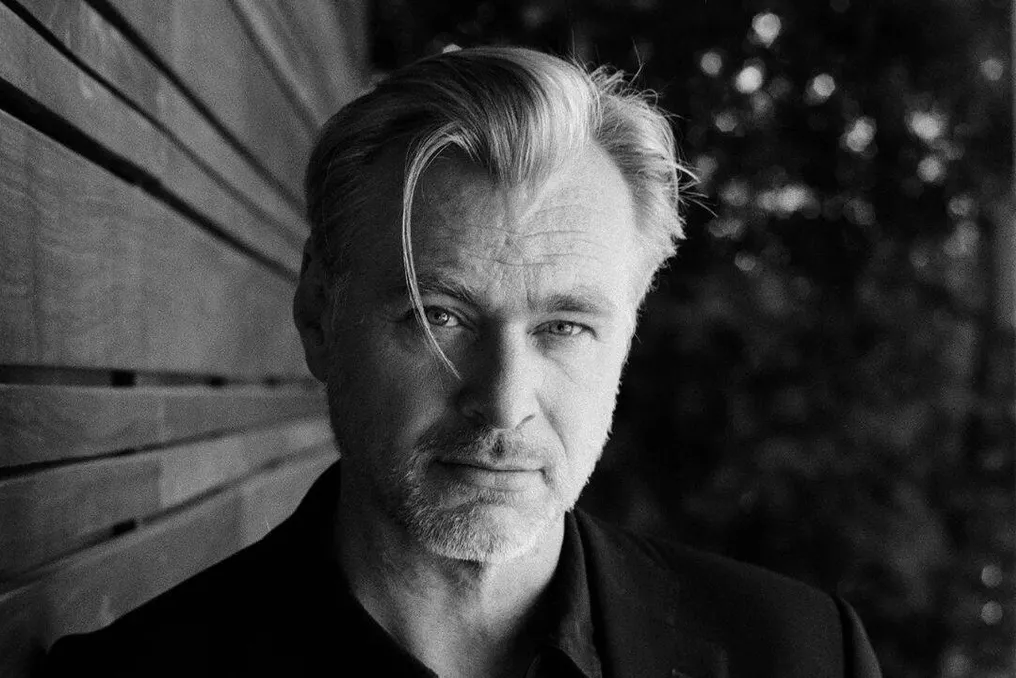
Christopher Nolan, one of the most influential directors of the 21st century, stated that he prefers cinema capable of creating entire worlds and alternative universes into which one can immerse oneself for several hours.
Philosophy of World Creation
Nolan's philosophy lies in creating captivating worlds that simultaneously challenge the audience intellectually while providing spectacular entertainment. His career spans themes from black holes and dreamscapes to time reversal and nuclear history.
Biography and Early Works
Born on July 30, 1970, in London, Christopher Nolan is a British-American filmmaker, screenwriter, and producer. Over the last three decades, he has established himself as one of Hollywood's most successful directors, combining original storytelling with large-scale projects.
After creating short films, he entered the Hollywood arena with the psychological thriller 'Memento' in 2000, which received widespread critical acclaim for its unconventional plot. He subsequently directed 'Insomnia' and later revived the Batman franchise with 'Batman Begins,' 'The Dark Knight,' and 'The Dark Knight Rises.'
Notable Projects and Awards
Among Nolan's other acclaimed works are 'The Prestige,' 'Inception,' 'Interstellar,' 'Dunkirk,' 'Tenet,' and 'Oppenheimer.' The latter film earned him seven Academy Awards, including 'Best Picture' and 'Best Director,' marking his first Oscar win for directing.
His recent film 'The Odyssey' is an adaptation of Homer's ancient Greek epic for the big screen on an unprecedented scale.
Approach to Visuals
Unlike many blockbuster creators who heavily rely on computer graphics, Nolan strives to give these worlds tangibility. He favors practical effects, real locations, and large-format IMAX cameras, believing that authenticity enhances the immersive effect. Every visual choice is intended to convince the viewer that the impossible can seem real.
Cinema as an Ecosystem
For Nolan, a film is not just a collection of scenes linked by a plot; it is an entire ecosystem with its own internal laws, emotions, and logic. Each story is designed to transport the viewer into a complete reality, whether it is a dream, distant galaxies, the period of World War II, or a person's consciousness in a state of internal conflict.
Examples of Immersive Approach
'Inception' best illustrates Nolan's quote. Instead of abstractly depicting dreams, Nolan constructs a complex universe where dream architects design cities, gravity is distorted, time moves at different speeds, and subconscious memories become physical threats. This film is more concerned with the feeling of guilt, loss, and the inability to let go of the past than with the heist itself.
In 'Interstellar,' scientific accuracy, based on theories of relativity and black holes, is used as a tool to tell a deeply personal story about family, hope, and sacrifice, exploring humanity's place in the Universe despite its stunning visual effects.
Historical and Mythological Themes
Nolan applied his immersion philosophy in the historical drama 'Oppenheimer.' Instead of simply recounting the biography of J. Robert Oppenheimer, the film places the viewer inside the scientist's moral conflict, showing the clash of genius, ambition, politics, and guilt during the creation of the atomic bomb. The story becomes deeply personal, demonstrating that Nolan's alternative worlds are not always fictional; they can be psychological landscapes shaped by memory and conscience.
In his latest film 'The Odyssey,' he expands this concept into the realm of mythology, once again attempting to create a vast cinematic universe where adventure, resilience, fate, and the yearning for home converge, adapting Homer's ancient epic.
Every film directed by Nolan reflects the conviction that cinema achieves its highest potential when it offers the viewer something more than mere entertainment.