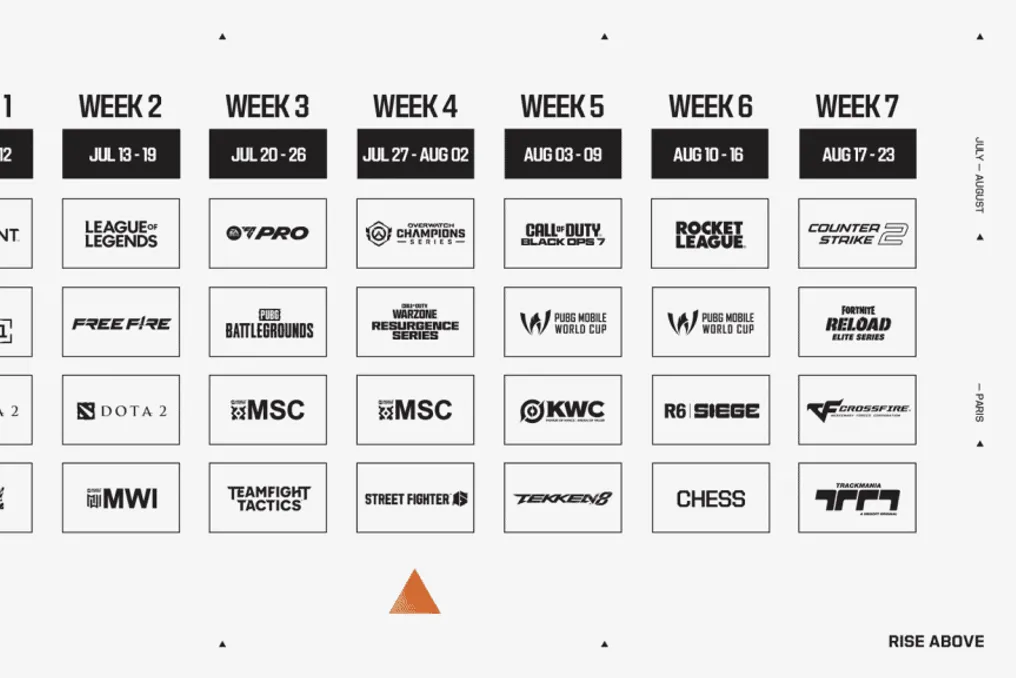
The Esports World Cup (EWC) is presented as the largest and most ambitious global esports festival currently, conceived to be the ultimate evolution of integrated multi-discipline tournaments. This event gathers the elite of game athletes and the most renowned organizations in the world to compete simultaneously in dozens of prominent titles, covering genres such as tactical, FPS, MOBA, Battle Royale, and fighting games.
Similar stories
Popular
Distinctions and Elimination Ritual
A distinctive feature of the EWC is its innovative Club Championship system, which functions as a unified points race. This system aims to crown the most dominant and versatile club on the planet, establishing the event as a true 'Esports Club World Cup' and promoting a permanent transformation in the global competitive ecosystem.
Another symbolic aspect of the Esports World Cup 2026 is its elimination ritual. Initially, each organization receives an exclusive triangular key. However, when a team is eliminated, its key is publicly destroyed by a hydraulic press. The champion of each discipline holds the right to select keys from defeated teams to affix them to their trophy, thus immortalizing stories of great rivalry or personal overcoming in the final cup.
Structural Changes and Location
In its third edition, and held outside of Riyadh, Saudi Arabia, due to instabilities related to the war in Iran, the Esports World Cup took place at the Paris Expo Porte de Versailles, in the French capital. The event began on July 6th and will run until August 23rd.
Changes in 2026 Disciplines
EWC 2026 implemented significant modifications to its structure. Circuits such as Call of Duty: Black Ops 6, StarCraft II, Rennsport, and EA SPORTS FC 25 were replaced by launches and updates such as Call of Duty: Black Ops 7, Fortnite, Trackmania, and EA SPORTS FC 26.
Financially, there was a decrease of $1,000,000 in the Dota 2 prize pool. Conversely, VALORANT and Counter-Strike 2 received an increase of $750,000 each, and EA SPORTS FC 26 saw an increase of $500,000.
The total number of participants was expanded with significant adjustments to the number of organizations and individual competitors. In terms of teams, 16 teams were added to Counter-Strike 2, 11 to Call of Duty: Warzone, 8 to Dota 2, 8 to PUBG Mobile, 6 to Free Fire, 6 to Rainbow Six Siege, 4 to League of Legends, plus 2 teams in MLBB Mid Season Cup 2026 and 2 in HoK World Cup 2026. Regarding individual competitors, the championship saw the inclusion of 16 players in Fatal Fury: City of the Wolves, 6 in Chess, and 4 in EA SPORTS FC 26, with the only recorded cut being the reduction and departure of 16 players in Street Fighter 6.
Global Competitive Integration
Beyond the total prize money, several Esports World Cup events began offering spots for the world championships of their respective games, formally integrating into established global cycles or circuits. This may lead to the tournament name changing to fit the official game schedule, rather than maintaining the EWC standard.
In 2026, the Apex Legends competition will correspond to the Split 1 Playoffs, distributing points for the Apex Legends Global Series Championship. CrossFire and Free Fire competitions will act as Mid-Season Tournaments, potentially generating direct spots for the CFS Grand Finals and the Free Fire World Series – Global Finals, respectively.
The EA SPORTS FC 26 tournament will host the World Championship itself. Furthermore, Honor of Kings, Mobile Legends: Bang Bang (including the Women’s World Championship), and Overwatch 2 will hold their Mid-Season Tournaments. PUBG Mobile will be a Mid-Season Tournament with points for the PUBG Mobile Global Championship, and Rainbow Six Siege will function as Mid-Season, guaranteeing the winner a direct spot in the Six Invitational.
Finally, in the Other Circuits group, Call of Duty: Warzone will be part of the Resurgence Series Championship, the Chess tournament will integrate into the Champions Chess Tour Grand Finals, and Fortnite will correspond to the Reload Elite Series Championship.
First Week Results
The first week of EWC 2026 crowned major winners in tactical and fighting shooters, reigniting pre-existing regional rivalries.
In Fatal Fury: City of the Wolves, the rivalry between Mexican tradition and the Japanese fighting game school was evident. Veteran Mexican DarkAngel, representing Natus Vincere (NAVI), confirmed his superiority with his iconic character Terry Bogard, defeating Japanese newcomer mi2ha4 (from Virtus.pro) 5 to 1 in the final, becoming the first athlete to win a trophy in this EWC edition.
In VALORANT, despite the participation of the Brazilian team MIBR, the main focus remained on the intense rivalry from North America, which culminated in the Grand Final. The team 100 Thieves secured its first international title by overcoming rival NRG 3 to 1, reversing a negative season history and overcoming a 9-3 deficit on the Ascent map to secure victory in overtime with a score of 14 to 12.
In the Apex Legends scene, the competition provided one of the longest, most balanced, and dramatic finals in recent history, intensifying the rivalry between North American teams and the Asian powerhouse of the APAC North region. Under the tense Match Point system, where eleven teams came within one victory of the title, the North American trio Sentinels was the favorite. However, the Japanese organization UNLIMIT, which advanced to the final phase only on tie-breaker criteria, achieved a remarkable feat by winning the seventh map, surviving several elimination scenarios, and securing victory on the tenth map in World’s Edge, crowning Japan in the Battle Royale and breaking Western hegemony in the discipline.
Second Week Developments
The second week of EWC 2026 raised the intensity of the arenas in Paris with the conclusion of four important disciplines, consolidating new dynamics and ending old hegemonies.
In League of Legends, the South Korean Dplus KIA was the main protagonist, defeating the French team Karmine Corp 3 to 0 at home, frustrating strong local fan support and earning $600,000. The Brazilian representatives, FURIA and MIBR.LOS, were eliminated in the group stage.
Mobile supremacy was also highlighted in Mobile Legends: Bang Bang (MWI 2026), where the players from Team Vitality defended their title in an exciting repeat of the 2025 final, overcoming Natus Vincere 4 to 2 and securing their second consecutive championship, solidifying the organization as the dominant global force in the discipline. Brazil, represented by MIBR.LOS, was eliminated in the early stages, finishing 13th-16th and receiving $10,000.
In Dota 2, PVISION emerged as the undisputed champion. Despite the reduction of one million dollars in its total prize pool in this edition, the tournament offered exhaustive macro management confrontations on the French stages. Although Brazil did not have complete native organizations, the country had a discreet and qualified presence through athletes integrated into international rosters. LGD Gaming, with the participation of Brazilians Thiolicor and KJ, was the national team closest to the podium, finishing 9th-12th, while Team Nemesis, with Brazilians 4nalog and Lelis, was eliminated earlier, in the preliminary rounds.
The Free Fire tournament crowned the South American team LYON, which set historical records for eliminations in decisive rounds to secure first place, thwarting the projects of Brazilian teams LOUD, LOS, and Fluxo W7M, who were strong contenders for the trophy and the $300,000 prize.
Focus on Subsequent Weeks
In Week 3, Teamfight Tactics had no Brazilian representatives, with Weibo Gaming focusing on defending its title in a traditional analytical confrontation between North America and Asia.
PUBG: Battlegrounds also lacked Brazilians in the competition, with attention focused on the tactical clash between the powers of South Korea and China against Western squads, alongside the current Saudi champion Twisted Minds.
In Men's Mobile Legends: Bang Bang, even without a Brazilian organization in the bracket, the country shows interest through national players Akashi and Vaguin, who represent the Peruvian organization Entity7.
Finally, EA SPORTS FC 26 concentrates the biggest hopes for Brazil that week, counting on three standout athletes: Guga Ferraz, a promising new generation player with good qualification campaigns; Paulo Neto, known for his tactical consistency in international circuits and recent victory in e-Libertadores; and PHzin, one of the most victorious names in the world scene.
Broadcast Coverage
Access to the Esports World Cup broadcasts presents a decentralized dynamic for the Brazilian audience. There is no official studio broadcast in Brazil; however, the community follows the matches through co-stream programs and watch parties. Various Brazilian content creators and streamers use their own channels to broadcast the games live with Portuguese commentary. The broadcasting ecosystem is distributed across various digital platforms, keeping the official global broadcast active in English and Arabic on the main EWC channels.
According to the State Labor Inspectorate of Uzbekistan, in the first half of 2026, the inspectorate received 1495 appeals from citizens who were employed without their knowledge.
Measures taken against violators
As a result of studying these appeals, administrative and criminal measures were applied to the heads of 143 operating enterprises and organizations. Additionally, written orders were issued to 56 other enterprises and organizations to eliminate the identified violations.
Work with data and citizens
It was found that some organizations mentioned in the appeals had already ceased operations. Incorrect information entered into the Unified National Labor System between 2020 and 2025 was removed to restore citizens' rights.
The Inspectorate urged citizens who discovered that information about their employment activity was processed without their knowledge to contact the authorized bodies.
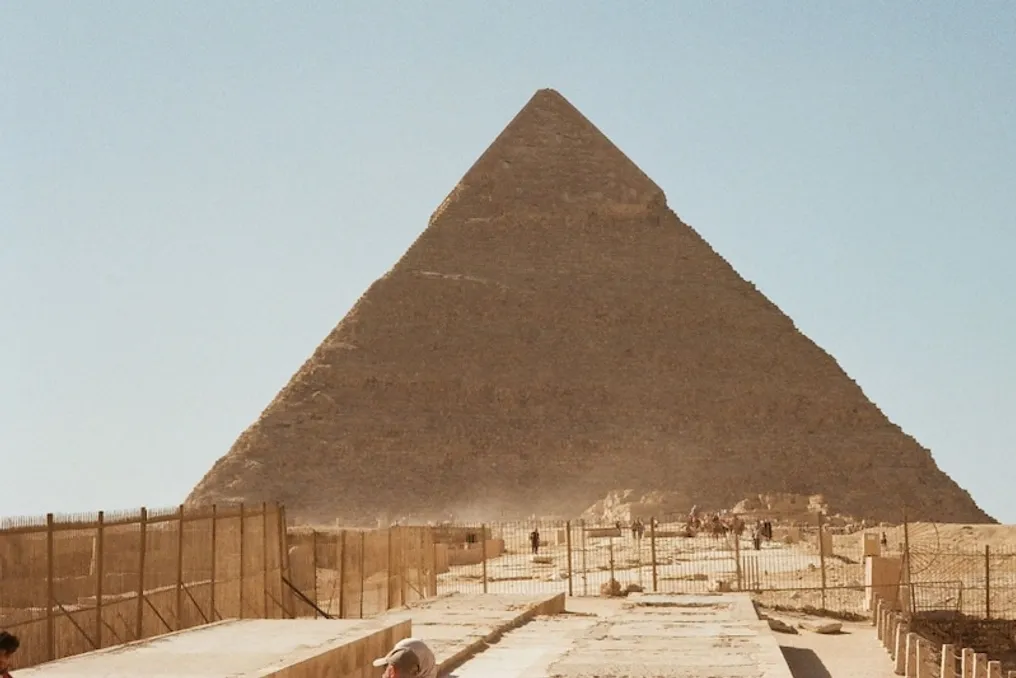
The Great Pyramid of Giza, the most famous of all Egyptian pyramids, was the oldest of the Seven Wonders of the Ancient World and remains the only surviving wonder. For approximately four thousand years, it served as the tallest man-made structure in the world. Currently, there are over fifty pyramids in Egypt, which are monumental monuments to the ancient civilization of the pharaohs.
The Complexity of Pyramid Construction
The complexity of these architectural specimens presents a serious challenge for archaeologists studying Ancient Egypt. The question arises as to how this civilization managed to erect such grandiose and technically precise structures. Similar to Stonehenge, many controversial theories have been put forward when searching for answers to these questions, including the popular conspiracy theory that the pyramids were built by aliens.
Theories on the Origin of Pyramids
According to this conspiracy theory, the pyramids were not the result of long-term construction projects requiring thousands of workers, enormous logistics, an unlimited supply of stone, as well as qualified architects and engineers. Instead, it is suggested that they were created by aliens or that aliens taught humans how to build them. However, the theory of external astronomical intervention is not the only attempt to explain the construction of such majestic monuments. Some conspiracy theorists believe that people from the sunken, highly developed civilization of Atlantis may have participated in the creation of the pyramids, although the mysteries of Atlantis remain unsolved.
Archaeological Evidence Against the Alien Theory
Much about the pyramids, including their internal structure and construction process, remains unknown, which gives rise to many misconceptions and conspiracy theories. Nevertheless, archaeological evidence convincingly indicates that the pyramids of Ancient Egypt were erected not by external forces, but by large groups of Egyptian workers under the direction of an efficient administration and using primitive but effective tools.
According to Professor Joyce Tyldesley, an Egyptologist from the University of Manchester, the Great Pyramid of Giza was built by workers gathered within some system of state service or forced labor. These workers possessed relatively simple but effective tools and were capable of carving large stone blocks, transporting them to the construction site, and gradually erecting the pyramid. Although some aspects of the technology, such as ramps, are still unknown to us, colossal human power was at the core of everything.
The presence of limestone quarries near the location of the Great Pyramid, as well as the discovery of workers' camps, testifies to the scale of this project. Professor Tyldesley notes that there is evidence of how the workers were fed and where they were buried. Understanding the pyramid construction process has significantly improved only in the last 50–70 years, as previously there was a gap in knowledge that allowed conspiracy theories to take root.
The Spread of the Alien Idea
Pyramids have existed for more than four thousand years, whereas the concept of aliens is relatively new in many cultures around the world. Professor Tyldesley believes that this idea truly began to develop after the publication of H.G. Wells' book 'The War of the Worlds' in 1897, which initiated a series of science fiction works. The book 'Edward's Triumph on Mars,' written by American astronomer and writer Garrett P. Service in 1898, had a particular influence. Although this book was fictional and not considered serious, it claimed that the Great Pyramid and the Sphinx were built on Mars, and this idea that someone from outside came to Egypt and built the pyramids became widely spread.
Another significant contribution was the bestseller by Swiss writer Eric von Daniken, published in 1968, titled 'Chariots of the Gods? Unsolved Mysteries of the Past.' This book helped popularize the idea that ancient space travelers visited Earth, were accepted as gods, and had a huge influence on the cultures, religions, technologies, and, certainly, the architecture of ancient civilizations.
It can be concluded that the belief that ancient aliens came to Earth and disseminated their superior knowledge arose, at least initially, as a reaction to the inability to believe that any ancient civilization could independently create such impressive monuments, so credit is attributed to an external force.
State policy in the country is aimed at fully realizing the economic potential of every mahalla, ensuring employment for the population, and increasing family incomes. As part of fundamental reforms, specific tasks have been defined to fully mobilize the internal capabilities of the mahallas, support entrepreneurship, create new jobs, and increase residents' income.
Success Example in Jizzakh
The activities implemented in the mahalla named Amir Temur in the city of Jizzakh clearly demonstrate the effectiveness of the goals set by state leadership. This experience, which might seem like a local process, is actually a model showing what contribution local initiatives can make to national development. Since the reforms first yield results at the mahalla level, their effect then spreads to the district, and from there—to the national level.
Economic Activity and Directions
In the mahalla, where 8334 people live, a full analysis of existing resources was conducted to increase economic activity. The main driving forces identified were agriculture, gardening, greenhouse farming, vegetable cultivation, animal husbandry, and poultry farming. This reflects a systemic approach aimed at ensuring that every family has a source of income.
Infrastructure Development and Support
According to Mahbuba Mamirova, the mahalla assistant, the effective use of geographical location is also an important factor in economic growth. In this regard, the development of service infrastructure along the Uchtepa–Jizzakh–Gallaorol highway is planned. Creating services in trade, public catering, hotels, car services, and car washes will generate additional jobs and strengthen population employment.
Agricultural Production
Currently, 56 greenhouse farms are operating in the mahalla, and three hectares of new greenhouses were recently built. This is a logical continuation of systematic work to turn residents' garden plots into high-income production areas. The experience of the Ravshanov family in this mahalla is particularly noteworthy. They grow bodrings in every hundredth of a greenhouse farm, harvesting up to 10–12 kilograms per bush. Direct sale of harvested products through trade channels eliminates the problem of finding additional markets for the population and ensures stable income.
State Support and Ecology
Results achieved through state support also have practical examples. For instance, Sherzod Begmanov had a hundredth of a greenhouse built based on a subsidy, and this year he managed to grow almost a ton of tomatoes. Such cases confirm the possibility of strengthening economic activity by stimulating public initiative. Furthermore, special attention is paid to environmental improvement and expanding green zones. At the initiative of the mayor's office, a modern flower greenhouse covering 40 hundredths of a hectare was created, where hundreds of thousands of flower seedlings are grown, contributing to the greening of the city of Jizzakh while ensuring ecological sustainability alongside economic benefit.
Social Protection of the Population
Targeted measures are also being carried out in the field of social protection. Employment was provided to 45 women from the 'Women's Passport,' and nine of them were granted preferential loans. Three of these women opened greenhouse farms, while the rest received permanent jobs in trade, sewing, and handicrafts. It is also evident that the mechanism of targeted social protection in the mahalla is working consistently, as loans and social assistance are provided to citizens included in the 'Youth Passport' and the social register.
Prospects for Mahalla Development
The activity carried out in the Amir Temur mahalla is not just the experience of one district. It is an effective model suitable for dissemination across the republic, concerning employment provision, support for entrepreneurship, increasing the income of every family, and reducing poverty. After all, the development of New Uzbekistan begins with the mahalla, and any advanced initiative tested at the local level only reveals its true potential with wide application on a national scale.