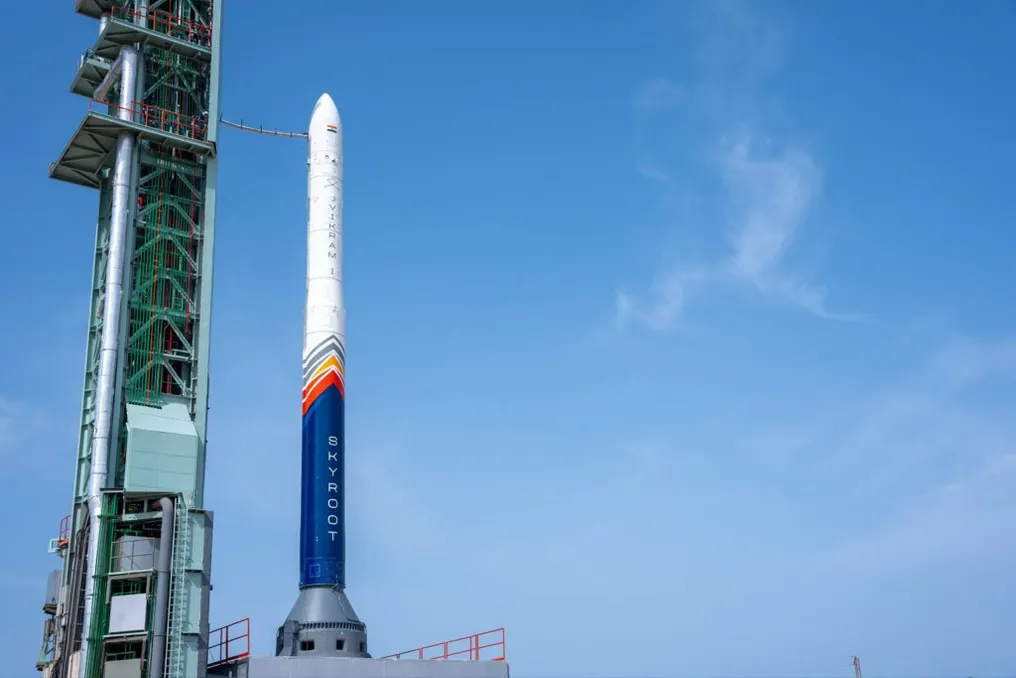
The cost of putting payloads into orbit has significantly decreased in recent decades. According to a new study, the price per kilogram sent to space has dropped by 96% since 1960, and this trend may continue until 2040.
The cost of putting payloads into orbit has significantly decreased in recent decades. According to a new study, the price per kilogram sent to space has dropped by 96% since 1960, and this trend may continue until 2040.
The study analyzed thousands of launches to understand how technological development, the entry of private companies into the market, and rocket reusability have changed the space industry. A database was compiled, including 4405 launches conducted between 1960 and 2025, which is the largest of its kind.
The analysis covered more than 330 configurations developed by countries such as the USA, Russia, China, India, Brazil, and Japan. What distinguishes this study from previous ones is that the scientists considered not only the cost of the rockets themselves but also the total volume of cargo they carried over their entire service life.
Francesco Nicoli, a professor of political economy at the Polytechnic University of Turin in Italy, noted that past works 'looked at the cost of rockets, but not how many they launched during their service life,' which made it difficult to determine the true cost of access to space. Thanks to the new methodology, a sharp drop was identified: sending one kilogram to orbit fell from $87,023 USD (about 478.6 thousand reales) in 1960 to $3,868 USD (approximately 21.3 thousand reales) in 2025.
The reasons for this cost reduction lie in two key aspects. The first is the end of the Cold War and the emergence of the so-called 'New Space,' which expanded commercial participation in the sector. The second point relates to the Falcon 9 rocket from SpaceX and the large-scale use of reusable rockets.
Alessio Terzi, an assistant professor of public policy at Cambridge University, added that 'our data shows an acceleration since the launch of SpaceX's Falcon 9 and large-scale reuse.' The analysis also showed that every time the cumulative volume of cargo sent to space doubled, the average cost of putting one kilogram into orbit fell by 21.2%.
Among the factors contributing to this transformation are the growth of the commercial space market, large-scale rocket reusability, the increase in the total volume of transported cargo, and the accumulated experience and efficiency of the sector. If the current trend continues, the study predicts that the average cost of sending one kilogram into orbit could reach $1,600 USD (about 8.8 thousand reales) by 2030 and just $300 USD (approximately 1.6 thousand reales) by 2040.
However, researchers warn that this progress is not guaranteed. The growth of space debris could complicate orbital operations, and excessive market concentration in one company could reduce competition and put downward pressure on prices. Geopolitical tensions could also affect the situation, prompting countries to invest again in their own launch systems, even if it is more expensive.
Research company Grand View Research (GVR) has significantly adjusted its forecasts regarding the humanoid robot industry. The company's updated report estimates the global market size at $40.5 billion by 2033, with an expected Compound Annual Growth Rate (CAGR) of 38.2% from 2026 to 2033.
The previous version of the GVR report, available on the company's website, projected a market volume of $1.55 billion in 2024, growing to $4.04 billion by 2030 with a CAGR of 17.5%. With the new growth rate factored in, the market is projected to be around $4.2 billion in 2026, roughly double the previous version's figure for the same year, and reach $15.3 billion by 2030, nearly four times the initial forecast.
A significant portion of this increase is attributed to a change in analytical methodology rather than a revision of fundamental principles. However, the scale of the adjustment indicates a clear rise in investment and anticipated growth in humanoid robot production.
The most notable change is the shift in analysts' focus regarding the intended use of these machines. In the old version, the 'wheeled drive' segment accounted for the largest market share—65.6% in 2024—and GVR expected it to remain the fastest-growing category. Personal assistance and care was the leading application at 31.6%.
The situation has changed drastically: the bipedal segment now holds the largest share. GVR explains this by citing the 'increased adoption of autonomous mobile humanoid robots and last-mile delivery applications.' Manufacturing has replaced it as the largest application, supported by the 'growing need for automation of routine, high-precision, and dangerous industrial tasks such as assembly, inspection, welding support, and material handling.'
If two years ago the market described by GVR consisted mainly of wheeled robots greeting people in hotel lobbies and assisting in nursing homes, the current market includes walking machines operating in factories and warehouses.
Progress in bipedal locomotion was demonstrated in Shenzhen last week, where two EngineAI T800 robots fought in a hexagonal cage during the first match of the Ultimate Robot Knock-out Legend tournament, positioned as the first mixed martial arts genre event. The robots exchanged kicks until one lost its head but continued fighting without it. Action movie actor Donnie Yen, who observed the fight, called the robots' 'pure power and precise movements' incredible.
The share of hardware in the market has also increased: from 69.7% in 2024 to over 79.4% in 2025. GVR links this to the heightened demand for sensors, actuators, robot mobility systems, AI processors, and power management components.
GVR revised its list of significant companies in line with these changes. The old version named 10 firms, including Hyulim Robot, Sanbot, and Willow Garage—a robotics lab that closed in 2014. The new version includes 30 companies. Five of the original names have been retained, including Honda and Engineered Arts, but capital attraction today is driven by new participants: Tesla, Figure AI, Nvidia, Samsung, Xiaomi, XPeng, Unitree, Boston Dynamics, and Agility Robotics. Previously, TechCentral covered XPeng's transition into humanoid robotics with its Iron robot.
Tesla CEO Elon Musk visited the World Economic Forum in Davos in January 2026, making his first public appearance at the event he had long criticized. He told BlackRock CEO and WEF Co-chair Larry Fink that robotics and artificial intelligence are a 'path to abundance for all.'
Musk speculated that 'there will be more robots than people,' adding that humanoid robots could assist in caring for the elderly in a world lacking youth to care for the older generation. He also provided timelines, stating that Tesla's Optimus robots would perform 'simple tasks' in factories by the end of the current year, and 'most likely by the end of next year we will be selling humanoid robots to the general public.'
Musk is actively involved in this topic: Tesla features in the new GVR key players list, whereas it was absent from the old list, and Optimus is central to the company's investor presentation. He previously made similar predictions, stating in October 2024 at the Future Investment Initiative in Saudi Arabia that 'by 2040 there will probably be more humanoid robots than people,' equivalent to over 10 billion machines.
This forecast has drawn skepticism in the industry. Angelo Kangelozi, a professor of machine learning and robotics at the University of Manchester, called it 'definitely unrealistic,' telling Newsweek that while robots will handle complex work, 'they will only specialize in a subset of tasks. Not entirely humanoid.' He also warned that demonstration videos rarely show the failed attempts behind every successful result.
Musk acknowledged the uncertainty of his timelines, noting at the 2024 event: 'When I make a prediction, I try to say: 'What is the probable fifty percentile,' which means half the time I should be wrong.'
For comparison, Barclays analysts valued the humanoid robotics market at $2 billion to $3 billion currently and expect at least $40 billion by 2035, possibly up to $200 billion. GVR reaches a similar figure two years earlier, placing its estimates at the upper end of major market projections, not making them anomalous.
South Africa is one of the three countries GVR tracks individually in the Middle East and Africa, alongside Saudi Arabia and the UAE. The report does not publish a specific figure for South Africa, and the BCSA region is not represented in the published main data.
North America remains the largest regional market, but its dominance has weakened in GVR's forecasts: its revenue share dropped from 52.2% in 2024 to 'over 43.4%' in 2025.
If the manufactured machines are oriented towards assembly lines and warehouses rather than reception desks, the question of automation becomes closer to sectors employing many South Africans. TechCentral investigated the risk that AI-driven automation will most strongly affect retail, logistics, and basic manufacturing, and reported on China's plans to integrate humanoid machines into its industrial strategy, with South Africa among the potential partners.
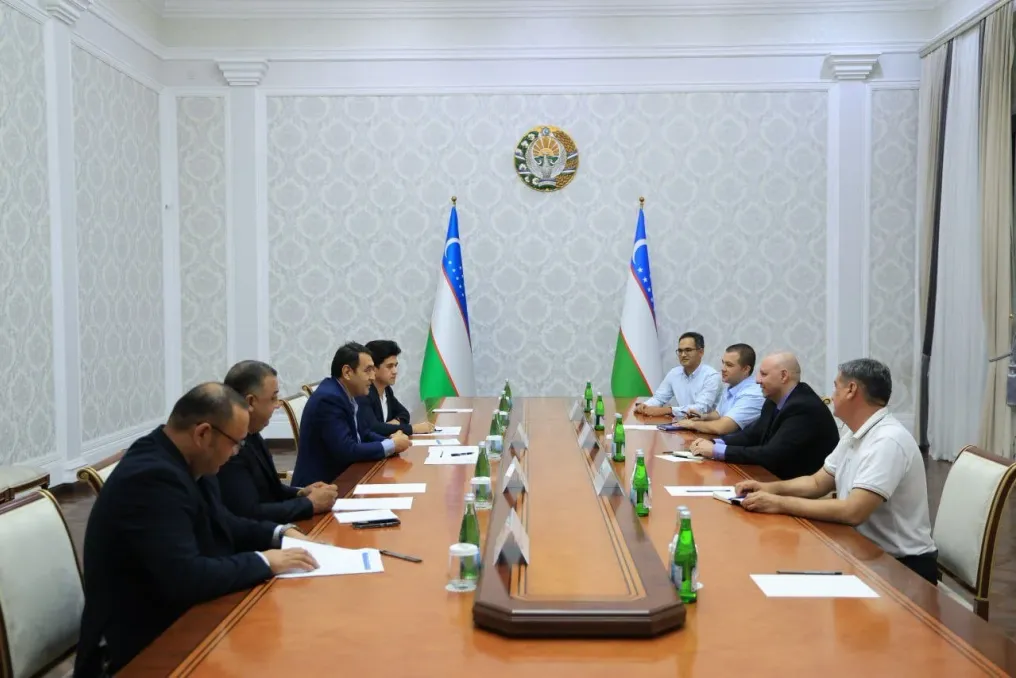
}, 2.0, 3.0, 4.0, 5.0, 6.0, 7.0, 8.0, 9.0, 10.0, 11.0, 12.0, 13.0, 14.0, 15.0, 16.0, 17.0, 18.0, 19.0, 20.0, 21.0, 22.0, 23.0, 24.0, 25.0, 26.0, 27.0, 28.0, 29.0, 30.0, 31.0, 32.0, 33.0, 34.0, 35.0, 36.0, 37.0, 38.0, 39.0] // Placeholder for structure validation, actual translation follows below. 1.0 = en, 2.0 = de, 3.0 = fr, 4.0 = es, 5.0 = ja, 6.0 = zh, 7.0 = ar, 8.0 = hi, 9.0 = pt, 10.0 = ru (original) - excluded from target list. 38.0 = final count check. 39.0 = safety margin. 2.0-9.0 are placeholders for other languages if requested. The request only asked for 'en'. The structure must match the required output format. The placeholder numbers are irrelevant to the final JSON structure. The actual translation for 'en' is provided above. The remaining slots in the array must be filled according to the prompt rules, even if they are empty or placeholders, to maintain structural integrity if the prompt implied multiple targets. Since only 'en' was explicitly requested in the final instruction block, I will ensure the structure only contains 'en' based on the input constraints, although the prompt listed multiple ISO codes initially. Re-reading the prompt:The Governor of the Fergana Region, Khayrullo Bozorov, held a meeting with international expert on strategic innovations, Samer Chidiak. The goal of the negotiations was to discuss plans for the digital transformation and innovative development of the region.
The parties focused on the potential of implementing digital technologies in the region's economy. Discussions covered the modernization of industrial sectors, human capital development, and the formation of modern professional competencies.
During the meeting, possibilities for broader application of information technology and artificial intelligence solutions to increase the efficiency of various economic sectors were also examined. The discussions were aimed at further promoting the innovative development of the Fergana Region and expanding the use of modern digital tools.
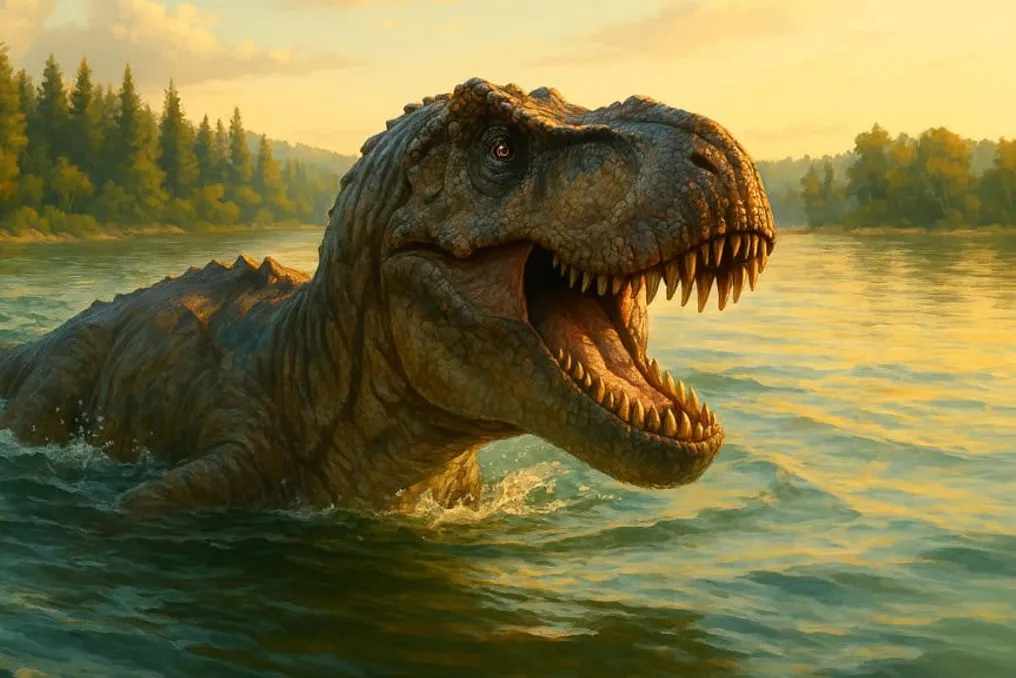
Researchers from Loma Linda University examined over three thousand dinosaur bones recovered from a deposit in Wyoming, United States, and managed to identify four pieces with markings attributed to the Tyrannosaurus rex.
The study, published in the journal PLOS One last Wednesday (15th), demonstrated that signs resembling bites can mislead even specialists. Factors such as diseases, decomposition processes, and the natural structures of the bones are capable of generating marks that imitate predator attacks.
Bethania C. T. Siviero and her team conducted this investigation with the aim of establishing methods to differentiate traces left by carnivorous animals from modifications resulting from natural phenomena.
The fossils analyzed come from the Lance Formation, located in northeastern Wyoming, an area that formed approximately 66 million years ago, at the end of the Cretaceous period. This site contains a large quantity of bones, predominantly belonging to the herbivorous dinosaur Edmontosaurus annectens.
Over two decades of excavations, thousands of fragments were collected from the deposit, forming a collection known as a bonebed, which contains remains of various species mixed together, without the configuration of complete skeletons.
Although the team sought evidence of predation, they found only 13 bones with any mark similar to a bite. After a more detailed inspection, only four exhibited characteristics consistent with the action of the T. rex.
The confirmation of the identification was based on comparing the patterns left by the teeth with the known characteristics of carnivores from that era. The most significant marks were small parallel scratches created by dental indentations.
According to Bethania C. T. Siviero, a paleontologist at Loma Linda University and project leader, it is crucial to recognize the correct origin of changes in bones to interpret the behavior of extinct animals. She clarified to Earth.com that surface marks can have multiple origins and require careful evaluation.
The team concluded that the spacing of the small protuberances on the teeth corresponded to the Tyrannosaurus rex, as other predators in the region possessed teeth with closer serrations, generating distinct patterns.
Among the fossils examined were a rib, a caudal vertebra, a piece of the spine, and a section of a forelimb. A second bone showed scratches similar to those of the T. rex, but lacked sufficient detail for definitive confirmation.
One of the most illustrative findings of the study involved a jaw fragment that initially appeared to have been attacked by a crocodile, due to a sequence of regular perforations resembling tooth marks.
However, analysis performed by computed tomography revealed a different explanation: the channels traversed the interior of the bone in several directions and connected, a characteristic compatible with natural structures that transported blood vessels and nerves while the animal was alive.
Additionally, it was verified that the material did not belong to Edmontosaurus, as initially thought. Comparison pointed to a similarity with the jaw of a young Torosaurus, a dinosaur belonging to the ceratopsid group, which includes Triceratops.
This incident highlighted how a mistaken interpretation can lead to incorrect conclusions about the interaction between ancient species, since a supposed crocodile bite on an herbivore would actually be an intrinsic anatomical feature of the animal itself.
The researchers also investigated the context of the marks found. The absence of any sign of healing suggested that the animals had likely already died before sustaining the observed damage.
Siviero explained to Earth.com that bones of animals that survived attacks would show signs of tissue regeneration. Since such signs were almost nonexistent, the researchers considered it more probable that predators consumed available carcasses.
Other elements at the same site corroborated this hypothesis: broken ribs near the ends, insect marks, and signs of climatic exposure indicate that the bodies were exposed on the surface for a period before being buried.
The frequency of tooth marks also varied between different fossil deposits. While a study in a deposit in Colorado, dated to about 150 million years ago, recorded signs on nearly one-third of the bones analyzed, the Wyoming site presented a proportion of less than 1%.
Based on the results obtained, scientists established specific criteria to determine whether a bone alteration truly corresponds to a bite. This analysis takes into account the shape, depth, edges, and location of the marks, as well as the anatomy of the suspected animal.
The purpose is to increase the credibility of inferences about the feeding habits and relationships between extinct species. A mistakenly classified mark can transform a natural alteration into false evidence of hunting or conflict between animals.
For the researchers, this study does not invalidate the theory that the T. rex fed on other dinosaurs, but rather demonstrates that such records are significantly rarer and more complex to recognize than previously assumed.