An example of honesty and dedication from the municipal service workers emerged in Indore, Madhya Pradesh. A woman accidentally threw a silver vessel weighing about two kilograms into the garbage trucks.
An example of honesty and dedication from the municipal service workers emerged in Indore, Madhya Pradesh. A woman accidentally threw a silver vessel weighing about two kilograms into the garbage trucks.
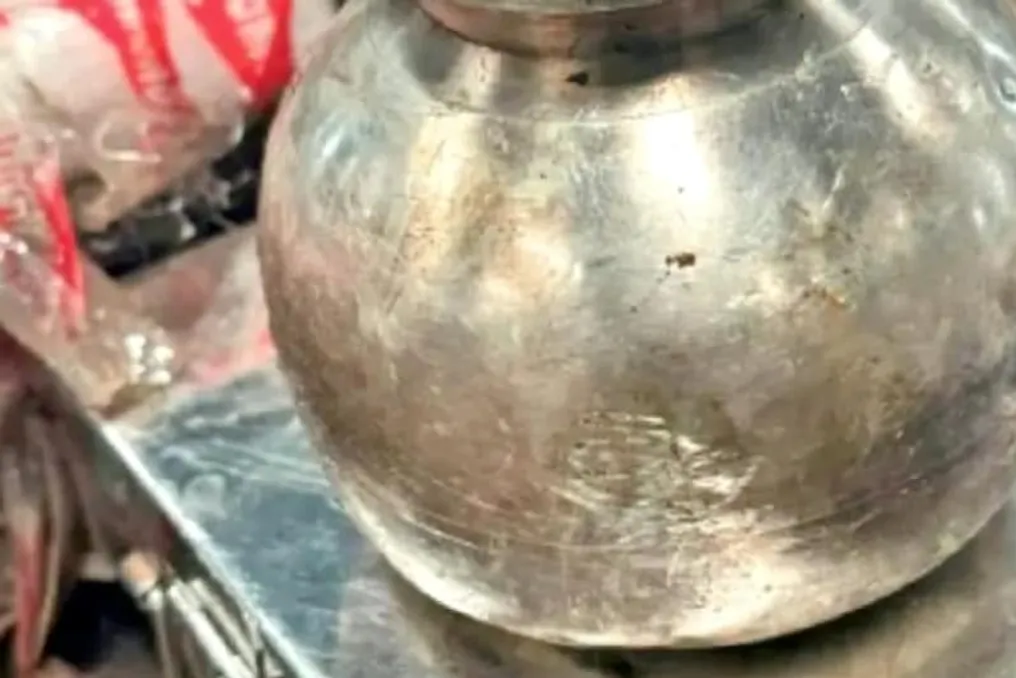
A woman from the Rajendra Nagar area, who came from Bangalore to be with her children after several months away, accidentally discarded this silver vessel weighing approximately 2 kg along with household waste due to the large amount of refuse in the house.
After the family realized their mistake, they contacted local councilor Prashant Badwe. Upon receiving the information, the municipal department staff were notified, but the garbage trucks had already arrived at the landfill. Despite this, the municipal service workers continuously sorted hundreds of tons of garbage over 24 hours and eventually discovered the valuable vessel.
The family went to the landfill where their valuable item was safely handed back to them. Having recovered their silver vessel, the family expressed gratitude to the municipal department and the workers. The employees Vijay Yadav, Ravi Singh, Diraj Vyas, and Abhishek played a special role in this commendable work. The municipal department decided to reward these four employees.
Sometimes fabric burns while ironing. This not only damages the clothing but also causes the bottom of the iron to turn black from burning. This condition causes problems because it leaves stains on clothes and disrupts the normal operation of the appliance. As a result, many people start considering buying a new iron.
However, there is a simple way to solve this problem using a common painkiller tablet that might be at home. Paracetamol can clean a burnt iron in just a few minutes.
To clean the iron using a painkiller tablet, several steps must be followed. First, turn on the iron to medium or medium-high heat and let it heat up for a few minutes. When working with a hot iron, it is crucial not to hold the paracetamol tablet with bare hands; tongs or heat-resistant gloves should be used to avoid burns.
Next, using tongs, take the paracetamol tablet and gently rub it over the burnt or black area on the soleplate of the iron. Due to the high temperature, the tablet will begin to melt and turn into a gel-like substance, which will loosen the stuck dirt layer and charred spots. As soon as the spots start to come off, immediately wipe the soleplate with a slightly damp microfiber or cotton cloth to remove the melted tablet and charred residue.
After this, unplug the iron and let it cool down completely. Once it has cooled, wipe the entire soleplate again with a clean, slightly damp cloth to prevent any residual stickiness.
This home remedy has been in use for a long time. Dissolving paracetamol on a hot iron helps to loosen charred particles, making them easier to remove. Nevertheless, special caution must be exercised when using this method, as the iron is a very hot appliance.
A new study revealed that giraffes are capable of solving basic mathematical problems, performing addition operations to identify containers with the largest quantity of carrots, a finding considered a scientific novelty.
Although previous studies have confirmed numerical cognition in animals such as wolves and bees, giraffes were often overlooked in these investigations due to the relatively small size of their brains. However, a recent study conducted by researchers from Spain and Germany sought to assess the level of numerical ability in these animals, covering recognition, interpretation, and execution of simple or complex operations.
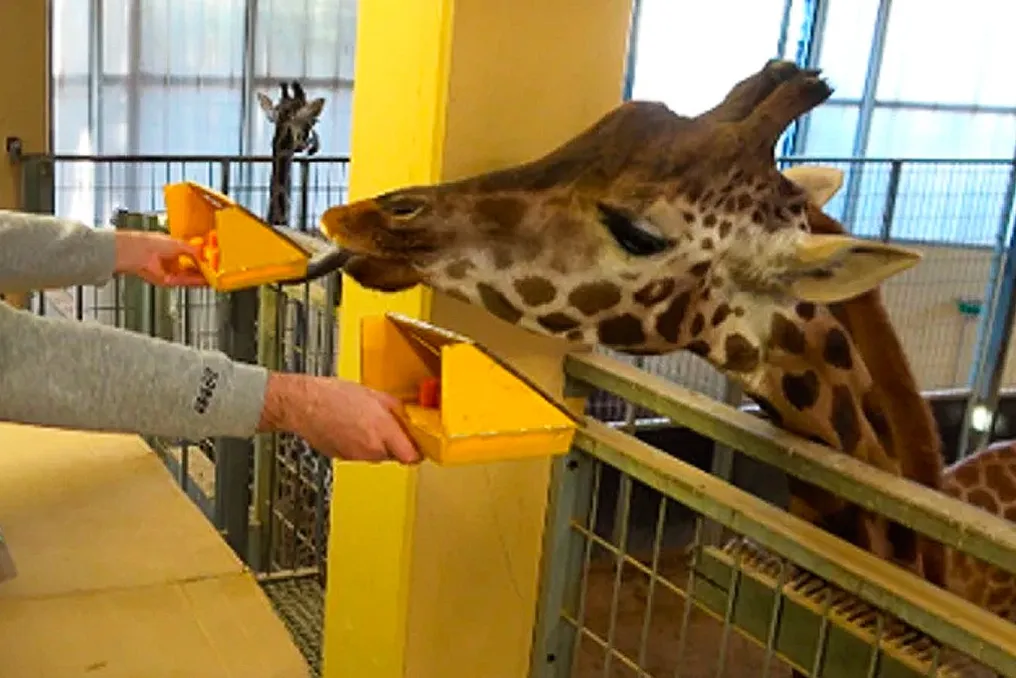
The specialists applied experiments using four giraffes (Giraffa camelopardalis) kept at the Barcelona Zoo in Spain. Carrots, a favorite food of giraffes, served as an incentive for mathematical reasoning. The animals observed containers with varying amounts of carrots (such as two or three items). After observation, the scientists sealed the containers and added more carrots to one of them, without the giraffes seeing the final amount.
The task assigned was to select a container for consumption. However, determining which one had more carrots required more than just visual perception; it was necessary to retain the initial quantity and update this information after the addition, which essentially constitutes an addition operation.
The results, published in the journal Scientific Reports, were quite positive. Two of the four giraffes, specifically the female Nuru and the male Njano, consistently selected the containers with the highest number of carrots across several tests. The other two giraffes only got it right when the container that received the addition of carrots was the last one handled by the researchers.
A section of the study points out that while two giraffes might have used more elementary tactics (such as avoiding the container manipulated by the experimenter), the others demonstrated success even when this strategy was not applicable, suggesting the possible use of more elaborate mental calculations.
The giraffes' abilities were tested in subtractions and multiplications, in which all animals failed. Based on this disparity in performance, the authors speculate that some giraffes may possess superior numerical aptitudes to others, potentially being able to solve more intricate mathematical problems.
This work follows a previous investigation, also published in 2023 in Scientific Reports, with giraffes from the same zoo. Initially, the animals chose containers with more carrots, and later, the containers contained a mixture of carrot and zucchini, yet the giraffes continued to correctly identify the largest quantity. This was the first indication of quantity comprehension, and now it is known that they perform small mathematical operations.
The expectation with this new research is to deepen the studies to understand how giraffes use mathematics and what factors support this ability. The authors suggest that such competencies may have evolved in response to the socioecological pressures found in nature, such as the need to monitor other individuals of the same species and their social bonds, or to manage a diversified diet that requires knowledge and memory of different food locations.
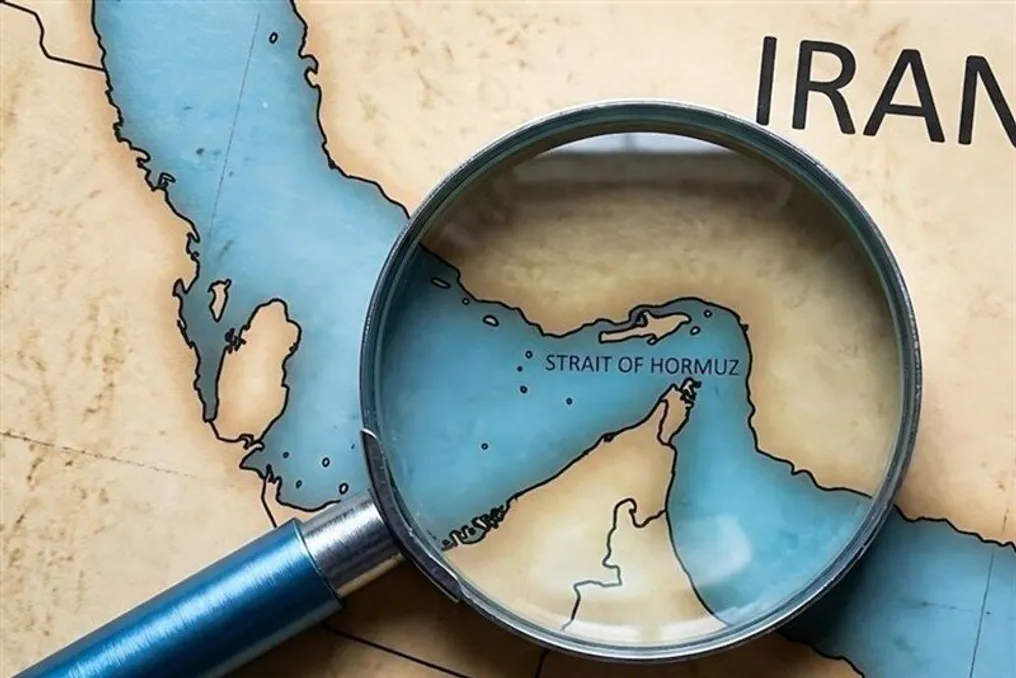
Examining the physical geography map of Iran reveals that the Strait of Hormuz is not merely a waterway, but a natural, submerged extension of the Iranian Plateau.
This truth is based on two key characteristics: the convexity (arc) of the coast towards the interior of Iran and the geological continuation of the seabed from the central Zagros mountain range. Thus, the strait is an integral part of the natural territory of the Iranian Plateau, and any other interpretation ignores undeniable geographical facts.
The convexity of the Iranian coast is not only a natural phenomenon but also a geometric design that has allowed Iran to fully control this narrow point. The deepest and only navigable channel for supertankers is located right near the apex of this arc and the Iranian islands of Qeshm, Larak, and Hengam. In fact, the 'lifeline' of maritime traffic flows within the geographical influence of Iran, and no country can access the Persian Gulf without passing under the shadow of this arc.
The mentioned arc has formed the strait into a concave nose, along which lie the strategic islands of Abu Musa, Greater Tunb, Lesser Tunb, Qeshm, Larak, Hengam, and Hormuz. Military experts refer to these islands as 'unsinkable aircraft carriers'; they possess panoramic views and dominance over the shipping route without the need to move, forming the first line of defense for Iran's maritime borders.
The narrow width of the channel and the presence of shallow sedimentary areas along the edges of the arc create serious limitations for the maneuverability of foreign navies. Under such conditions, asymmetric tactics, such as 'mass deployment of fast attack craft' and 'laying sea mines,' become extremely effective. Iran, relying on complete knowledge of the seabed, controls the safety of this waterway.
Furthermore, by extending the surveillance zone to Jask port, located east of the strait, the Islamic Republic of Iran has transformed this arc into a 'full crescent.' This allows the defensive line to extend beyond the narrowest point itself, enabling Iran to detect any movements kilometers before vessels enter the Persian Gulf from the Arabian Sea.
From a geological perspective, the Strait of Hormuz is simply a submerged continuation of the Zagros mountain range and part of the Iranian Plateau. The sedimentary layers and salt domes beneath the strait perfectly match the structure of the southern continental part of Iran and arose from the same tectonic processes that formed the Iranian Plateau itself. Moreover, during the last Ice Age, the Persian Gulf was part of the landmass of the Iranian Plateau, and the Strait of Hormuz represented an ancient valley through which great rivers—the Karun and the Euphrates—flowed. This historical continuity testifies to the inalienable belonging of this seabed to the land of Iran.
Oil and gas reserves also confirm this reality. The vast oil and gas deposits beneath the strait are a natural continuation of the resources found on the southern mainland of Iran, which economically solidifies the inseparable link of this space with the territory of Iran.
The convexity of the coastal arc and the geological continuation of the seabed are two sides of the same coin, making the Strait of Hormuz an integral part of the geographical body of Iran. On one hand, the geometry of the battlefield allows Iran to act as the 'gatekeeper' of the Persian Gulf and ensure the safety of this waterway. On the other hand, the natural continuation of the Iranian Plateau beneath the sea fundamentally refutes any claims that this space is separated from the homeland.
Based on these considerations, the Strait of Hormuz is part of the geographical reality of Iran, regardless of what was stipulated in treaties by colonial powers and maritime empires. Even raising the issue of joint management of the strait or involving coastal states in its administration contradicts the very natural geography of the strait. The Islamic Republic of Iran has always emphasized its full sovereignty over this strategic choke point, viewing any foreign interference as contrary to the natural and historical realities of the region.