The motorsport world mourns the passing of Miguel Crispim Ladeira, known as Crispim, who died on Sunday (19th) at the age of 85 after multiple organ failure while hospitalized for an extended period.
The motorsport world mourns the passing of Miguel Crispim Ladeira, known as Crispim, who died on Sunday (19th) at the age of 85 after multiple organ failure while hospitalized for an extended period.
Under the guidance of Jorge Lettri in the official Vemag team in the 1960s, Crispim achieved incredible results using small one-liter three-cylinder DKW engines. He was also the preparer of the legendary Carcará prototype, which broke the 212 km/h barrier in 1966, setting a South American speed record. This feat was a marvel of engineering, achieved while working with a piston that had already failed during training.
For decades, Crispim left his mark in Formula Super Vee, Formula Ford, at the famous Boxer workshop (alongside Chico Lameirao), and participated in the development of the national sports car Lobini H1. Recently, he published his memoirs in the autobiography 'Nasci Mecânico' (2025). The publication FlatOut extends its deepest condolences to Crispim's family and friends.
Although manual gearboxes are becoming increasingly rare in standard cars, niche sports models can maintain their relevance, as seen with Henessey, Pagani, Porsche, and Ferrari. McLaren potentially could join this trend. According to information from The Supercar Blog, Woking employees are preparing for the presentation of their new model—the McLaren P50. Rumor has it that to satisfy a certain group of clients who value McLaren's design and performance but desire a more engaging experience, the car will be equipped with a clutch pedal.
The publication does not provide sources, limiting itself to stating 'we learned,' yet the statements made are confident, albeit sparse. It is said that the new McLaren with a manual gearbox will be more expensive than the W1, part of the line started by the McLaren F1 and priced over 2 million US dollars, and that its production will be limited to fewer than 100 units. It is also claimed that the car will be presented to the public at 'The Quail, A Motorsport Gathering' event during Monterey Car Week in California on August 14, 2026.
It is unknown whether the proposed new McLaren will have a true manual gearbox or if it will be a shift and neutral simulator, similar to what Ferrari does with the 12Cilindri Manuale. If it turns out to be the latter, it will be an interesting surprise.
Recall studies showing that multimedia screens make cars increasingly dangerous. However, it seems this will not prevent manufacturers from continuing to invest in larger and more sophisticated displays that may further distract drivers. The new Freelander 8, which will be the first model from the newly created Jaguar Land Rover sub-brand, unveiled its interior, and the most striking element was the huge 46-inch multimedia panel.
In fact, there are two panels: a central multimedia unit, which is very large in itself—15.6 inches; and a panel above it, spanning the entire width of the dashboard and functioning as the instrument cluster. It also displays additional information such as GPS navigation, clock, weather forecast, and onboard computer functions. Below the central multimedia unit is a small series of physical buttons for functions like hazard lights, windshield heating, and audio volume, but apparently, all other controls will be focused on the screens. Furthermore, a third screen is provided for rear passengers.
The technological look is complemented by the overall minimalist cabin design, with atmospheric lighting in 256 colors (similar to gaming PC RGB equipment!) and an aromatic diffuser that, according to the Freelander description, will accurately reproduce the scent of a 'traditional English manor.' It should be noted that the new Freelander 8 will be a hybrid, using the internal combustion engine solely as a range extender, equipped with two electric motors—one on each axle, providing a total output of 561 hp. A fully electric drive version is also planned. This clearly differs from the traditional Freelander, although the classic-inspired visual style, including the sloping C-pillar, looks interesting.
The new generation Volkswagen Amarok is approaching launch, and thus it is appearing more frequently on the streets, albeit in disguise. Recent photos published by Argentina Autoblog show that it will have a completely different silhouette compared to the usual one. If the more straight shapes, high hood, more vertical windshield, and thin pillars give it a more 'Chinese' style, it is not accidental: the next generation Amarok is the result of a partnership between Volkswagen and Chinese SAIC; essentially, it is a VW version of the Maxus Terron 9 pickup. Naturally, it retains the current VW visual identity, including dual-level headlights and a LED strip running across the front end. Nevertheless, the bumpers and taillights look identical to the Chinese model.
The shared platform means that the new Amarok will have a semi-monocoque construction, combining a frame with passenger car elements such as the suspension. While Volkswagen has not disclosed details about the powertrain, only stating that the new Amarok will be hybrid. Although specific information is lacking, Volkswagen might present the new Amarok in Barretos during the rodeo festival at the end of August. The brand has previously held promotional events during this event.
A prototype of the new Toyota Hilux, in the final development stage, was spotted almost without camouflage, displaying almost the entire body, including the brand and model logos. Photos were received from the Guru dos Carros website. The pickup had sensors and a long exhaust pipe directed into the cargo bed, indicating the start of certification testing. This process should take about six months, predicting the release of the ninth generation in early 2027, depending on the production schedule at the Zarate plant in Argentina.
Although Toyota decided to reuse the proven IMV technical base and central cabin structure—including pillars, roof, windshield, and doors—the exterior front end will undergo a radical modernization. It is this deep plastic molding at the front combined with new technologies that leads the manufacturer to view the project globally as a full generational change. The main innovation under the hood is the introduction of a 48V mild-hybrid system installed on the 2.8 turbo-diesel engine. This technology uses a small 0.2 kWh lithium-ion battery and an auxiliary motor of 16 hp, which replaces the traditional generator and starter. The goal is to reduce emissions and smooth acceleration by working together with the improved start-stop system. Since the electrical assistance is localized and only operates below 1000 rpm (without direct wheel movement), maximum performance figures do not change: they remain 204 hp and 50.9 kgm of torque, always controlled by a six-speed automatic transmission. In the future, the portfolio will be supplemented by an unprecedented 100% electric version, the production of which has also been confirmed in Argentina for the Brazilian market. Plug-in hybrid versions, although often mentioned in industry rumors, remain speculative and have no release date in the country.
Bugatti has confirmed the end of production for the W16 Mistral hypercar, marking the end of an era for this model. The last of the 99 units was completed in the brand's workshop located in Molsheim, concluding the line of the roadster equipped with an eight-liter, four-turbo, 16-cylinder engine, based on the Bugatti Chiron.
This last Mistral features a relatively subtle color palette, combining two shades of off-white (Pearl and Sparkle) on the body, while the interior uses beige leather called 'Magnolia' and 'Grey Carbon Matt' gray. The vehicle received exclusive touches ordered by the owner through the Bugatti Sur Mesure program, such as a falcon sculpture on the gear lever (replacing the usual elephant) and hand embroidery on the door trims, which pay homage to the front ends of the Veyron and the Mistral itself, referencing the manufacturer's W-configuration 16-cylinder lineage.
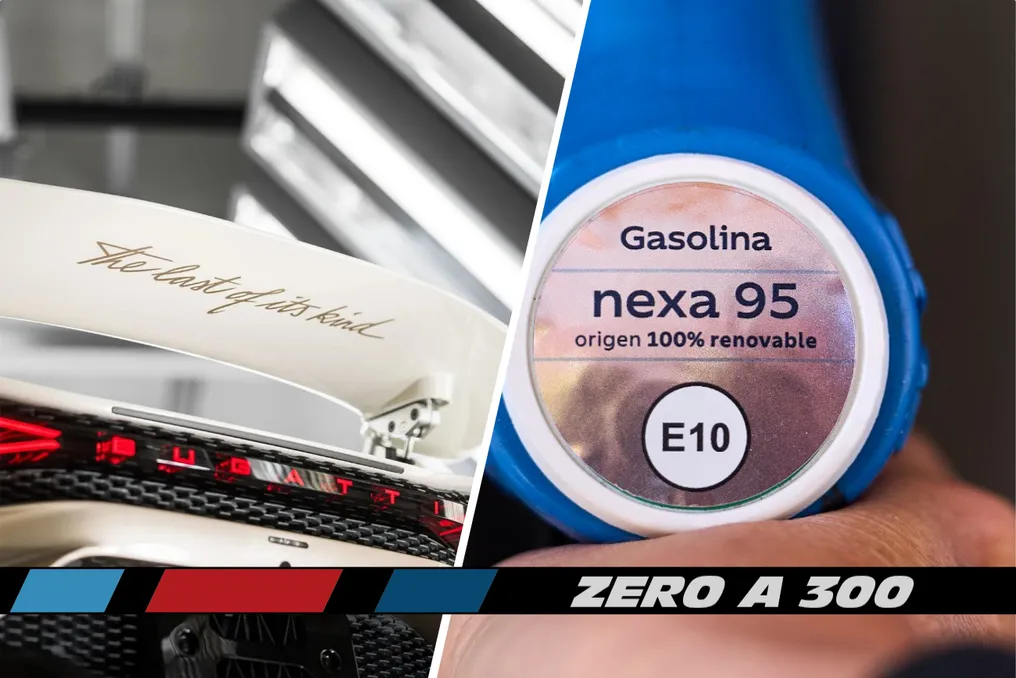
On the center console and the movable rear wing, the phrase 'The last of its kind — The last of its species' was engraved. Although the Mistral number 99 is the last of the official series, the Bugatti Solitaire program allows customers to order a unique one-off unit using the Chiron monocoque or the eight-liter quad-turbo W16 engine, while stock is available. These customized models have a power output of 1,600 hp and a torque of 163.1 kgfm.
In parallel, Toyota and BMW are testing a renewable gasoline developed in partnership between the oil company Repsol and Bosch. This fuel, called Nexa 95, aims to help address the ban on combustion cars in Europe, differing from synthetic e-fuels because it is produced from organic waste.
The logic behind Nexa 95 is that the carbon dioxide emitted from the exhaust would be offset by what the organic raw material absorbed during its life cycle, resulting in a reduction of over 70% in greenhouse gas emissions compared to traditional fossil gasoline. A significant advantage is that Nexa 95 is a 'drop-in' fuel, capable of directly replacing gasoline at the pump without the need for mechanical modifications or reprogramming of existing engines. For six months, a fleet of approximately 20 vehicles will be fueled exclusively with this new fuel, under monitoring by a digital telemetry system provided by Bosch.
The text reflects on the situation, pointing out that Brazil has had a similar solution for decades with ethanol, a green fuel used since the 1970s, which today makes up more than 30% of the national fleet, making it one of the cleanest in the world, even before the global climate concern.
At an event held on the 16th, MG introduced the electric hatchback MG4 Urban to the Brazilian market. With an initial price of R$ 129,990, the vehicle is positioned at the base of the brand's lineup, competing with models such as Dolphin Mini, Geely EX2, and GAC Aion UT.
Manufactured in Horizonte (CE), the MG4 Urban has dimensions of 4.39 meters in length, 1.84 m in width, and a wheelbase of 2.75 m, making it larger than the standard MG4, which starts at R$ 169,990 in the Comfort version. It also surpasses its competitors in trunk space, offering 477 liters, compared to 230 liters for the Dolphin Mini and 375 liters for the EX2.
MG offers the MG4 Urban only with an electric motor, but with two battery options. The 42 kWh version generates 150 hp, accelerates from 0 to 100 km/h in 9.6 seconds, and achieves up to 299 km of range. The 54 kWh battery delivers 160 hp, completes acceleration in 9.5 seconds, and travels up to 358 km on a single charge (Inmetro data). In European WLTP tests, the figures are 320 km and 415 km, respectively. Both batteries support fast DC charging, allowing travel from 10% to 80% in about 30 minutes.
There are three trim levels. The entry-level version, MG4 Urban Comfort 43 kWh, costs R$ 129,990 and includes LED headlights and taillights, a roof rack, 16-inch wheels, and automatic one-zone air conditioning. In terms of technology and safety, it features a 7-inch digital dashboard, a 12.8-inch multimedia center, 7 airbags, and the ADAS package with 15 driving assistants.
Above it, the MG4 Urban Luxury 43 kWh, for R$ 139,990, adds 17-inch wheels, heated front seats and steering wheel, ambient LED lighting, and a 360-degree camera system, in addition to electric seat adjustment and wireless charging.
At the top of the line, the MG4 Urban Luxury 54 kWh, valued at R$ 149,990, maintains the same comfort and safety features as the 43 kWh Luxury version, differing only in the larger battery capacity.
V12 engines seem to be in a comeback phase, and the newcomer Nilu27 serves as proof of this. Two years ago, the manufacturer presented the Nilu, a futuristic-looking hypercar with a classic proposal: naturally aspirated V12 engine, no hybrid assistance, manual gearbox, rear-wheel drive, and a light weight estimated at 1,200 kg.
Expectations were high, given that the Nilu27 had disclosed impressive figures at the time: over 1,000 hp, 11,000 rpm, and 1,200 kg. Although technically possible, the figures seemed excessive. However, a recent video published on the Nilu27 YouTube channel shows the V12 running on the workshop bench, demonstrating a powerful sound.
The V12 engine was developed by Hartley Engines, a company based in New Zealand. Configured in a 'hot V' with an exhaust manifold between the cylinders and individual throttle bodies, the 6.5-liter engine appears robust and represents an auditory alternative to the growing wave of electric hypercars. The project is led by designer Sasha Selipanov, who has prior experience at Lamborghini, Bugatti, and Koenigsegg.
The Nilu features a minimalist cockpit, with analog gauges, many metal components, seats integrated into the carbon fiber monocoque, and a highlight on the seven-speed manual gearbox. Nilu27 plans to send the engines from New Zealand to its factory in Germany, where the development and testing of the Nilu take place. Initially, 15 track units will be produced, with the possibility of homologation for 54 street models if the process is successful.
Aston Martin has also collaborated with developer Infinity Ward and publisher Activision to include an exclusive vehicle in the first-person shooter game Call of Duty: Modern Warfare 4. This vehicle is the Aston Martin Dreadnought, described by the brand as the 'ultimate high-performance tactical SUV.'
Visually, the Dreadnought resembles a futuristic Humvee, incorporating design elements inspired by Aston Martins, such as the front reminiscent of the late 1970s V8 Vantage, notably in the grille shape and headlight arrangement. Although it is a virtual vehicle, Aston Martin ensured that it has the sound of its V12 engine and that its physics were developed in conjunction with the brand's engineering department to realistically simulate the behavior of an Aston Martin, even in war scenarios.
The name of the car also originates from historical British combat vehicles, such as the HMS Dreadnought ship. Like the ship, the Dreadnought in CoD: MW4 includes reserve fuel tanks, ammunition compartments, and armor against heavy ordnance. Beyond the gaming universe, Aston Martin will present a full-size replica of the Dreadnought at the Fanatics Fest, a sporting event held in New York this weekend, while the game will be released in October of this year.
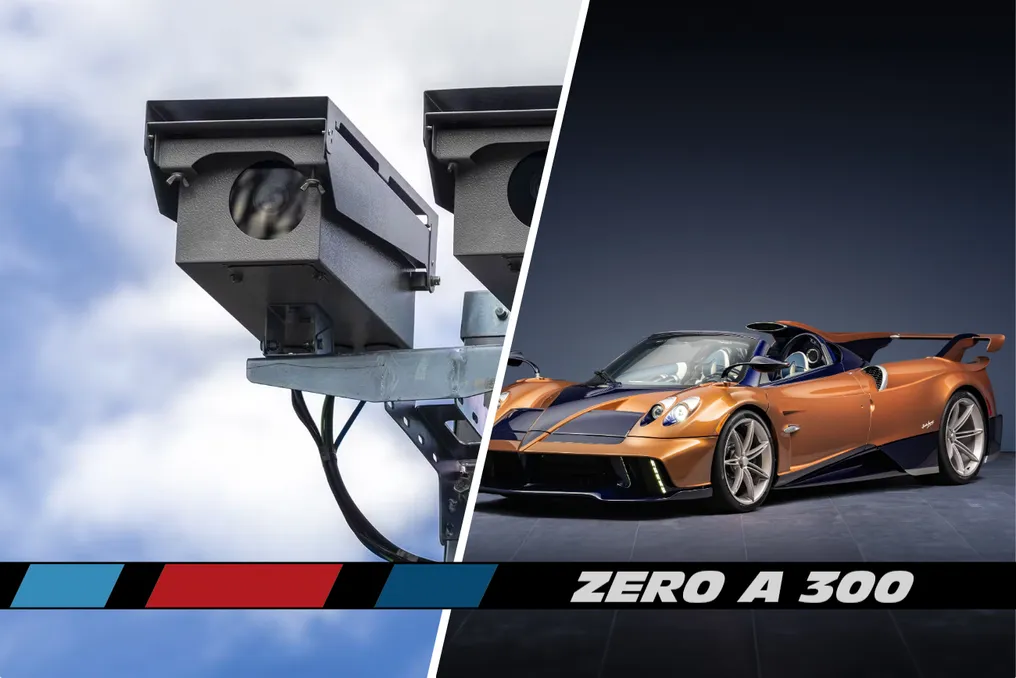
Brazilian cities are beginning to implement radars equipped with Artificial Intelligence (AI) to monitor specific infractions, such as seatbelt usage and mobile phone use while driving, as speed limits have already been adjusted and no longer allow reductions without causing urban contradictions.
In São Paulo, this type of monitoring is already active on the South and East sections of the Mário Covas Ring Road. After a testing and calibration period lasting almost a month, the new high-definition cameras, equipped with AI and infrared sensors, ceased to be merely educational. Since the beginning of July, the images captured by the system have begun to support real fines issued by the Highway Military Police (PMRv).
During the testing phase, which took place between May 12 and June 9, the SPMAR concessionaire's algorithm registered the seriousness of the situation, totaling 4,879 infractions, representing a notable average of 168.2 daily violations. Of these, almost half (49%) was motivated by drivers failing to use seatbelts, and 30% referred to passengers without belts. Mobile phone use while driving accounted for 21% of the infractions, indicating these are the focus areas for AI radar surveillance.
Unlike conventional speed radars, which use inductive loops or lasers at fixed points, these cameras monitor traffic continuously, 24 hours a day. The algorithm scans the interior of vehicles and, upon identifying the absence of a belt or the driver holding a phone, freezes the image and triggers an alert. It is important to note that the application of the fine is not automatic; the material is sent to a shared center, where highway police officers conduct a human verification of each record, confirming whether the classification follows the criteria of the Brazilian Traffic Code (CTB) before issuing the notification.
The technology is not limited to the Ring Road. Since January 2026, the Anchieta-Imigrantes System has been operating with this same analytical monitoring model, supervising speed, seatbelts, and mobile phones on the descent towards the Santista Lowlands. The plan established by the concessionaires and the state government aims to progressively expand AI surveillance to the main São Paulo highways, prioritizing sections with the highest traffic volume and critical history of accidents caused by distraction.
In the automotive sector, the Dacia Striker emerges as a precursor to Renault's future coupe SUV in Brazil. Given the trend of all vehicles becoming SUVs in the Brazilian market, it is expected that the next step will be the expansion of the 'coupe SUV' niche, a segment proven to be profitable for brands like Volkswagen and Fiat. Although Renault's initial project for a mid-sized SUV above the Kardian had a coupe format, it reached the market as the Boreal, with a traditional SUV silhouette. However, plans for a model with a sloping roof were resumed with the presentation of the Dacia Striker in Europe.
Built on the RGMP (Renault Group Modular Platform), which also serves as the base for the Boreal and the Niagara pickup, the Striker is the Romanian version for the C-SUV coupe segment. It has a length of 4.62 meters, making it slightly larger than the European Bigster and the national Boreal (4.57 m). This dimensional increase is concentrated in the rear section, a design necessity to maintain the visual proportion after the roof slope and ensure a trunk capacity of 600 liters.
Internally, the Striker's architecture shares the Boreal's structure, featuring a raised center console to house the electronic parking brake, driving mode selectors, and the gear lever. When the model is localized by the French brand around 2027 in Brazil, its exterior look will shift from Dacia's rectilinear aesthetic to Renault's more fluid lines, aligning with the stylistic identity of the Niagara. The mechanical engineering of the European Striker also anticipates what Renault plans for Brazil. In Europe, the top-tier all-wheel-drive version uses an e-AWD system without mechanical connection between the axles: the 1.2-liter 140 hp turbo engine drives the front wheels, while an independent 31 hp electric motor assists the rear axle on demand in low-grip conditions or maximum acceleration. For the Brazilian market, this electronic architecture will be adapted to the 1.3 TCe Flex engine, combining light 48-volt electrification in the front with the auxiliary electric motor on the rear axle to enable 4x4 traction, with a planned launch in the country in 2027.
The Nissan Sentra has shown very low sales recently; in the first half of 2026, only 341 units were registered in Brazil. For context, the Toyota Corolla, the absolute leader among mid-size sedans, recorded 13,021 sales, while the hybrid BYD King came in second with 8,196 units. Given this performance, it is evident that the low commercial performance influenced the manufacturer's decision to end production of the model three years after the current generation was launched.
Although the Sentra is considered an attractive, well-equipped, and competent car, it used the same engine as the previous generation: a naturally aspirated 2.0L gasoline engine with direct injection, producing 151 hp and 20 kgfm of torque, coupled with an eight-speed simulated CVT gearbox. Despite this mechanical setup seeming dated in 2026, it could be a selling point for those who prefer a more traditional style. However, the successor is already under development and represents a complete break from the past. According to Autoesporte, it is the Nissan S7, an electric vehicle developed in collaboration with the Chinese company Dongfeng, which uses an electric motor on the front axle, powered by a 73 kWh battery. With 272 hp and 30.5 kgfm of torque, it can reach 100 km/h in 7 seconds, with a maximum speed limited to 160 km/h.
To celebrate the start of the Goodwood Festival of Speed, Pagani Automobili presented the Huayra 70 Derecho. This is the second example of a 'few-off' series (a type of limited edition with more than one unit) created by the Grandi Complicazioni division to mark the 70th anniversary of the brand's founder. Unlike the tradition of naming its cars after specific winds, the choice 'Derecho' refers directly to a severe storm system of fast and linear displacement, which Pagani compares to the constant power delivery offered by the supercar.
The 70 Derecho stands out for its high level of technical finish, which is a trademark of the company located in San Cesario sul Panaro. The body features a two-tone scheme in Pearl Orange and Inky Blue. On the underside and the central monocoque, the blue tone is completely translucent, exposing the 'fishbone' pattern of the carbon fiber weave that constitutes the structural panels. Beneath the paint, the architecture combines a central monocoque made of Carbo-Titanium HP62 G2 and Carbo-Triax HP62, with front and rear chromoly steel subframes, externally complemented by block-machined aluminum parts anodized in bright titanium, a finish replicated on the new wheels.
Under the hood is the iconic 60° Pagani V12, with 5,980 cc and two turbochargers, developed by Mercedes-AMG. In this configuration, it generates 864 hp at 6,000 rpm and 112.2 kgfm of torque, available between 2,800 and 5,900 rpm. All this power is directed exclusively to the rear wheels via a transmission with an electromechanical locking differential and managed by a seven-speed transverse manual gearbox developed by Xtrac, allowing the car to reach its maximum speed of 350 km/h (electronically limited, as is usual).
Inside, the artisanal work combines Ceramic White leather and Tricolore Blue with custom stitching. The Pearl Orange of the body appears in strategic points of interaction with the driver, such as the '12-hour' marking on the steering wheel and the gear lever. The fact that it has a lever with a grille on the center console, connected to a genuine manual transmission—and not an automatic gearbox with simulated gears—already gives the Huayra 70 Derecho a special character. The vehicle also features independent suspension using superimposed triangular arms, equipped with upper wishbones, helical springs, and adjustable and interconnected electronic dampers. Contact with the asphalt is ensured by Pirelli P Zero Trofeo R tires (265/30 R20 in the front and 355/25 R21 in the rear), while braking is handled by a Brembo CCM system with four carbon-ceramic ventilated discs, measuring 398 mm in the front and 380 mm in the rear.
The elaborate style and watchmaking precision applied to a supercar may not please everyone, but they convey an unmistakable personality. Horacio Pagani reinforced the Renaissance philosophy guiding the management of his workshop. He stated: 'Our daily commitment is to dedicate maximum attention to every detail, seeking to approach that essential harmony between form and function, intellect and craftsmanship, exactly as Leonardo da Vinci taught us. Being able to present the world premiere of the Pagani Huayra 70 Derecho at Goodwood is a privilege for us: an opportunity to share the fruits of this work with those who share our deep love for the automobile.'
Continuing the theme of V12 engines and Goodwood, the Zenvo Aurora also participated in the event. This is the latest hypercar from the Danish manufacturer, which was unveiled almost a year ago with the ambitious goal of presenting the most powerful 12-cylinder engine ever installed in a road car. Now, Goodwood served as the stage for the debut of its production version.
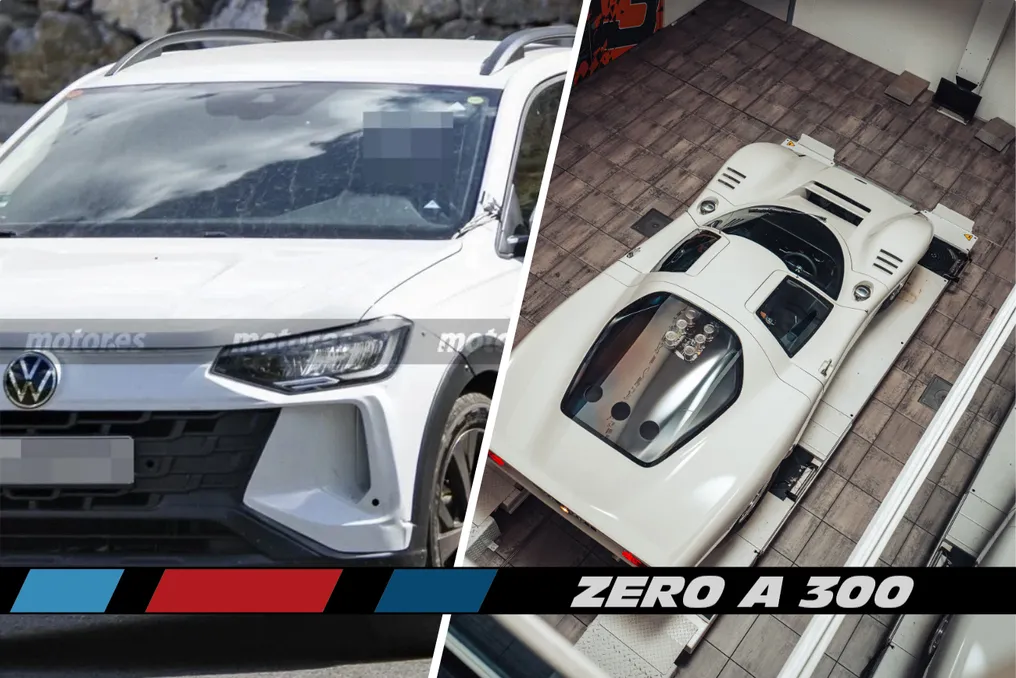
} , {Volkswagen is preparing the second generation of the compact crossover Nivus, which is expected to arrive in Brazil next year. Prototypes of the model are already being tested, disguised to hide the adoption of a new platform.
The new structure will be based on the MQB Hybrid architecture, replacing the MQB A0 due to its support for hybrid systems. This platform change will allow the Nivus to gain in length, wheelbase, and width, slightly distancing it from the traditional compact segment.
Prototypes were spotted by vehicles from the website Motor.es, appearing similar to the VW Taigo (European version of the Nivus), except for the front end, which uses a VW Tera bumper to accommodate structural changes, mainly in the front width. The wheelbase will increase by 9 cm, reaching 1.65m, which will significantly benefit the legroom for rear passengers, a weak point of the current model.
The suggested powertrain options indicate a change in the strategy for the new Nivus. The 1.0 turbo engine should be replaced by the 1.5 TSI Evo 2, which can run on gasoline or ethanol and will be combined with a 48V mild hybrid system in entry-level versions. This configuration generates 150 hp and 25.5 kgfm of torque, using a six-speed automatic torque converter gearbox.
In higher versions, the MHEV system will be replaced by a full hybrid (HEV) setup, keeping the 1.5 turbo engine but with more power: 170 hp and 31.6 kgfm of torque. In this case, the transmission will be a seven-speed dual-clutch unit.
To celebrate Fiat's 50 years in Brazil, which began with the iconic 147 in 1976, the manufacturer launched a special series for the Toro pickup and the Fastback crossover, both with 550 units available.
The Toro, based on the Volcano version, features exclusive 'Maximum Steel' gray paint, commemorative emblems, and darkened details on the wheels and trim. It has a black roof, and the interior features suede upholstery on the doors and seats, with 'Fiat 50 Years' embroidery and a special message on the dashboard. It is equipped with a 10-inch multimedia center and an ADAS package, including automatic braking, lane departure warning, front parking sensors, blind spot sensor, and rear cross-traffic alert. Its engine is the 1.3 turbo flex with direct injection and a 48V mild hybrid system, delivering 176 hp and 27.5 kgfm of torque, coupled to a six-speed automatic gearbox.
The Fastback Special Edition Fiat 50 Years follows a similar aesthetic but in Amalfi Blue. Based on the Fastback Impetus, it stands out with a panoramic sunroof. It includes a digital dashboard, a 10.1-inch multimedia system with wireless connectivity for Apple CarPlay and Android Auto, and an ADAS package with emergency automatic braking and lane keeping assist. The engine is the 1.0 GSE turbo flex with a mild hybrid system, producing 130 hp and 20.4 kgfm of torque, connected to a simulated seven-speed CVT gearbox. Fiat has not yet disclosed the prices for this special series, which will start selling next Thursday (9).
Previously, it was explained that the growth of Chinese EVs was driven by local incentive policies. However, preliminary data from the China Passenger Car Association (CPCA) shows a 13% contraction in the market compared to the previous year, after hundreds of brands were created and supply exceeded demand.
Several factors contribute to this decline, such as local economic instability, leading Chinese consumers to wait for a possible price war. Additionally, the gradual withdrawal of government subsidies has reduced the appeal of EVs compared to hybrids. The Chinese government has already cut tax exemptions this year and confirmed that it will completely eliminate annual incentives for electric, hybrid, and fuel cell vehicles starting January 1, 2027.
This local slowdown may impact the global market, especially large importers like Brazil. Due to excess stock, reduced margins, and financial risks, Chinese manufacturers need to export this surplus. Brazil has an incentive program for these vehicles coming from China. Analysts predict that China will continue to break export records in 2026, projecting 10 million units, a 41% increase over last year.
Currently, only three manufacturers actually profit in China—BYD, Xiaomi, and Leapmotor—two of which are strong in Brazil. Consulting firms like AlixPartners estimate that at most four more brands will survive this crisis, citing GWM and Geely. The others will face bankruptcy or merger.
Bruce McLaren is a prominent figure in motorsport history, known for victories in Formula 1 and the 24 Hours of Le Mans, and for founding McLaren. His main aspiration, however, was to apply his track experience to creating road cars. Although McLaren became a major supercar manufacturer, the New Zealander died in 1970 during testing of the McLaren M8D.
The M6GT, the car conceived by Bruce McLaren, was a closed, street-homologated version of the CanAm prototypes. More than half a century later, McLaren officially realized this concept through McLaren Special Operations (MSO), creating a unique example based on the final design of the 1960s.
The project focused on historical fidelity, avoiding modernizations. The chassis was taken from a contemporary M6A race car, and the body replicates the original molds, preserving even minor development modifications made during tests of that decade. Mechanically, the vehicle uses a central-rear V8 small-block engine with heads identical to the originals, along with period transmission and suspension. The artisanal work included the manual fabrication of hidden structural elements and the replication of the windshield via digital scanning. The interior features green vinyl seats and a walnut wood gear knob. The exterior paint, Colnbrook White, pays tribute to the region where Bruce began his activities, evoking the look of the 1966 McLaren M2B Formula 1.
The M6GT will be displayed at the Goodwood Festival of Speed, alongside models such as the Can-Am M8A and the McLaren F1 GTR, representing the DNA of all McLaren road supercars.
After ceasing operations in Russia in March 2022 due to economic blockade, the Avtotor factory in Kaliningrad was not dismantled. Instead, it ignored the end of the partnership and resumed production of the X5, X6, and X7 models using spare parts left in the warehouses, without authorization from the German headquarters, which disclaimed any responsibility.
Although sales in authorized dealerships dropped drastically to 505 units in 2023, the brand managed to regain leadership in the Russian premium segment in 2025, thanks to the importation of wheels from China and neutral countries. However, the Kaliningrad scheme is considered marginal. Local media reports that more than 145 of these 'unlicensed' SUVs were sold between 2025 and 2026 to wealthy clients. The price of an X5 produced under this scheme starts at 11.9 million rubles (approximately US$ 155,000), making it more competitive than that practiced by independent importers.
A notable aspect of this survival engineering is the embedded technology. Since Avtotor workers are merely assembling a puzzle with what remained before the embargo, the cars are dated 2025 and 2026, but retain the mechanics and appearance of 2022 models. Later aesthetic or technological facelift updates are absent. Furthermore, since BMW no longer participates, the ECUs do not receive official updates, which has become a selling point: these SUVs cannot be remotely blocked or disabled by BMW programmers in Germany.
To keep production active, the factory had to improvise with components from Russian manufacturers, expanding local production to models like the X6 40d, which was not originally manufactured there. Parallel production will only cease when the core stock runs out, unless they find a local or Chinese supplier to replicate the components.