The 2026 FIFA World Cup will be remembered not only for its bright moments on the field but also for a number of controversial situations that attracted global attention. The tournament demonstrated that football goes beyond just a game, touching upon issues ranging from ticket price disputes to political interference.
VAR Decisions and Egypt's Complaints
Egypt's defeat, which occurred after a late comeback, was overshadowed by the disallowed goal and the rejection of a penalty appeal following VAR analysis. This caused dissatisfaction from the Egyptian Football Association, which stated that several refereeing decisions affecting the match outcome were inconsistent and unfair. The association demanded the exclusion of the referee team from the remainder of the tournament.
Head coach Hossam Hassan also criticized the referees' performance, asserting that Egypt had been unfairly overlooked, and suggested that some decisions helped keep Argentina and Lionel Messi in the competition.
Trump's Political Interference
Another major issue arose during the World Cup after US President Donald Trump publicly intervened in a referee's decision concerning the American team. Trump stated that he had approached FIFA President Gianni Infantino requesting a review of the red card shown to US forward Folarin Balogun, calling the decision 'terrible.' He insisted that he had only requested a review and not pressured FIFA, later praising the governing body's decision to overturn the suspension.
His involvement drew criticism from football figures who believed that political leaders should not interfere in sporting decisions. Former Liverpool manager Jürgen Klopp was among the critics, stating, 'This is our sport, not theirs,' and warning that any political involvement in FIFA's disciplinary process would undermine the integrity of the game.
Levi's Marketing Stunt
FIFA took steps to remove unauthorized advertising from the stadiums by temporarily renaming all 15 host stadiums in North America that had commercial names. At the Levi's stadium in Santa Clara, which was renamed 'San Francisco Bay Area Stadium' for the tournament, large white coverings were placed over the Levi's logos both inside and outside.
Instead of ignoring this unusual move, Levi's turned it into a viral marketing campaign. The company changed its Instagram profile avatar to a masked version of its logo and spread the campaign to stores worldwide, placing similar white coverings on store signs in cities such as Paris, London, Brazil, Mexico, and Hong Kong. FIFA's decision aimed to protect its official sponsors, who pay hundreds of millions of dollars for exclusive partnerships and the right to associate their brands with the tournament.
Iran in the US Amidst Conflict
Iran's campaign at the World Cup ended in disappointment as the team narrowly failed to reach the playoffs. The national team's journey attracted attention even before the matches, as Iran became the first team to play a World Cup match in the United States while the two countries remain in a state of conflict, according to Reuters.
Visa restrictions and diplomatic tension forced Iran to travel from its base in Mexico for all three group stage matches in the US, with players facing strict entry and exit rules. Captain Mehdi Taremi called the situation a logistical 'disaster,' while coach Amir Ghalenoei stated that the team felt 'depressed.'
Unexpected Ticket Prices
Preparations for the 2026 World Cup were marred by debates over ticket costs, as fans criticized what they called record expenses. Initial FIFA prices, revealed by The Athletic in October, were the highest in World Cup history, with every ticket category costing more than comparable seats in previous tournaments.
An analysis of World Cup ticket prices by The New York Times showed that fans might have needed to spend between $19,256 and $10,000 to attend over 10 matches, and a three-match package could cost around $5,619. FIFA defended the pricing, arguing that it reflected the North American sports market and would help raise funds for football development worldwide. Nevertheless, many fans protested, calling the prices 'astounding' and 'unacceptable,' while Football Supporters Europe characterized them as a 'monumental betrayal' of the tournament's traditions. Despite the negative reaction, FIFA continued to increase ticket prices; seats for the Spain-Argentina final at the New York New Jersey stadium exceeded $10,000, making it one of the most expensive sporting events held in the United States, according to Reuters.
Hydration Breaks Caused Dissatisfaction
In December 2025, FIFA introduced mandatory three-minute hydration breaks in each half of the 2026 World Cup to protect players from the intense heat during the North American summer. Although these breaks were implemented as a player safety measure, they quickly became one of the tournament's most discussed changes, as they were filled with advertising, causing murmurs among fans who felt that football was transforming into an American format.
Previously, referees could call hydration or cooling breaks during matches in high temperatures, but the decision rested with officials, and such pauses usually lasted about 90 seconds, significantly shorter than the mandatory three-minute breaks introduced for the World Cup.
Iran vs. Egypt Pride Match
The tournament also served as a platform for broader cultural and political discussions. One of the biggest topics arose when fans were allowed to bring rainbow flags during the Egypt versus Iran match designated as the 'Pride Match' in Seattle on June 27, despite objections from both countries. The match took place during Pride month, and the local Seattle organizing committee dubbed it the 'Pride Match' even before the teams were determined in December.
Egypt and Iran expressed concern: the Egyptian Football Association stated that the event contradicted its values. The Iranian Football Federation also emphasized that no ceremonies or promotional events 'related to this movement' should take place inside the stadium, according to media reports. FIFA defended its position, stating that the World Cup is an 'inclusive event welcoming people of all walks of life' and permitted rainbow flags inside the stadium.
Racism Against Mbappé
French captain Kylian Mbappé criticized a Pan-American senator for racist remarks directed at him after Paraguay's exit from the tournament, calling the comments 'disgusting.' Mbappé scored the decisive penalty when France beat Paraguay 1-0 in a tense match in Philadelphia to advance to the quarterfinals. After the loss, Paraguayan Senator Celeste Amarilla published a series of racist comments on X targeting Mbappé, insulting his origin and nationality, and criticizing him in a post that caused widespread resonance. She went further, stating that Paraguayan players should have hit him after the match. Mbappé responded by condemning her remarks and defending both himself and the Paraguayan players, stating that her comments did not represent the country or the team's efforts in the tournament. The French Football Federation (FFF) announced its intention to file a lawsuit, calling the remarks 'absolutely disgusting and unacceptable.'
Conflict After the Final
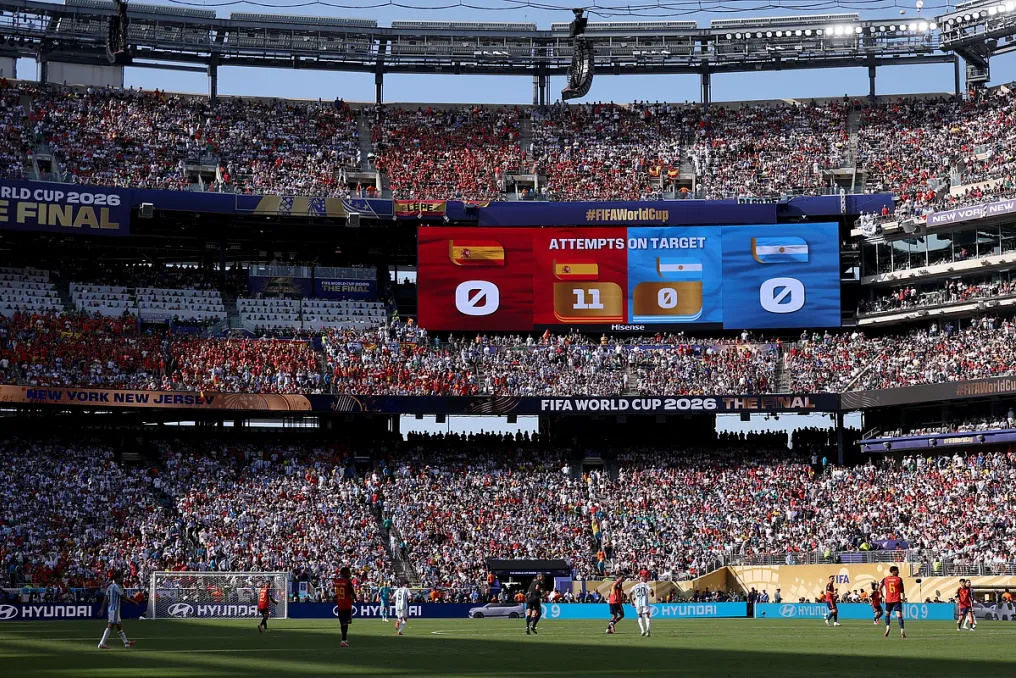
Spain's 1-0 victory over Argentina in the World Cup final ended with unpleasant scenes, as the celebrations were overshadowed by a fierce confrontation between players from both teams. The center of the incident involved Argentine midfielder Leandro Paredes and Spanish defender Eric Garcia; tensions escalated near the center circle after the final whistle. Videos circulated online showed Paredes grabbing Garcia by the neck before the confrontation turned into a fight involving players, substitutes, and coaching staff. FIFA appointed a prosecutor for discipline and ethics to investigate the post-match clash, with no deadline set for the completion of the review.