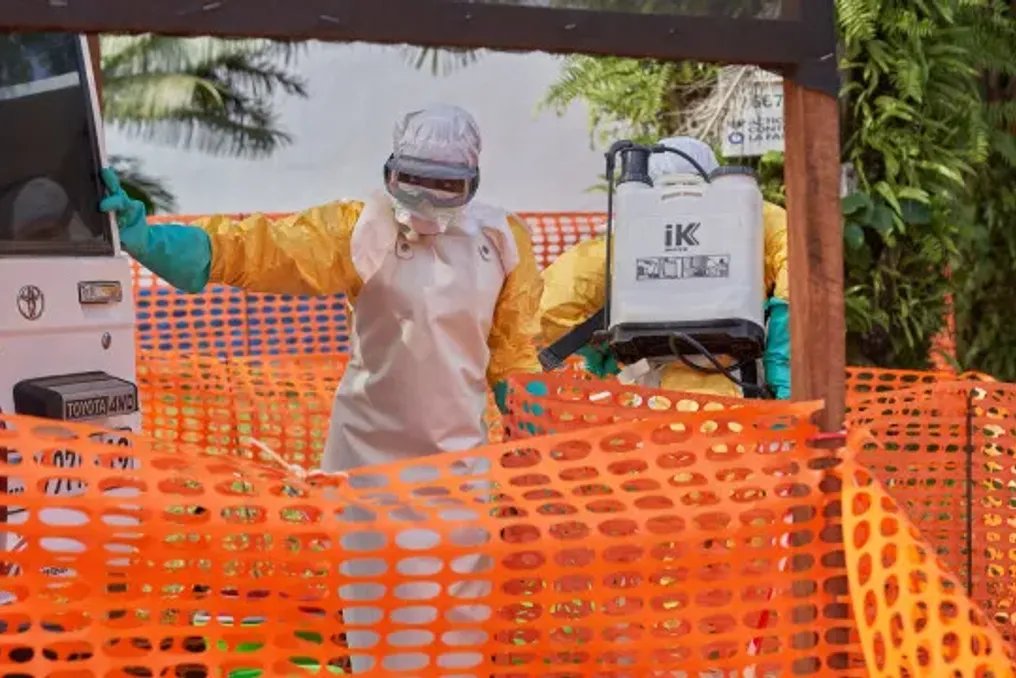
According to the latest bulletin released by the executive, based on data collected up to July 19, the number of Ebola-related deaths has risen to 967. The current recorded fatality rate is 39.9%.
Current status of the outbreak
During this period, 734 individuals are in isolation or hospitalization, while 469 people have recovered from the disease. Furthermore, the contact tracing rate reached 81.1%.
Affected areas and government response
So far, five provinces in the Democratic Republic of Congo have been impacted by the Ebola epidemic: Ituri, considered the epicenter of the outbreak, along with North Kivu, South Kivu, Haut-Uele (located in the east), and Tshopo (located in the north-central).
The DRCongo Government stated that health teams maintain continuous surveillance, assistance, and contact monitoring operations to prevent the spread of the disease. Meanwhile, the Congolese National Institute of Public Health (INSP) issued an alert in the bulletin, indicating that the results obtained from contact follow-up are still insufficient, which requires reinforcement of surveillance.
Transmission and geographical expansion
The presented data points to 'continuous community transmission' and the recent geographical expansion of the outbreak, which, according to the INSP, highlights the need to maintain intensive interventions in the epicenter while carrying out preparation activities in adjacent provinces.
International impact and history of the epidemic
The epidemic, which was declared on May 15 in the province of Ituri—a border region with South Sudan and Uganda—has also expanded to Uganda. However, Uganda discharged the last hospitalized patient on Thursday after recording a total of 20 confirmed cases, 15 of which were classified as imported from the DRCongo, including two deaths. With this, Uganda began a 42-day countdown without new cases, a necessary step to declare the end of the outbreak.
The current epidemic is linked to the Bundibugyo strain, whose fatality rate varies between 30% and 50%. According to the World Health Organization (WHO), there is no authorized vaccine or specific treatment for this strain, and the WHO classifies the risk of the outbreak spreading in Sub-Saharan Africa as 'high', but 'low' globally.
This episode represents the third worst Ebola epidemic ever documented and is the 17th to affect the DRCongo. Comparatively, the previous epidemic in West Africa, which occurred between 2014 and 2016, resulted in approximately 11 thousand deaths and 28 thousand infections. The one that occurred in eastern Congo, between 2018 and 2020, caused 2,299 deaths and 3,481 cases.
The Ebola virus is transmitted through direct contact with the body fluids of infected people or animals and causes severe symptoms such as hemorrhagic fever, vomiting, diarrhea, and internal bleeding.