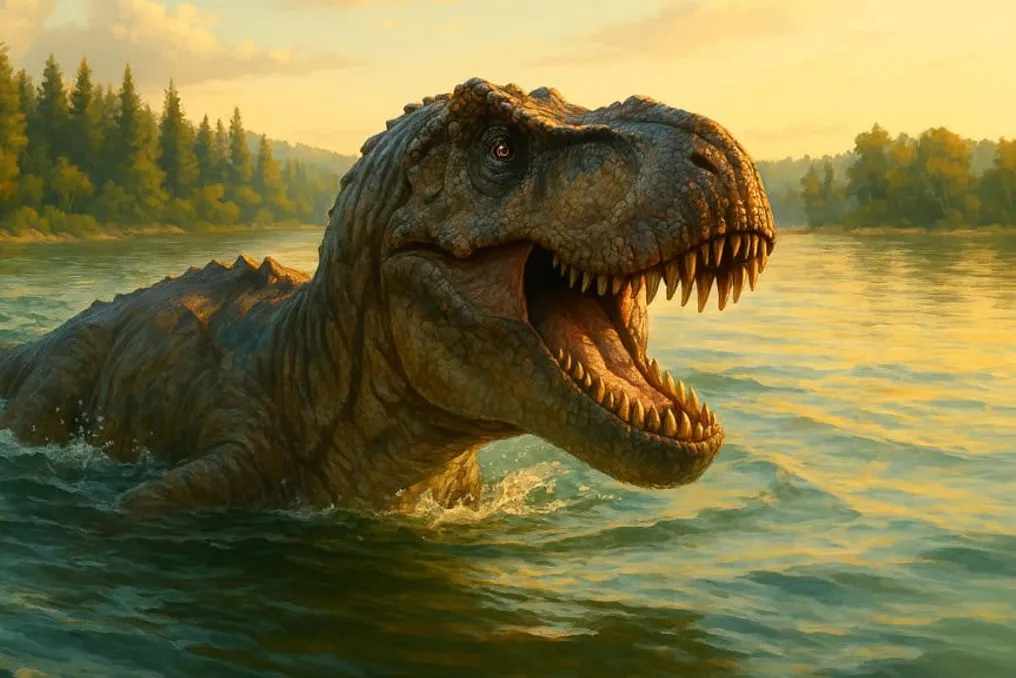
Researchers from Loma Linda University examined over three thousand dinosaur bones recovered from a deposit in Wyoming, United States, and managed to identify four pieces with markings attributed to the Tyrannosaurus rex.
Limitations in marking identification
The study, published in the journal PLOS One last Wednesday (15th), demonstrated that signs resembling bites can mislead even specialists. Factors such as diseases, decomposition processes, and the natural structures of the bones are capable of generating marks that imitate predator attacks.
Bethania C. T. Siviero and her team conducted this investigation with the aim of establishing methods to differentiate traces left by carnivorous animals from modifications resulting from natural phenomena.
Analysis of fossil findings
The fossils analyzed come from the Lance Formation, located in northeastern Wyoming, an area that formed approximately 66 million years ago, at the end of the Cretaceous period. This site contains a large quantity of bones, predominantly belonging to the herbivorous dinosaur Edmontosaurus annectens.
Over two decades of excavations, thousands of fragments were collected from the deposit, forming a collection known as a bonebed, which contains remains of various species mixed together, without the configuration of complete skeletons.
Although the team sought evidence of predation, they found only 13 bones with any mark similar to a bite. After a more detailed inspection, only four exhibited characteristics consistent with the action of the T. rex.
The confirmation of the identification was based on comparing the patterns left by the teeth with the known characteristics of carnivores from that era. The most significant marks were small parallel scratches created by dental indentations.
Importance of correct recognition
According to Bethania C. T. Siviero, a paleontologist at Loma Linda University and project leader, it is crucial to recognize the correct origin of changes in bones to interpret the behavior of extinct animals. She clarified to Earth.com that surface marks can have multiple origins and require careful evaluation.
The team concluded that the spacing of the small protuberances on the teeth corresponded to the Tyrannosaurus rex, as other predators in the region possessed teeth with closer serrations, generating distinct patterns.
Among the fossils examined were a rib, a caudal vertebra, a piece of the spine, and a section of a forelimb. A second bone showed scratches similar to those of the T. rex, but lacked sufficient detail for definitive confirmation.
Case of false bite
One of the most illustrative findings of the study involved a jaw fragment that initially appeared to have been attacked by a crocodile, due to a sequence of regular perforations resembling tooth marks.
However, analysis performed by computed tomography revealed a different explanation: the channels traversed the interior of the bone in several directions and connected, a characteristic compatible with natural structures that transported blood vessels and nerves while the animal was alive.
Additionally, it was verified that the material did not belong to Edmontosaurus, as initially thought. Comparison pointed to a similarity with the jaw of a young Torosaurus, a dinosaur belonging to the ceratopsid group, which includes Triceratops.
This incident highlighted how a mistaken interpretation can lead to incorrect conclusions about the interaction between ancient species, since a supposed crocodile bite on an herbivore would actually be an intrinsic anatomical feature of the animal itself.
Signs of post-mortem consumption
The researchers also investigated the context of the marks found. The absence of any sign of healing suggested that the animals had likely already died before sustaining the observed damage.
Siviero explained to Earth.com that bones of animals that survived attacks would show signs of tissue regeneration. Since such signs were almost nonexistent, the researchers considered it more probable that predators consumed available carcasses.
Other elements at the same site corroborated this hypothesis: broken ribs near the ends, insect marks, and signs of climatic exposure indicate that the bodies were exposed on the surface for a period before being buried.
The frequency of tooth marks also varied between different fossil deposits. While a study in a deposit in Colorado, dated to about 150 million years ago, recorded signs on nearly one-third of the bones analyzed, the Wyoming site presented a proportion of less than 1%.
New criteria for paleontology
Based on the results obtained, scientists established specific criteria to determine whether a bone alteration truly corresponds to a bite. This analysis takes into account the shape, depth, edges, and location of the marks, as well as the anatomy of the suspected animal.
The purpose is to increase the credibility of inferences about the feeding habits and relationships between extinct species. A mistakenly classified mark can transform a natural alteration into false evidence of hunting or conflict between animals.
For the researchers, this study does not invalidate the theory that the T. rex fed on other dinosaurs, but rather demonstrates that such records are significantly rarer and more complex to recognize than previously assumed.