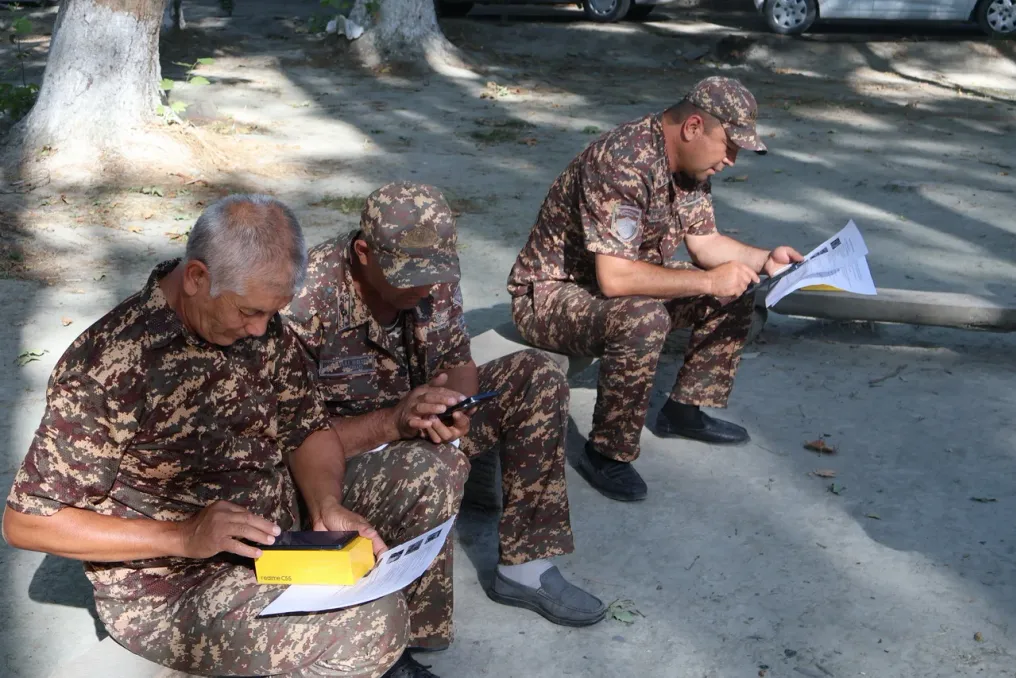
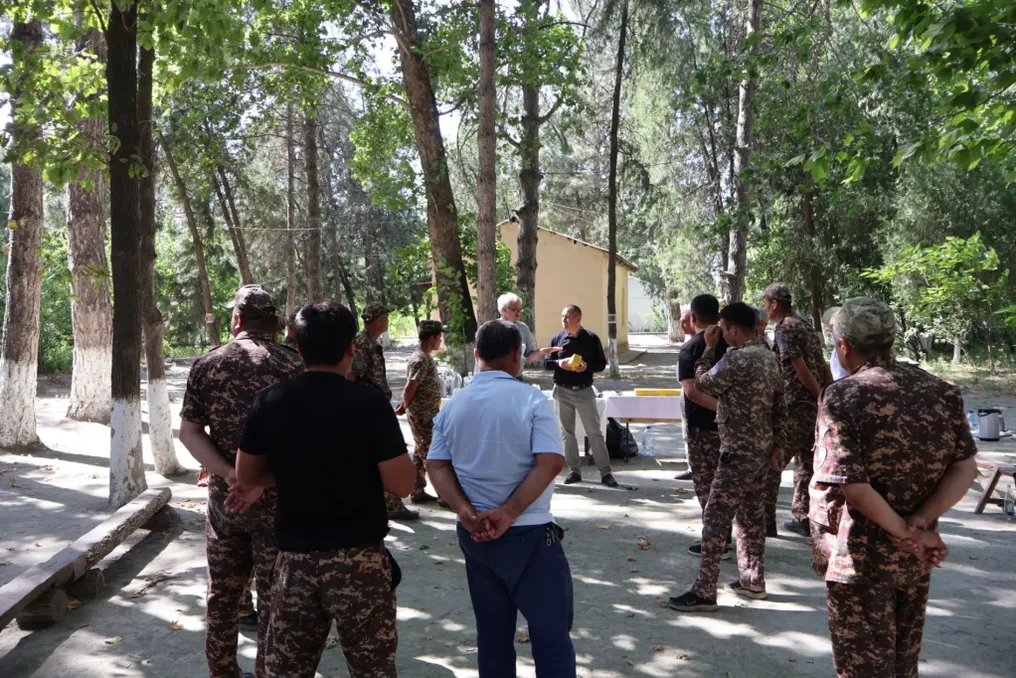
The SMART Patrol system has been launched in the Zarafshan National Nature Park, which will fundamentally change the methods used by inspectors. Thanks to this system, staff will be able to abandon the use of paper logs and switch to digital monitoring using smartphones and GPS devices.
Training and Technology Implementation
Currently, a special training session on working with SMART Patrol is being conducted in the park. This training was organized by the National Committee for Ecology and Climate Change together with the German agency GIZ. Park inspectors and specialists are mastering the SMART mobile application, which is designed to record all necessary data during patrols.
Instead of traditional paper reports, secure smartphones will now be used. With these devices, specialists can record their observations, determine exact coordinates, and immediately transmit the received information to a centralized database.
Application of the SMART System
The SMART system (Spatial Monitoring and Reporting Tool) is used in over one hundred countries worldwide and in thousands of different protected areas. Within Uzbekistan, this technology has already been applied in the South Ustyurt National Park, the 'Saiga' reserve, and the Surkhandi State Reserve.
Specialists are currently focused on studying the process of data collection and processing, as well as on quality control of data for preparing analytical reports. Upon completion of the training course, the system will be tested in real conditions, after which all collected data will be integrated into a single platform.
Expert Assessment and Park Expansion
Michael Hette, an international expert in wildlife conservation from the Netherlands, noted that the inspectors are demonstrating high responsibility during the training process. He emphasized that the implementation of SMART will significantly increase the accuracy of nature monitoring and strengthen the effectiveness of biodiversity protection measures.
It should be noted that the area of the Zarafshan National Nature Park was previously increased by 2807.61 hectares as part of environmental protection initiatives. As a result, the current total area of the park has reached 5234.01 hectares.