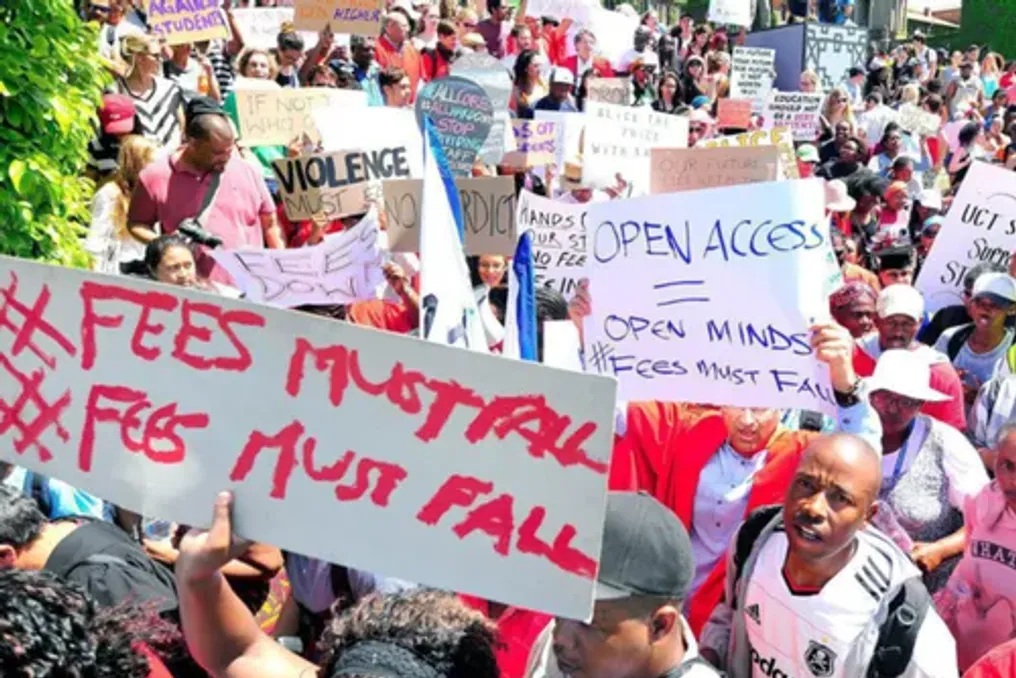
Ten years after the #FeesMustFall protests brought university funding to the center of national debate in South Africa, thousands of students continue to struggle with affording higher education.
The Funding Problem Remains Relevant
Despite a decade of discussion and good intentions, many students, especially those from low and middle-income families, remain outside the higher education funding system. The rising cost of living, complex economic conditions, and intense competition for state resources make sustainable and predictable support inaccessible to too many people.
In fact, the need is growing faster than the available support, leading students to bear emotional and financial consequences. While some receive full funding and others can support themselves, a large group falls in between. These students, often termed the 'missing middle class,' frequently come from households whose income is too high to qualify for many traditional forms of aid but too low to realistically cover tuition, accommodation, transport, study materials, and other necessary expenses.
Consequences of Financial Pressure
As a result, students are forced to work long hours in part-time jobs, take fewer modules than they could academically, skip meals, or drop out entirely when financial strain becomes unbearable.
Initiatives to Bridge the Gap
ISFAP is at the forefront of efforts to bridge this gap by combining funding with structured comprehensive support. Through partnerships with donors, corporations, and institutions, ISFAP focuses on students from impoverished backgrounds and the 'missing middle class,' particularly in priority fields such as engineering, medical sciences, ICT, and other critical skills.
The program provides not only support for tuition and living expenses but also elements like mentorship, psychosocial assistance, and academic support. These factors play a key role in helping students not just enroll in university, but complete their studies and transition into employment.
Sustainable Funding Models
Early results demonstrate that this approach can improve retention and graduation rates among funded students, even in a challenging economic environment where families face increasing pressure and labor markets are unstable. Sustainable funding models now involve not increasing expenditure, but leveraging partnerships, improving student performance, and maximizing the return on every unit of currency spent.
During Mandela Month, the question is not whether the country spoke loudly enough about the right to education. Instead, the real question is whether South Africa is organizing its resources, partnerships, and innovations in a way that truly opens doors for those who need it most, a decade after #FeesMustFall.
ISFAP believes that no single organization can solve the student funding crisis. However, by sharing what works and highlighting existing gaps, the organization hopes to contribute to a more honest national dialogue on how to support the next generation of graduates. Werner Abrahams, CEO of the Ikusasa Student Financial Aid Programme (ISFAP), emphasizes that the focus post-#FeesMustFall must be on practical, scalable funding solutions, and calls on potential partners to join in shaping the future of student support.