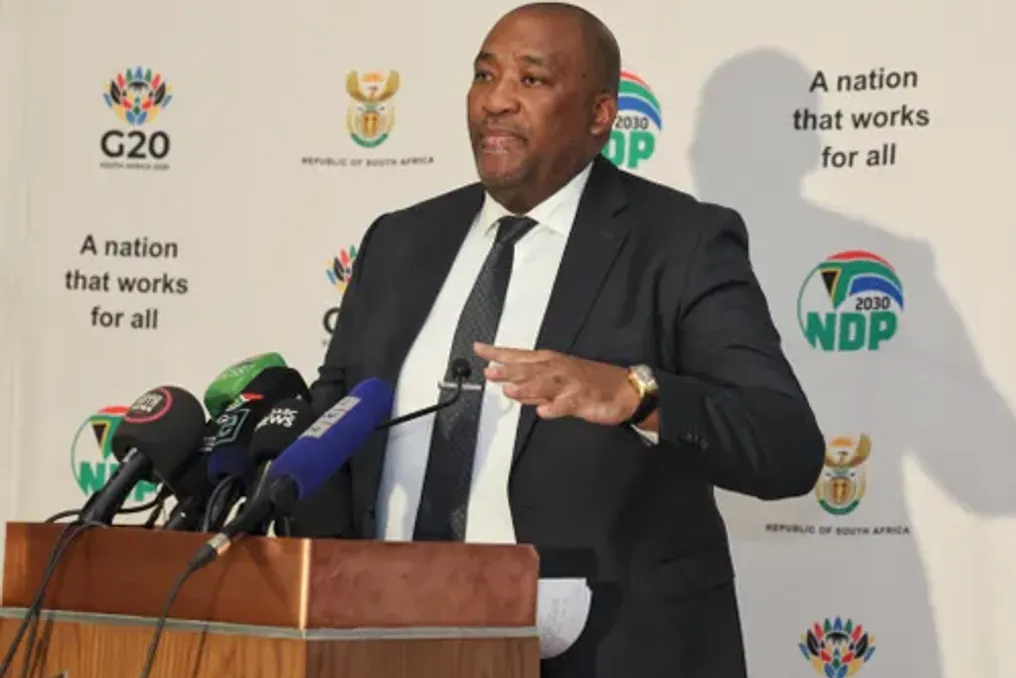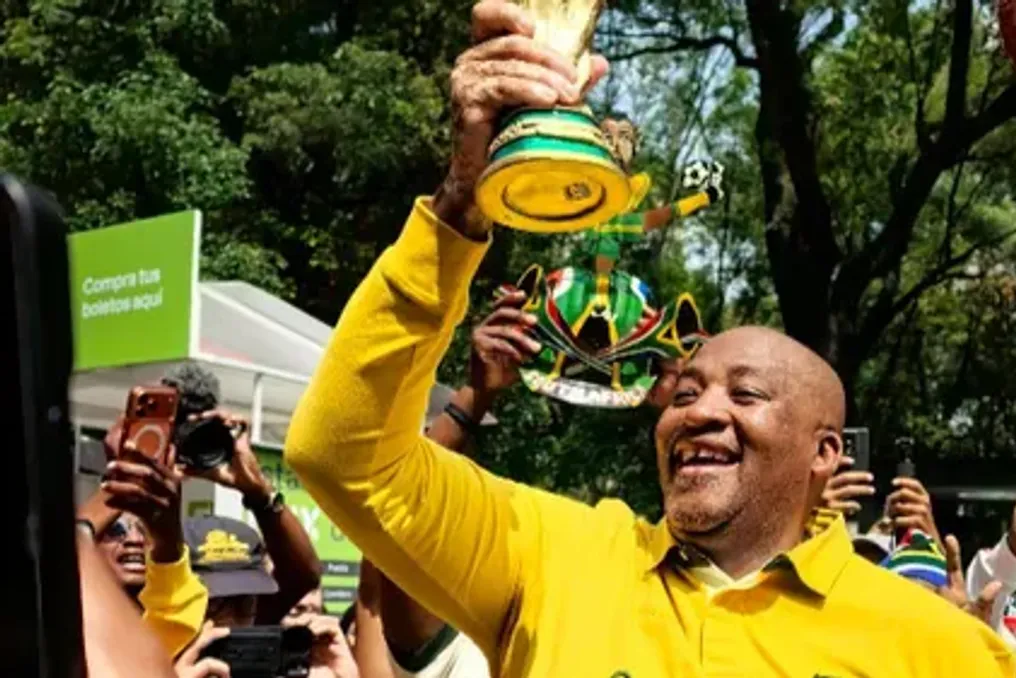
The Minister of Sport, Arts and Culture, Geyton Mackenzie, presented parliament with documentary proof of expenses related to his trip to the FIFA World Cup and called on opposition parties to provide evidence of any misconduct on his part.
The Minister of Sport, Arts and Culture, Geyton Mackenzie, presented parliament with documentary proof of expenses related to his trip to the FIFA World Cup and called on opposition parties to provide evidence of any misconduct on his part.
This followed an interrogation by the Democratic Alliance and ActionSA regarding the 31 million rand allocated to the Department of Sport, Arts and Culture for a delegation of 151 people in North America.
In a detailed statement, Mackenzie emphasized that the amount was openly disclosed in a parliamentary response and stated that 'there is nothing to hide.' He clarified that the program included 151 participants traveling to Mexico and the United States, excluding service providers, and that part of the costs was covered by private sponsors. The final reconciliation of sponsor contributions is still ongoing.
According to Mackenzie, 7.86 million rand was spent on the official delegation. These funds covered travel, accommodation, local transport, travel insurance, daily allowances, and other approved expenditures for civil servants, logistics personnel, communications teams, protocol officers, and South African artists.
Furthermore, 6.71 million rand went to the 'South Africa Legends 2010' program, which included a friendly match between the 2010 Bafana Bafana team and the 2010 Mexico legends team. Another 3.36 million rand was allocated for official event venues in Atlanta and Monterrey.
Mackenzie reported that 3.01 million rand covered 294 match tickets, while the remaining 10 million rand financed South Africa's exhibition stands in Mexico City, Atlanta, and Monterrey.
He asserted that all expenses align with the department's mandate to promote South Africa through sport, art, and culture. Mackenzie added that if anyone believes the money was improperly distributed, misappropriated, or spent, or that he personally benefited from corruption, he invites these individuals to present evidence.
He accused opposition parties of turning legitimate government expenditures into a scandal and stated that assumptions that he personally spent 31 million rand are false. Mackenzie also stated that his personal expenses amounted to 1,058,379.75 rand over a five-week period, including airfare, accommodation, and insurance.
He noted that he waived daily allowances totaling 55,000 rand, used public transport where possible, and stressed that no state funds were used for his family's travel.
The Minister of Sport, Arts and Culture, Gaitan Mackenzie, defended the expenditures of the Department of Sport, Arts and Culture (DSAC) for South Africa's participation in the 2026 FIFA World Cup, refuting claims that the spending of approximately 31 million rand was unjustified or improper.
In a detailed statement, Mackenzie noted that this amount was openly disclosed in a parliamentary response, emphasizing that 'there is nothing to hide.' He clarified that the program involved 151 people traveling to Mexico and the United States, excluding service providers, and that part of the costs were covered by private sponsors. The final reconciliation of sponsor contributions is currently ongoing.
According to Mackenzie, 7.86 million rand was spent on the official delegation. These funds covered international travel, accommodation, local transport, travel insurance, daily allowances, and other approved expenses for state officials, logistics personnel, communications teams, protocol officers, and South African artists.
Furthermore, 6.71 million rand was allocated to the South Africa Legends Programme of 2010, which included a friendly match between the 2010 Bafana Bafana team and the 2010 Mexico Legends team. Another 3.36 million rand was directed towards official event venues in Atlanta and Monterrey, which, according to Mackenzie, served as workspaces for meetings with government leaders, investors, sponsors, football officials, and international partners.
3.01 million rand was allocated for 294 official tickets to FIFA matches in the three host cities for program participants and the delegation. The remaining 10 million rand went towards creating South Africa exhibition stands in Mexico, Atlanta, and Monterrey. These funds covered construction, branding, technical equipment, logistics, security, and cultural events showcasing South Africa's potential in tourism, arts, cuisine, and investment.
Mackenzie asserted that all expenses complied with the department's mandate to promote South Africa through sport, art, and culture. He called on anyone who believes the money was improperly distributed, misappropriated, or spent, or who personally benefited from corruption, to provide relevant evidence. The Minister accused opposition parties of turning legitimate government spending into a scandal and stated that assumptions about him personally spending 31 million rand are false.
Mackenzie reported that his personal expenses amounted to 1,058,379.75 rand over a five-week period, including airfare, accommodation, and insurance. He added that he declined a daily allowance of 55,000 rand, used public transport whenever possible, and did not use state funds for his family's travel. He also mentioned that private partners, such as Brand South Africa, Coca-Cola, HONOR, Betway, Cell C, and Old School, funded the trips of happy fans, journalists, podcasters, and influencers, thereby reducing the financial burden on the state.
The Minister emphasized that the World Cup program included engagement with Mexican officials, stakeholders in investment and tourism, Formula 1 organizers, and cultural institutions, alongside activations and performances by South African fans in Mexico, Atlanta, and Monterrey. He assured that all expenses were approved in accordance with departmental procedures and fall under the Public Finance Management Act, Treasury regulations, and National Treasury cost containment measures. Every account, sponsor contribution, and payment undergoes a reconciliation process within a consolidated closing report to be presented upon completion.
The Democratic Alliance (DA) and ActionSA are insisting on holding the Minister of the Department of Sport, Arts and Culture (DSAC), Gethon Mackenzie, accountable, demanding a full justification of the expenses related to the South African delegation for the FIFA World Cup 2026, which are estimated at approximately 31 million rand.
Both political blocs have demanded that Minister Gethon Mackenzie provide a detailed breakdown of the costs. This information was disclosed by Mackenzie in a parliamentary response, which, according to both parties, does not answer several questions regarding the structure of the delegation and the nature of the expenses.
DA states that it has repeatedly requested detailed information about the budget, composition, and cost of the delegation over the past two months. Previously, the minister provided only general information, and later stated that the delegation included 20 artists and 18 civil servants. Among the officials, preliminary estimates suggest the minister himself, two support staff members, the CEO, and a project team of 14 people, costing just under 8 million rand.
However, DA emphasized that the exact number and names of the delegation members remain unknown, and the department has not yet presented the final audited cost of the trip. The party also questioned the presented expenditure figures and the ambiguity surrounding the delegation's funding.
DA intends to submit further parliamentary queries to obtain the missing data and demand a date when all information will be available. Furthermore, they plan to demand Mackenzie's appearance before the Parliamentary Portfolio Committee on Sport, Arts and Culture to report on the expenditures.
ActionSA clarified that nearly 31 million rand covered international flights, accommodation, hospitality suites, match tickets, a friendly match, and other country promotion initiatives related to the tournament. While the party acknowledges the importance of promoting South Africa internationally, it questioned the economic viability of such spending given the lack of basic sports infrastructure in many communities and ongoing challenges with national team funding.
ActionSA also expressed concern over Mackenzie admitting that his personal expenses had not yet been separated from the overall delegation costs, which prevents the disclosure of his individual spending to taxpayers. The party insists on complete transparency regarding all taxpayer-funded expenses, including travel, accommodation, and hospitality, pointing to the need for increased oversight through its bill on reducing ministerial privileges.
In response to the queries, DSAC explained that the 'delegation' included officials, artists, cultural participants, legends, media partners, sponsored fans, and implementation teams. The department noted that some individuals traveled using DSAC funds, others using sponsors, and a third group via implementation partners, and that grouping them into one list would be misleading.
The department also specified that the approved program was a scaled-down support for the FIFA World Cup, focused on Aldea Global, Atlanta, Monterrey, fan engagement, cultural promotion, and events related to the 2010 Legends.
According to DSAC, the previously submitted report recorded total program expenses of 30,945,370.15 rand. These funds were allocated to official trips, a Legends friendly match, suites, spectator tickets, and program activations.
Official trips and associated costs for the minister, two support staff members, the CEO, and the project team were estimated at 7,865,134.97 rand. This amount included international flights, accommodation, local transport, per diems, and operational costs. The department explained that this figure is not yet detailed to separate the minister's individual expenses from the overall delegation costs because elements such as security, protocol, and logistics were purchased as a single block.
DSAC reported that the final reconciliation for each person is currently underway. This reconciliation should include, where applicable: full name, position, role, city, associated program, duration of stay, flight cost, accommodation, transport, per diem, visa, insurance, accreditation, match tickets, hospitality, and source of funding. The department stressed that it is trying to avoid assumptions where account reconciliations have not yet taken place, and that the final response must clearly separate state-funded participants from sponsor-funded participants and implementation partner personnel to present the information accurately.