Four parliamentary committees held hearings to examine how the National Treasury suspended payments amounting to R13.5 billion under the equitable share for 69 municipalities. It was reported that funds for 27 councils were released on Thursday, and another 22 will be paid next week.
Circumstances of the Funding Freeze
Committees, including the Committee on Cooperative Governance and Traditional Affairs (Cogta), the Standing Committees on Finance and Appropriations, and the Standing Committee on Public Accounts (Scopa), met virtually. They received reports from the Treasury, the Department of Cooperative Governance, the Fiscal and Tax Commission (FFC), and the South African Local Government Association (Salga).
Earlier this month, the Treasury announced the suspension of the July equitable share tranche, amounting to approximately R13.5 billion out of a total of R110 billion allocated to local government this year. The reason cited was ongoing financial mismanagement, unpaid budgets, and outstanding debts to Eskom, water utilities, and other creditors. The number of affected municipalities was reduced from 99 to 69 after the councils presented their arguments.
Conditions for Receiving Payments
The Treasury CEO, Duncan Peters, informed parliamentarians that of the 27 municipalities that received payment on Thursday, 10 received the full deferred amount of R1.7 billion after meeting all Treasury conditions. The remaining 17 received partial funds totaling R2.9 billion, which were strictly intended for debt repayment, including Eskom, water utilities, the South African Revenue Service, and pension funds. These municipalities are also required to provide proof of payment before the remaining amount is released.
As payments are expected for another 22 municipalities next week, 20 municipalities remain without funds, and the Treasury stated that money will be disbursed weekly as the councils comply with the requirements. Peters noted that this intervention followed years of support that failed to change municipal behaviour.
Scale of Financial Problems
Since 2021/22, municipalities have accumulated R24.12 billion in fruitless and wasteful expenditure, R145.21 billion in irregular expenditure, of which R40.14 billion is only for 2024/25, as well as R118.13 billion in unauthorized expenditure. By the end of the year, they owed Eskom R3.40 billion in interest, and water utilities R1.21 billion. Furthermore, 116 municipalities, nearly half of the country's councils, adopted unpaid budgets in 2024/25.
Minister's Decision as a Last Resort
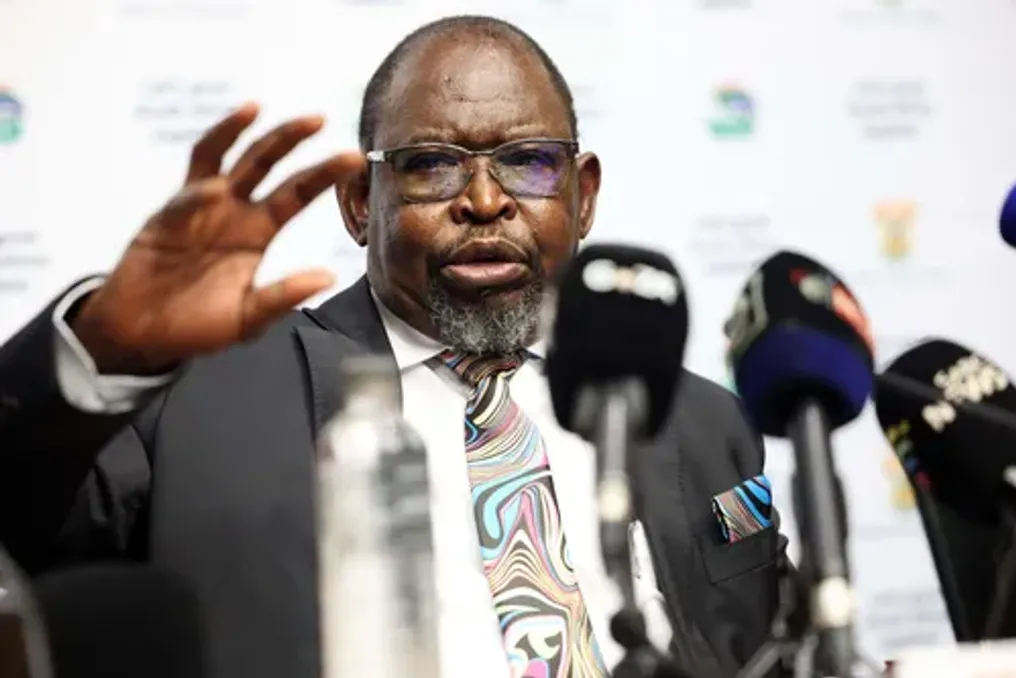
Finance Minister Enoch Godongwana told the committees that the freeze was a last resort, and Parliament was notified at every stage, with initial letters to chairpersons sent on June 19. He emphasized: 'Suspension or refusal is a last resort. It is a painful measure that we do not want to take.' He added that if everyone performed oversight functions, the need for such Treasury intervention would disappear.
Godongwana reported that the Treasury and Cogta agreed on a differentiated approach for councils in genuine need. He specified that last week they agreed on the necessity of identifying municipalities that are truly struggling and on joint work to support these councils. Cogta Minister Velenkosini Hlabisa agreed with the Treasury's view that municipal financial irresponsibility must cease. He noted that there is a general consensus regarding municipalities adopting unpaid budgets, as it is a lie to the public when it is known that there is no money but it is declared otherwise.
Proposals to Prevent Future Crises
However, his department expressed concerns about the manner of implementing the freeze, noting that it did not have time to inform the minister or MECs before its implementation. The seven-day window for municipalities to present their arguments was also deemed insufficient, as it ended just eight days before the scheduled transfer date of July 8. A five-stage solution was proposed for any future freezes, which includes formal consultation with Cogta in accordance with the Municipal Finance Management Act (MFMA), notification at least 14 working days in advance, and partial or phased withholding instead of a complete suspension, if less stringent measures can work.
The FFC, whose submission to parliament initiated the meeting, argued that the equitable share is an unconditional allocation approved by Parliament. It pointed out that stopping this distribution activates guarantees under Section 39 of the MFMA, including the affirmation of the Parliamentary decision within 30 days, the Auditor-General's report on each affected municipality, and a hearing for each affected council. The Commission strongly urged Parliament to fulfill this role without letting the deadline expire.
The Commission warned that 3.7 million needy households in the affected municipalities depend on the equitable share for free basic water, electricity, sanitation, and waste removal. Of the 69 municipalities, 15 had zero cash coverage, with a cumulative deficit of R4.65 billion. It was noted that the 69 municipalities owe their clients R217.9 billion, more than double the R97.4 billion they owe their creditors, with state departments and institutions accounting for R11.6 billion in debt and repaying only 4.4% of it within 30 days. The Commission stated: 'The application of measures is asymmetric: the lowest level faces the harshest tool.'
The Treasury informed parliamentarians that it is also taking action against state debtors by sending final notifications to national departments before blocking their funds, as well as preparing a second letter to provinces demanding missing documents and reasonable payment deadlines. Salga informed parliamentarians that the crisis has structural roots that enforcement alone will not solve, including water and electricity losses above 50%, collection rates below 50% in rural municipalities, increased general tariffs that municipalities cannot compensate consumers for, and the legacy of the 1998 amalgamation, which merged viable councils with failing ones.
Scopa Chairperson Songeso Zibi stated that a year of joint audits revealed the depth of the problem. He noted: 'A pattern has emerged where local authorities do not seem to take their duties seriously. When you ask why, the explanations are not good enough.' He concluded that a systemic failure is observed, and municipal public accounts committees are barely functioning. He also pointed out that provincial Cogta and public accounts committees were ineffective, shifting responsibility to MECs. Standing Committee on Appropriations Chairperson Musi Maimane stated that this situation requires establishing a permanent protocol between the executive and legislative branches of power. He stressed: 'The people of this country are represented in no other format than by the elected Parliament.' He added that it is crucial to establish a protocol for such actions in the future.
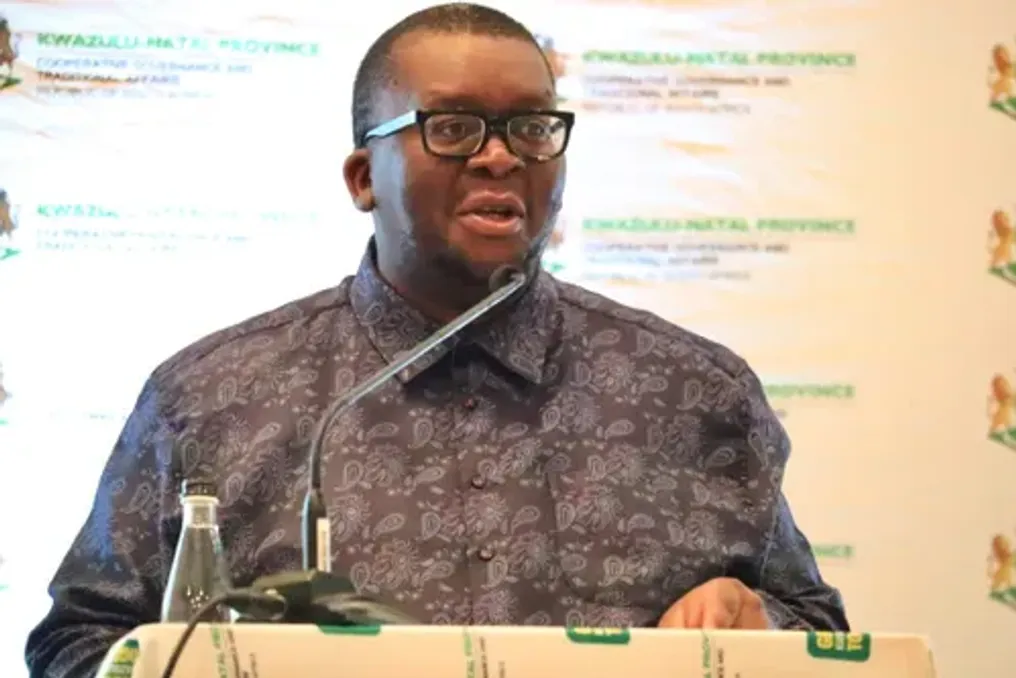
Committee Chairperson Dr. Zveli Mhize stated that the crisis has been brewing for years, starting with the consolidated Auditor-General's report for May 2025, which highlighted poor audit results, weak consequence management, and inefficient political and administrative leadership in municipalities.
[