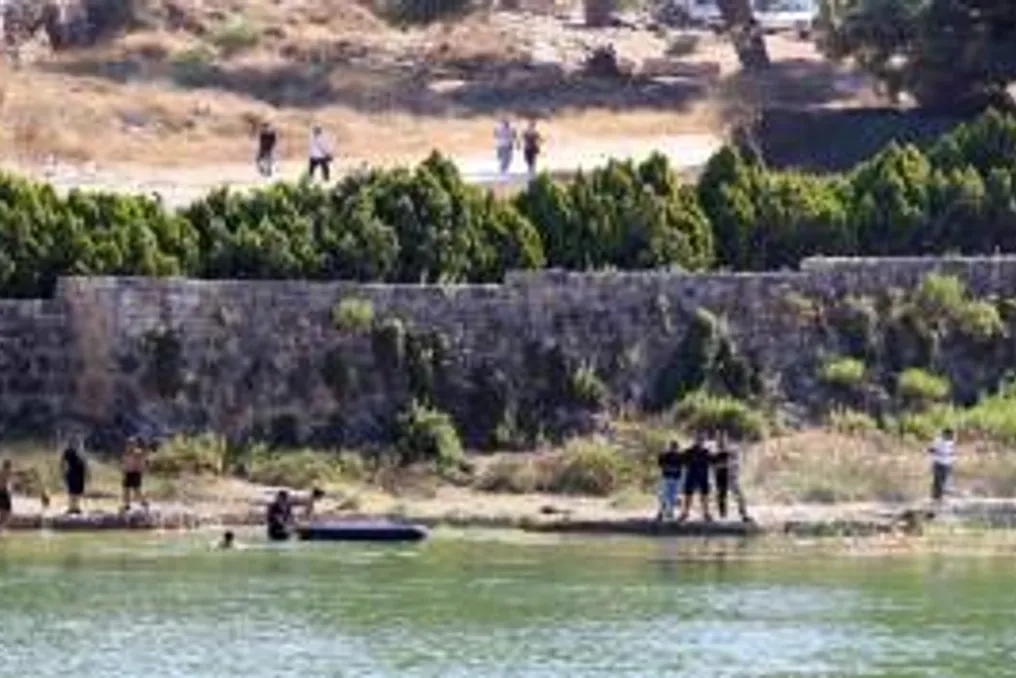
According to a report by The Guardian, Israel is attempting to seize a small body of water known as the ancient 'Solomon's Basins,' located near the city of Beit Jalahem, with the aim of gaining full control over the West Bank.
According to a report by The Guardian, Israel is attempting to seize a small body of water known as the ancient 'Solomon's Basins,' located near the city of Beit Jalahem, with the aim of gaining full control over the West Bank.
Following the announcement in May of this year by Israeli Finance Minister Bezalel Smotrich regarding the annulment of 30-year agreements defining Palestinian ownership of the territory, the activity of Israeli military and settlers in the area has intensified.
It is emphasized that according to the Oslo Accords of 1995, this location falls under 'Area A,' which is controlled by the Palestinian Authority and considered neutral. However, the Israeli Finance Minister calls this a 'terrible mistake' from that time.
Experts believe that claiming these basins completely undermines international agreements. This system of ancient basins, dating back to the 2nd century BC, was originally built by the Romans to supply water to Jerusalem, and later expanded by the Ottomans and the British.
Currently, this site is the only facility providing housing, fishing opportunities, and recreation for the residents of Beit Jalahem who are surrounded by Israeli settlements. Israel claims this complex, asserting it is 'Jewish heritage,' and attempts to link it to the name of King Solomon. Nevertheless, archaeologists reject this claim, as King Solomon lived 800 years before the construction of these basins.
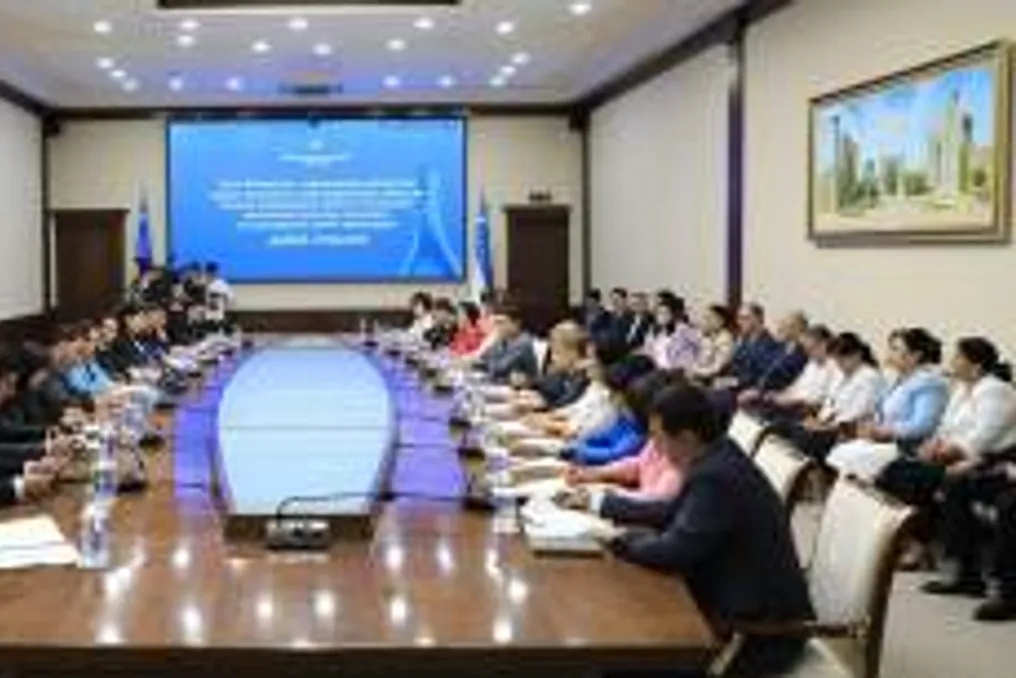
In connection with the 35th anniversary of the country's independence, a round table meeting was organized with the participation of the 'Adolat' faction of the SDP, the Parliamentary Committee on Combating Corruption and Legal Issues, and the Supreme Court of the Republic of Uzbekistan.
The event was dedicated to the topic: 'New Uzbekistan – a humane democratic state: ensuring the highest human values, the rights of women and children, and the foundations of reforms in the judicial and legal sphere.' During this discussion, the historical path of the development of the judicial and legal system over the years of independence was reviewed.
Achievements in protecting human rights, particularly the rights of women and children, as well as issues of elevating cooperation between the legislative and judicial authorities to a new level, were subjects of discussion. Special attention was paid to the fact that strengthening a free and just rule of law is a solid foundation in the country, and increasing the independence of the judicial system and the quality of judicial proceedings was raised to the level of a priority state policy.
During the discussions, Zuhriddin Mavlonov, a member of the 'Adolat' faction of the SDP, elaborated on the significance of constitutional reforms and legislative initiatives aimed at elevating human dignity, as well as the parliament's control in this process.
Furthermore, an analysis was conducted on issues of reliable protection of the rights of women and children through judicial mechanisms, the adaptation of international standards in this area to national practice, and the further improvement of legal instruments.
Rustam Qizi Asfandiyorova Shakina will defend her PhD dissertation in economics. The work is titled 'Improving Risk-Based Internal Auditing in Enterprises.'
Rustam Qizi Asfandiyorova Shakina wrote a dissertation to obtain the academic degree of Doctor of Philosophy (PhD) in the specialty 08.00.08 – 'Accounting, Economic Analysis and Audit.' This dissertation will be defended at a one-time meeting of the Scientific Council based on the decision of the Scientific Council for awarding academic degrees DSc.03/30.01.2020.I.10.03 under the National Research University 'Institute of Tashkent Irrigation and Agricultural Mechanization Engineers.'
The defense meeting is scheduled for July 18, 2026, at 10:00 AM. The meeting will take place at 39 Koriy-Niyoziy Street in Tashkent city. Phone numbers, fax numbers, and email addresses have been provided for additional information.
Representatives of mass media and bloggers visited a press tour organized by the Tashkent city mayor's office to familiarize themselves with the digitalization and infrastructure projects being implemented in the Sergeli district.
During the event, the results of construction work, digital management systems, modern infrastructure, and amenities created for residents were presented in detail. Special attention was paid to the reconstructed Sergeli car market.
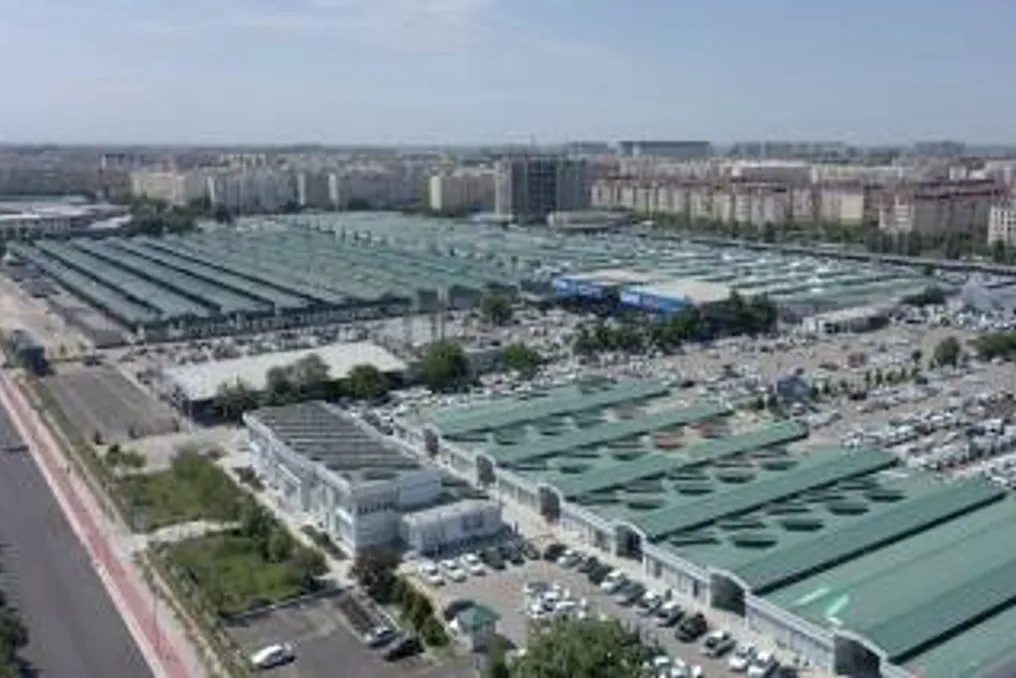
It is reported that as part of implementing the President's decision from January 5, 2026, on creating a safe environment in districts, the 'Sergeli Consumer Vehicles and Spare Parts' market, covering almost 24 hectares, was completely modernized.
Before the reconstruction, the market had 1,927 trading points and was visited by more than 7 thousand buyers daily. However, due to the lack of an organized parking lot and a unified management system, only about 4 thousand spaces were available for cars.
Thanks to the updates, 1,272 retail stores, 343 containers, and 7 hangars were brought up to modern standards, and 762 shopping passages were created. Thus, the total number of trading points reached 2,689.
58 thousand square meters of asphalt were laid in the market area, and the parking capacity increased by 32%, reaching the ability to accommodate 5,326 vehicles. Additionally, the problem of traffic jams on Yangi Sergeli Street was eliminated by building an additional 700-meter road.
The market has been fully digitized, and a modern situational monitoring center has been launched. For this, over 70 kilometers of optical and network cables, about 1,000 intelligent video cameras, more than 40 communication devices, and two servers have been connected to a single system.
In addition, an automatic fire alarm system has been installed in over a thousand trading points, and about 60 SOS buttons and alarm signals have been integrated. The new 'Avtobozor' program monitors incoming and outgoing vehicles, available and occupied spots in parking lots, as well as improperly parked cars in real time.
The market's entrance gates are equipped with smart barriers, cameras, and parking meters that accept cash and electronic payments. As a result, the time for vehicles to enter the market has been reduced from the previous 2-3 minutes to 20 seconds, and the throughput of the gates has increased sixfold.
It is noted that parking meters, which cost $30-50 thousand abroad, are localized and produced locally for $8-10 thousand.
As part of measures to combat the shadow economy, 116 citizens who were working informally were provided with official employment, of whom 35 people are registered in the state register as entrepreneurs.
As a result of the reforms, the market's revenue increased from 28 billion sums in the same period last year to 31.3 billion sums. It is projected that this figure will reach 100 billion sums by the end of the year.
The turnover of entrepreneurs also increased from 249.2 billion sums to 290.6 billion sums, with expectations that it will reach 726 billion sums by the end of the year, providing an additional 43 billion sums to the budget.
To increase the level of security, the Situational Monitoring Center is connected to the Ministry of Internal Affairs' 'Qalqon' system, and the deputy director of the market for security has been appointed to a position. A database of over 100 individuals involved in illegal activities at the market has been formed, and preventive work is being conducted with them.
As a result, no crimes or offenses were registered in the Sergeli car market during June. The Tashkent city mayor's office emphasized that this project is a model for supporting entrepreneurship, reducing the shadow economy, and providing modern services to the population.
Participants of the press tour were shown large-scale reconstruction works of the market, the 'Situational Monitoring Center', the 'Avtobozor' digital platform, smart cameras, barriers, parking spot systems, and modern security solutions.
Furthermore, journalists and bloggers learned how artificial intelligence and digital technologies are used in market management and their significance in improving service quality and creating conveniences for entrepreneurs.
The next stop of the press tour was the 'O'zgarish' and 'Habibiy' quarters. Here, the changes are felt not only in the built objects but also in people's consciousness. Attention is drawn to the picturesque canal with freely swimming animals and the habitats created for them.
In the 'O'zgarish' quarter, the transformation of former ground-floor warehouse premises of apartment buildings into household service facilities also attracted great interest and high praise. These amenities, created in the quarter where more than 6,700 people live in 45 apartment buildings, are now reflected in people's lives.