British archaeologists, excavating the site of a medieval abbey, discovered numerous burials of individuals who suffered from severe injuries and illnesses. These findings suggest the possible existence of the oldest Anglo-Saxon hospital or hospice.
British archaeologists, excavating the site of a medieval abbey, discovered numerous burials of individuals who suffered from severe injuries and illnesses. These findings suggest the possible existence of the oldest Anglo-Saxon hospital or hospice.
Experts estimate that the age of the discovered graves dates back to the 8th and 9th centuries AD. During the 7th–8th centuries, as Christianity was actively introduced into Anglo-Saxon kingdoms, ruling classes established many monasteries. By the mid-8th century, approximately thirty abbeys had appeared along the Thames. This region was a zone of conflict between the kingdoms of Mercia and Wessex over control of these institutions and their resources.
Researchers from Reading University, together with volunteers, identified the remains of one such monastery in the ancient settlement of Cockham, located in Berkshire county in southern England, in 2021. Traces of an 8th–9th century abbey were found there, which was led in its final phase by the Anglo-Saxon queen Cynetrid, wife of Æthelred, ruler of Mercia. After Æthelred's death in 796, she served as the abbess of Cockham Monastery for at least until 798.
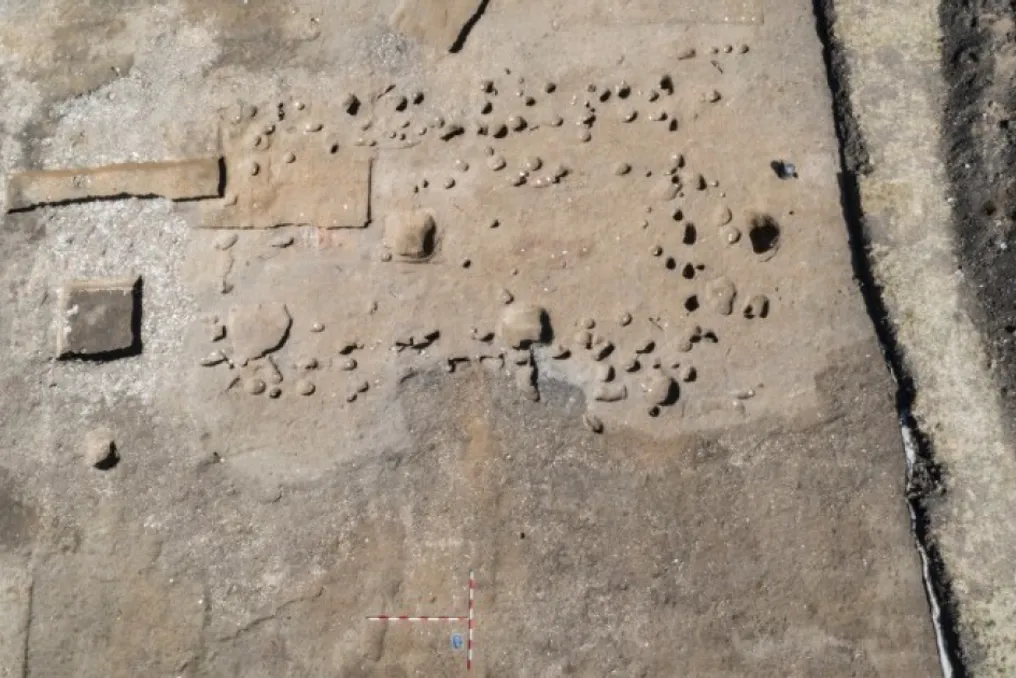
Gabor Thomas, a representative from Reading University, presented the results of further investigations at Cockham Monastery. Scientists discovered an early medieval necropolis, whose burials are likely dated to the 8th and 9th centuries. Approximately 80 graves were excavated in total, and anthropologists conducted a detailed study of the remains of 23 people from this group.
The analysis showed that a significant number of the buried individuals had serious health problems. Signs of tuberculosis, malignant neoplasms, and other ailments were found on the bones. Furthermore, nine individuals in the sample exhibited severe injuries that could have resulted from accidents, and one person apparently underwent recent cranial surgery.
Experts hypothesized that Cockham Abbey provided palliative care for those whose diseases were incurable. However, it remains unclear whether these people belonged to monks, local residents, or pilgrims. The high density of individuals showing signs of illness and injury leads researchers to conclude that not only monks were present there. Consequently, the hypothesis has been put forward that the abbey might have housed the oldest known Anglo-Saxon hospital or at least a lazaretto, or alternatively, a unique hospice.
Archaeologists regularly find new monuments from the Anglo-Saxon era. For example, previously in Suffolk county, probable remains of the residence of the kings of East Anglia were discovered, and in Buckinghamshire county, a necropolis of a wealthy early medieval community was excavated, whose members were often buried with valuables.
Of particular note is the analysis of more than twenty stone artifacts containing traces of ancient glue, found near Jerusalem at the Maza pre-ceramic Neolithic site. Scientists confirmed that the discovered black substance is natural bitumen originating from two different sources: the Dead Sea and possibly the Nahal Hemar valley. The age of the earliest examined artifacts is estimated to be approximately ten thousand years, as reported in the journal Journal of Archaeological Science: Reports.
According to the State Labor Inspectorate of Uzbekistan, in the first half of 2026, the inspectorate received 1495 appeals from citizens who were employed without their knowledge.
As a result of studying these appeals, administrative and criminal measures were applied to the heads of 143 operating enterprises and organizations. Additionally, written orders were issued to 56 other enterprises and organizations to eliminate the identified violations.
It was found that some organizations mentioned in the appeals had already ceased operations. Incorrect information entered into the Unified National Labor System between 2020 and 2025 was removed to restore citizens' rights.
The Inspectorate urged citizens who discovered that information about their employment activity was processed without their knowledge to contact the authorized bodies.
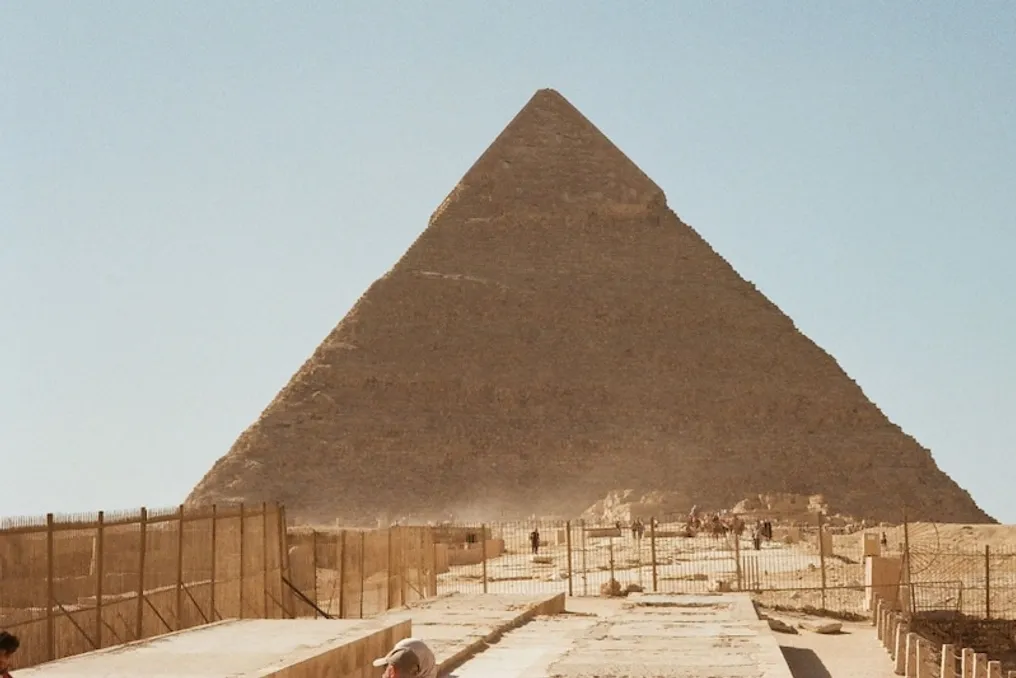
The Great Pyramid of Giza, the most famous of all Egyptian pyramids, was the oldest of the Seven Wonders of the Ancient World and remains the only surviving wonder. For approximately four thousand years, it served as the tallest man-made structure in the world. Currently, there are over fifty pyramids in Egypt, which are monumental monuments to the ancient civilization of the pharaohs.
The complexity of these architectural specimens presents a serious challenge for archaeologists studying Ancient Egypt. The question arises as to how this civilization managed to erect such grandiose and technically precise structures. Similar to Stonehenge, many controversial theories have been put forward when searching for answers to these questions, including the popular conspiracy theory that the pyramids were built by aliens.
According to this conspiracy theory, the pyramids were not the result of long-term construction projects requiring thousands of workers, enormous logistics, an unlimited supply of stone, as well as qualified architects and engineers. Instead, it is suggested that they were created by aliens or that aliens taught humans how to build them. However, the theory of external astronomical intervention is not the only attempt to explain the construction of such majestic monuments. Some conspiracy theorists believe that people from the sunken, highly developed civilization of Atlantis may have participated in the creation of the pyramids, although the mysteries of Atlantis remain unsolved.
Much about the pyramids, including their internal structure and construction process, remains unknown, which gives rise to many misconceptions and conspiracy theories. Nevertheless, archaeological evidence convincingly indicates that the pyramids of Ancient Egypt were erected not by external forces, but by large groups of Egyptian workers under the direction of an efficient administration and using primitive but effective tools.
According to Professor Joyce Tyldesley, an Egyptologist from the University of Manchester, the Great Pyramid of Giza was built by workers gathered within some system of state service or forced labor. These workers possessed relatively simple but effective tools and were capable of carving large stone blocks, transporting them to the construction site, and gradually erecting the pyramid. Although some aspects of the technology, such as ramps, are still unknown to us, colossal human power was at the core of everything.
The presence of limestone quarries near the location of the Great Pyramid, as well as the discovery of workers' camps, testifies to the scale of this project. Professor Tyldesley notes that there is evidence of how the workers were fed and where they were buried. Understanding the pyramid construction process has significantly improved only in the last 50–70 years, as previously there was a gap in knowledge that allowed conspiracy theories to take root.
Pyramids have existed for more than four thousand years, whereas the concept of aliens is relatively new in many cultures around the world. Professor Tyldesley believes that this idea truly began to develop after the publication of H.G. Wells' book 'The War of the Worlds' in 1897, which initiated a series of science fiction works. The book 'Edward's Triumph on Mars,' written by American astronomer and writer Garrett P. Service in 1898, had a particular influence. Although this book was fictional and not considered serious, it claimed that the Great Pyramid and the Sphinx were built on Mars, and this idea that someone from outside came to Egypt and built the pyramids became widely spread.
Another significant contribution was the bestseller by Swiss writer Eric von Daniken, published in 1968, titled 'Chariots of the Gods? Unsolved Mysteries of the Past.' This book helped popularize the idea that ancient space travelers visited Earth, were accepted as gods, and had a huge influence on the cultures, religions, technologies, and, certainly, the architecture of ancient civilizations.
It can be concluded that the belief that ancient aliens came to Earth and disseminated their superior knowledge arose, at least initially, as a reaction to the inability to believe that any ancient civilization could independently create such impressive monuments, so credit is attributed to an external force.
State policy in the country is aimed at fully realizing the economic potential of every mahalla, ensuring employment for the population, and increasing family incomes. As part of fundamental reforms, specific tasks have been defined to fully mobilize the internal capabilities of the mahallas, support entrepreneurship, create new jobs, and increase residents' income.
The activities implemented in the mahalla named Amir Temur in the city of Jizzakh clearly demonstrate the effectiveness of the goals set by state leadership. This experience, which might seem like a local process, is actually a model showing what contribution local initiatives can make to national development. Since the reforms first yield results at the mahalla level, their effect then spreads to the district, and from there—to the national level.
In the mahalla, where 8334 people live, a full analysis of existing resources was conducted to increase economic activity. The main driving forces identified were agriculture, gardening, greenhouse farming, vegetable cultivation, animal husbandry, and poultry farming. This reflects a systemic approach aimed at ensuring that every family has a source of income.
According to Mahbuba Mamirova, the mahalla assistant, the effective use of geographical location is also an important factor in economic growth. In this regard, the development of service infrastructure along the Uchtepa–Jizzakh–Gallaorol highway is planned. Creating services in trade, public catering, hotels, car services, and car washes will generate additional jobs and strengthen population employment.
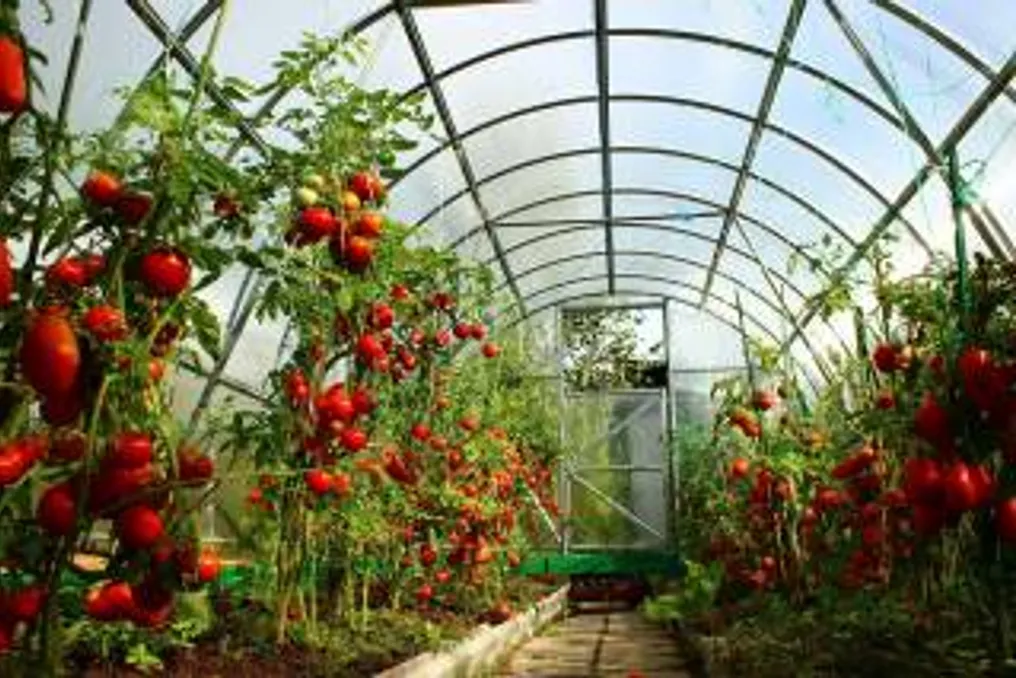
Currently, 56 greenhouse farms are operating in the mahalla, and three hectares of new greenhouses were recently built. This is a logical continuation of systematic work to turn residents' garden plots into high-income production areas. The experience of the Ravshanov family in this mahalla is particularly noteworthy. They grow bodrings in every hundredth of a greenhouse farm, harvesting up to 10–12 kilograms per bush. Direct sale of harvested products through trade channels eliminates the problem of finding additional markets for the population and ensures stable income.
Results achieved through state support also have practical examples. For instance, Sherzod Begmanov had a hundredth of a greenhouse built based on a subsidy, and this year he managed to grow almost a ton of tomatoes. Such cases confirm the possibility of strengthening economic activity by stimulating public initiative. Furthermore, special attention is paid to environmental improvement and expanding green zones. At the initiative of the mayor's office, a modern flower greenhouse covering 40 hundredths of a hectare was created, where hundreds of thousands of flower seedlings are grown, contributing to the greening of the city of Jizzakh while ensuring ecological sustainability alongside economic benefit.
Targeted measures are also being carried out in the field of social protection. Employment was provided to 45 women from the 'Women's Passport,' and nine of them were granted preferential loans. Three of these women opened greenhouse farms, while the rest received permanent jobs in trade, sewing, and handicrafts. It is also evident that the mechanism of targeted social protection in the mahalla is working consistently, as loans and social assistance are provided to citizens included in the 'Youth Passport' and the social register.
The activity carried out in the Amir Temur mahalla is not just the experience of one district. It is an effective model suitable for dissemination across the republic, concerning employment provision, support for entrepreneurship, increasing the income of every family, and reducing poverty. After all, the development of New Uzbekistan begins with the mahalla, and any advanced initiative tested at the local level only reveals its true potential with wide application on a national scale.