Renewed conflicts in the Middle East and rising oil prices have complicated the decision-making process regarding the interest rate by the South African Reserve Bank (SARB) this week. Investment experts warn that inflation risks remain high.
Renewed conflicts in the Middle East and rising oil prices have complicated the decision-making process regarding the interest rate by the South African Reserve Bank (SARB) this week. Investment experts warn that inflation risks remain high.
The new surge in global oil prices, triggered by the escalation of conflict in the Middle East, has added another layer of uncertainty ahead of the SARB's Monetary Policy Committee (MPC) meeting this week. Investment managers note that the central bank faces one of its most difficult interest rate decisions in recent months.
Brent crude surpassed the $90 per barrel mark after renewed military actions between the United States and Iran over the past weekend. This has reignited concerns regarding inflation, financial markets, and the global interest rate outlook.
The Reserve Bank will announce its latest interest rate decision on Thursday, one day after the release of South Africa's June inflation data. Mike van der Weshuizen, a portfolio manager at CAM Asset Management, believes the central bank's decision remains unpredictable, although markets appear to be leaning towards another hike or at least a tighter policy stance.
According to van der Weshuizen, the upcoming MPC meeting is likely to be very tense. Currently, there is about a 60% probability of a rate hike or at least a hawkish tone from the Governor. He added that while the June inflation data will be closely scrutinized, it is unlikely to drastically change a decision that was likely already largely formed.
Van der Weshuizen noted that the Reserve Bank is particularly concerned about core inflation, which excludes food and energy costs, as well as inflation expectations. He emphasized that core inflation remains persistent and is forecast to be around the upper end of the range, possibly closer to 4% for June. This is important because SARB focuses not only on current inflation but also on how it might change later in the year.
A key issue for the central bank remains its confidence in the low inflation target. SARB has made significant efforts to anchor inflation expectations closer to 3%. When inflation fell last year, expectations dropped, which reassured SARB. However, as the expert warned, long-term inflation expectations have started to rise again, reaching around 4%, which is at the upper limit of SARB's new acceptable band. A stronger argument is that SARB may raise rates to rein in these expectations once more.
Despite the heightened inflation risks, van der Weshuizen pointed to compelling reasons why the Reserve Bank might keep rates unchanged. One such argument is the significant drop in oil prices since the last MPC meeting, as well as the stability of the South African rand. Lower oil prices and a strong rand should help mitigate some of the inflationary pressure.
Nevertheless, he cautioned that the resumption of instability in the Middle East could quickly reverse these improvements. 'The game-changer is the resumption of the conflict and what that could mean for oil. Brent crude is still below SARB's oil assumption for 2026, but SARB must communicate how it views the oil price forecast and what that means for inflation.'
Neil Wilson, an investment strategist at Saxo UK, stated that the weekend escalation fundamentally changed market forecasts. He noted that the Middle East conflict apparently expanded and intensified over the weekend when the US attacked an Iranian nuclear facility. Wilson observed that Brent crude jumped above $90 per barrel as traders priced in growing risks to energy infrastructure and shipping through the Strait of Hormuz.
He concluded that any understanding agreement is effectively meaningless in the Strait of Hormuz, and the Persian Gulf's energy infrastructure is once again in a combat zone with all associated market risks. Risks now seem shifted towards higher and more prolonged energy prices, inflation, and rates.
The resurgence in oil prices has also led to a rise in global bond yields as investors re-evaluated inflation expectations and central bank policy prospects. Wilson reported that higher fuel costs are already beginning to affect businesses and consumers. 'Reflecting the Middle East uncertainty, Ryanair's profit fell by a third as the company battles lower fares and higher fuel costs. Summer fares look weak as consumers are nervous about the impact of the war with Iran and the economy.'
Volkswagen announced a recall program affecting 150,290 vehicles sold in the Brazilian market. The recall is due to a fault detected in the parking brake lever.
The models included in this recall are Polo, Polo Track, Tera, Nivus, T-Cross, and Virtus. Owners must take their cars to the manufacturer's dealerships for an inspection. If the problem is confirmed, the part will be replaced at no cost to the consumer.
The campaign covers vehicles manufactured between May and October 2025, encompassing some of the company's best sellers in the national territory.
As detailed by Volkswagen, the fault lies in the parking brake lever, which is the component responsible for locking the car when parked. Although the driver can engage the handbrake and have the impression that the system is correctly locked, the internal lock mechanism may fail.
This failure creates the risk of the vehicle moving unintentionally, especially when stopped on inclines or sloped surfaces. The manufacturer warns that such unexpected movement can result in accidents, causing material damage and injuries to occupants and third parties.
The affected compact models use the traditional cable-operated parking brake system, unlike electronic brakes. For this reason, its operation depends entirely on the mechanical integrity of the lever. The repair consists of checking the assembly and, if the defect is found, completely replacing the part.
The large volume of involved cars is linked to the MQB-A0 modular architecture, shared by the six participating models. Since these vehicles use common components and suppliers, the manufacturing defect was specifically located in the mechanical parking brake lever, a standardized part used across this line of compacts.
The list of vehicles covered by the recall includes:
The inspection and subsequent replacement of the parking brake lever will be offered free of charge to owners, in compliance with Brazilian legislation. Volkswagen estimates that the procedure will take about two hours.
Service is already available at all authorized brand dealerships, but prior scheduling is necessary to optimize workflow in the workshops. Vehicle owners can confirm if their car is under recall using the chassis number and schedule the service through the official Volkswagen website or by calling the service center at 0800 019 8866.
Volkswagen also emphasizes that owners who do not complete the recall will be prevented from renewing the vehicle's annual licensing. This restriction is part of the Brazilian traffic system and aims to ensure that any safety flaws pointed out by manufacturers are properly corrected.
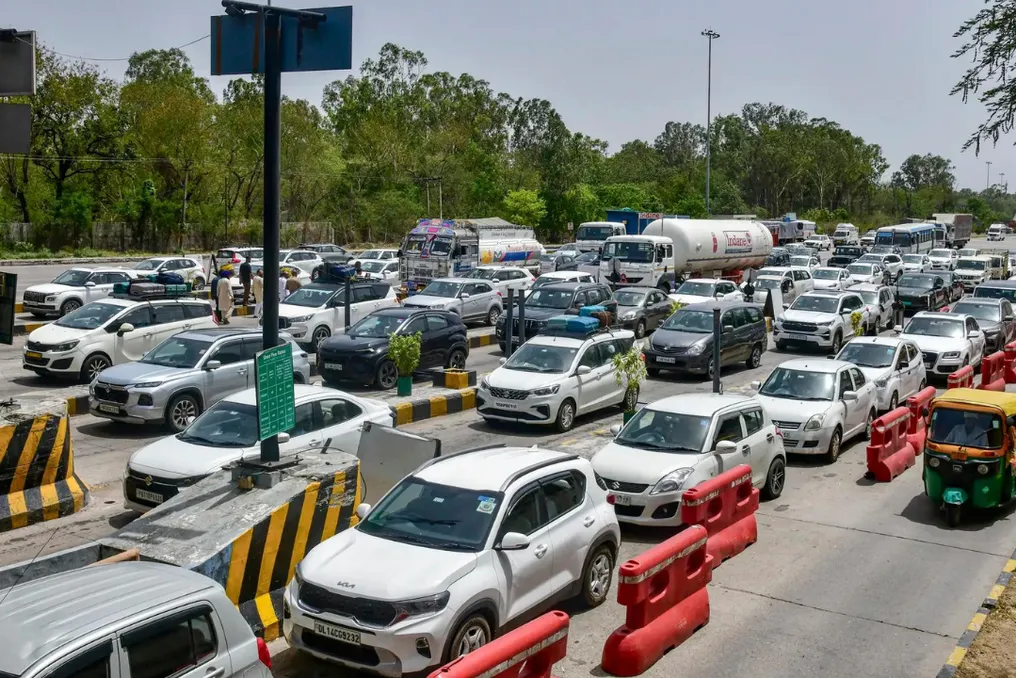
A small increase in tariffs has occurred at several toll plazas on national highways (NH) and expressways across the country. This change resulted from the Delhi High Court's decision to reinstate the use of a linkage factor for converting the Wholesale Price Index (WPI) series when reviewing user charges.
Toll plaza operators reported that the increase ranges from 2 to 5 percent, depending on the vehicle category. In most cases, the toll for private cars has not increased. One official noted that this does not affect vehicles with an annual FASTag pass, and even for those without one, the increase is minimal. The government merely reinstated the linkage factor for fee review.
Typically, the government reviews toll fees annually in April. However, following observations by the Comptroller and Auditor General (CAG) regarding the government's linkage factor—stemming from the change of the WPI base year from 2004-05 to 2011-12 for toll fee revision—the Ministry of Road Transport used the old rate linkage factor (2004-05) in September 2025. This led to a reduction in toll fees, and even the review in April of this year was conducted using the old rate.
Nevertheless, highway operators challenged the ministry's decision in the Delhi High Court, and the court ruled in their favor. Subsequently, in accordance with the court's order, the ministry decided on June 29 to use the 2011-12 linkage factor. According to one toll operator, the increase introduced in April 2025 has been restored, and rates have been revised since this April.
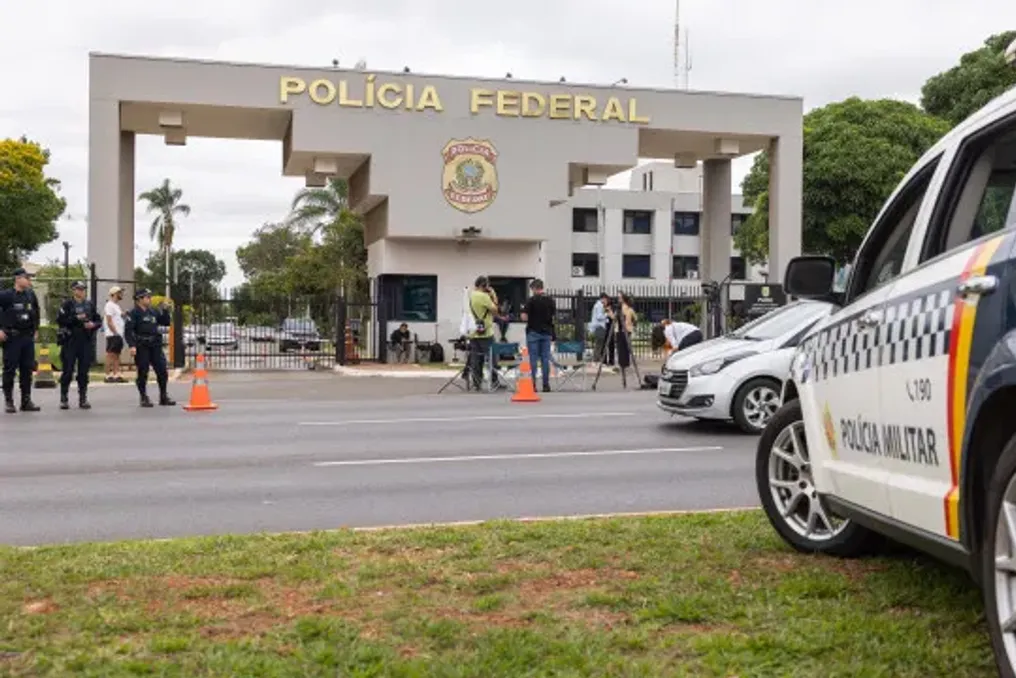
The Federal District Police initiated an operation named 'Operação Infiltrados' against a criminal group that stole 7.76 million from a bank in Brazil. Furthermore, the investigation involves suspicions of obstructing justice and unauthorized access to confidential information, according to the Federal District Police statement.
According to investigative data, the suspects gained access to secret data of Caixa clients and beneficiaries to carry out electronic theft of funds. The corporation's announcement indicates that the group utilized the involvement of public officials and other suspects to hinder potential investigations and leak privileged information.
Investigative bodies also discovered support from individuals linked to illegal lotteries. The operation involved about 120 agents with the support of the Special Operations Group for Combating Organized Crime of the Federal Public Prosecutor's Office (Gaeco) to execute 25 search and seizure warrants. These warrants were carried out in the cities of Rio de Janeiro, Duque de Caxias, Nova Iguaçu, Niterói, and Cabo Frio, Rio de Janeiro state, as well as in Indaiatuba and Salto, in the inland region of São Paulo.
Caixa Econômica Federal issued a statement reporting joint work with the Federal District Police and cooperation in investigations and operations against fraud and scams. The bank emphasized that it continuously monitors its products, services, and banking transactions to identify and investigate suspicious cases. The state bank also notified that it possesses security strategies, policies, and procedures to protect the data and operations of its clients, as well as specialized technologies and teams to ensure the security of its processes and service channels.