Spending long periods watching television during middle age may be correlated with brain modifications linked to Alzheimer's disease. This finding stems from a study that monitored 1,712 adults over approximately 24 years.
Spending long periods watching television during middle age may be correlated with brain modifications linked to Alzheimer's disease. This finding stems from a study that monitored 1,712 adults over approximately 24 years.
The investigation, published in the journal Alzheimer’s & Dementia, was based on data from ARIC (Atherosclerosis Risk in Communities), an American study focused on factors related to aging and cardiovascular problems. Participants were, on average, 53 years old when they reported their sedentary habits, between 1987 and 1989. Approximately 24 years later, between 2011 and 2013, they underwent MRI scans to assess brain structures.
The study compared two behavioral patterns: the frequency with which individuals watched television in their free time and the time spent sitting during their professional activities. Those who reported watching TV frequently showed differences in brain regions at the beginning of the process associated with Alzheimer's.
Among the most relevant findings, a greater volume of white matter hyperintensities was observed, an indicator linked to changes in small cerebral vessels. Furthermore, there was a decrease in the volume of the frontal and occipital areas, along with a reduction in regions considered markers of Alzheimer's disease. White matter hyperintensities are alterations detected in imaging tests and are associated with both cognitive decline and increased dementia risk.
A notable aspect of the research was that different types of sedentary behavior showed distinct correlations with brain structure. Frequent television viewing was associated with less favorable signs, while remaining seated in the workplace had different associations, including lower volumes of white matter hyperintensities and greater volume in certain brain regions.
The researchers suggest that the difference may lie in the degree of mental stimulation required. Professional tasks tend to demand greater reasoning, concentration, and decision-making capacity compared to the act of watching television. Experts argue that the recommendation to avoid sitting for too long should be expanded to consider the nature of the activities performed during that period, as they impact brain health in distinct ways.
The analysis took into account various control factors, such as age, gender, education level, history of hypertension, diabetes, body mass index (BMI), physical exercise, smoking, and alcohol consumption. Even after these statistical adjustments, the link between frequent television viewing and structural changes in the brain remained evident.
The research also identified disparities between sexes. In men, television habits were related to reductions in several brain areas, covering the frontal, temporal, occipital, parietal, and deep parts of the brain. In contrast, in women, no significant associations were found in most examined areas.
The authors acknowledged limitations in the study, such as the fact that TV viewing time was provided by the participants themselves and the absence of brain scans at the beginning of the follow-up. The main conclusion is that assessing only the number of hours spent sitting may be insufficient; the type of activity performed during that time is also a crucial variable for understanding the relationship between sedentary lifestyle and brain health.
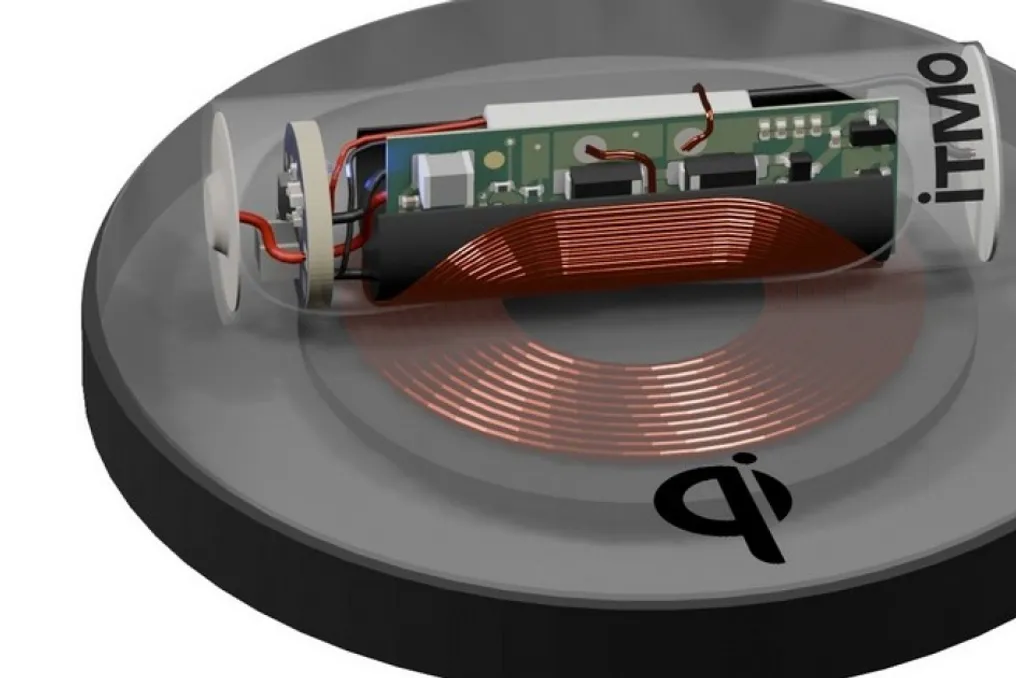
Russian specialists have created a working prototype of a battery shaped like a standard AA cell that is capable of receiving a charge via a wireless device according to the Qi standard.
This rechargeable element provides an output voltage corresponding to the standard for AA batteries, allowing any device without built-in wireless charging functionality to gain this capability. To fit the necessary area of the receiving coil inside the compact cylindrical casing, the engineers had to bend it along the side wall.
A detailed description of the device's architecture was published in the scientific journal IEEE Transactions on Power Electronics.
The prototype casing was manufactured by Alexey Dmitriev and his colleagues from ITMO University using a 3D printer with photopolymer resin, which is a dielectric material and does not block the magnetic field of the charging station. Inside, in addition to the rechargeable lithium-polymer battery itself, there are two printed circuit boards: one is designed to receive energy, and the other is for conversion.
The printed circuit board performs several functions: it rectifies the alternating current coming from the coil, manages data exchange according to the Qi protocol, controls the battery charging process, and converts the voltage to the standard 1.5 volts for an AA battery.
Despite the progress made, the capacity of the first version of the prototype remains small—only 65 milliampere-hours, and its energy density is 0.24 watt-hours, which is significantly lower than the performance of ordinary lithium-ion AA batteries.
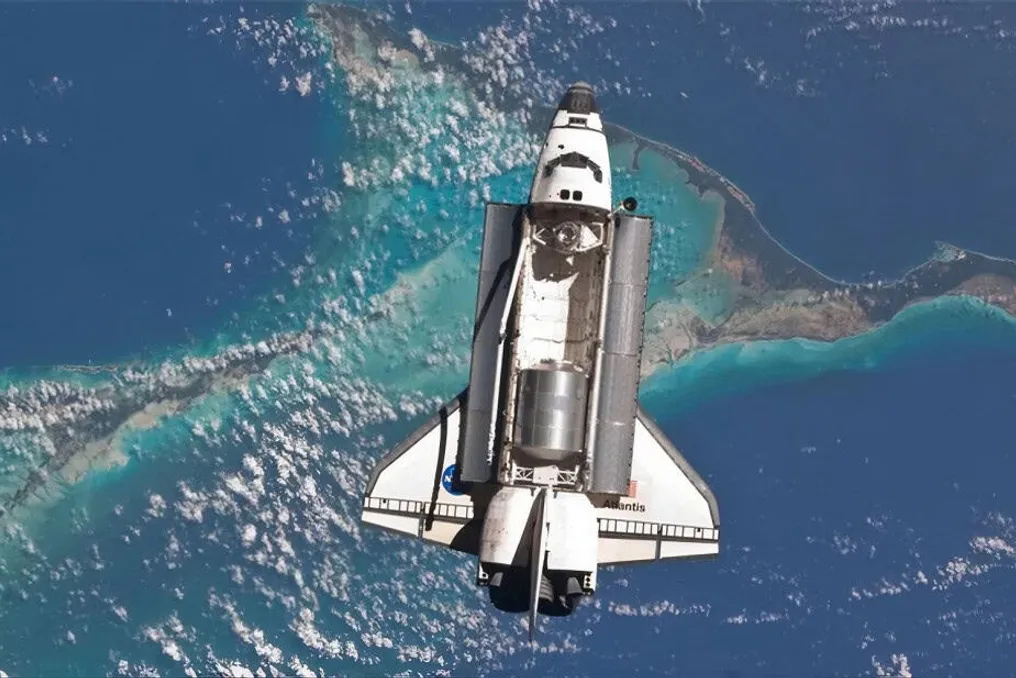
Exactly fifteen years ago, on July 21, 2011, a crucial period of space exploration came to an end. That morning, the Space Shuttle Atlantis completed its final landing at the Kennedy Space Center, located in Florida, at 6:57 AM (Brasília time). This event marked the official closure of three decades of activities of one of NASA's most notable programs.
The return of Atlantis concluded mission STS-135, which was the last of a system that revolutionized how humanity reached Earth orbit. This era of space shuttles began in 1981 with the launch of Columbia.
A few days earlier, on July 8, Atlantis took off from Earth, accompanied by thousands of spectators. The main purpose of this mission was to transport vital supplies and equipment to the International Space Station (ISS). The crew, consisting of Commander Chris Ferguson, Pilot Doug Hurley, and specialists Sandy Magnus and Rex Walheim, carried over four tons of cargo, including spare parts and more than one ton of food, using the Raffaello multifunctional logistics module.
During almost thirteen days in orbit, Atlantis traveled approximately 13.5 million kilometers. Upon returning, Commander Ferguson expressed his feelings, saying: 'We sincerely hope that everyone who worked, watched, admired, or dreamed about a space shuttle shared a little of this journey with us.'
The decision to retire the space shuttles was influenced by several factors. Primarily, the high maintenance costs of the fleet and growing safety concerns, intensified after the accidents involving Challenger in 1986 and Columbia in 2003. Consequently, the agency redirected its efforts towards new technologies and commercial collaborations aimed at future expeditions.
Rui Botelho, a professor, writer, and editor for the Brazilian Space channel and former employee of the Brazilian Space Agency (AEB), evaluates the program as something that was simultaneously 'a great success' and 'a disappointment.' In conversation with Olhar Digital, he pointed out that the system was a triumph for enabling milestones such as placing the Hubble Telescope into orbit and building the ISS itself. He observed that this made space operations much more routine compared to missions conducted with traditional giant rockets, such as the Saturn V or the SLS.
However, Botelho also highlighted the financial and operational failures of the project. According to the expert, costs never met the planned targets, and even with 135 missions over three decades, the launch frequency fell considerably short of what was initially planned, perhaps reaching only half of the expected volume. Additionally, he mentioned the negative image impact generated by the Challenger and Columbia accidents, which deeply affected American society and humanity.
Despite the setbacks, Botelho argues that when weighing expectations against reality, the final balance is positive. He concluded that 'Without a doubt, the space shuttles are a historical milestone, a very great contribution to humanity. And even though the accidents happened, which were terrible and still affect us greatly, it was very worthwhile to have developed this system.'
The space shuttles were partially reusable vehicles, designed to carry both astronauts and cargo into orbit and allow for a safe return to Earth for new flights. The first flight of the program occurred on April 12, 1981, with mission STS-1 of Columbia. The fleet totaled six aircraft: Enterprise (used only for tests) and the operational models Columbia, Challenger, Discovery, Atlantis, and Endeavour. Each vehicle had approximate dimensions of 37 meters in length, 24 meters in wingspan, and 17 meters in height. The orbiter weighed about 78 tons empty and exceeded 100 tons during missions, with a maximum payload capacity of approximately 27.5 tons for Earth orbit. Over the 30 years of service, the space shuttles transported 355 astronauts from 16 different countries. Specifically, the Atlantis space shuttle performed 33 missions between 1985 and 2011, including its final flight.
A question posed by a student prompted Dr. Sudipti Arora to rethink the purpose of her scientific work. While teaching, the biotechnologist, who holds a PhD from IIT Roorkee, received the question: 'Madam, is this useful anywhere outside the classroom?' Instead of leaving the question unanswered, she decided to take science beyond the laboratory and apply it in the village of Aandi Gaon in Rajasthan, where she believed practical solutions could improve daily life.
She developed a plan aimed at making the village completely waste-free and successfully secured a grant of 2 crore rupees to achieve this goal. On the day the funding was approved, she was diagnosed with Stage II cancer. Nevertheless, while undergoing chemotherapy, she relentlessly worked on the project, determined not to let it stop.
One of the first solutions she implemented was a patented vermifiltration technology. Dr. Arora notes that this unique technology is being implemented in the village of Aandi in Rajasthan. It uses worms, layers of gravel, and solar-powered pumps to treat wastewater from kitchens and bathrooms, which is then used in agriculture.
The school in the village also participated in this initiative. Food scraps, previously sent to trash bins, are now fed into a biogas plant that supplies fuel for the school kitchen. One student explained that this biogas is used in the school kitchen, and all other waste is directed there for biogas production.
During her first visit to Aandi, Sudipti noticed that about 80 percent of the village's wastewater was discharged into a water body before being used for irrigation. This sparked the idea to solve this problem by creating a natural system capable of naturally purifying the wastewater. Consequently, a technology for an artificial wetland with a capacity of 20 thousand cubic meters per day (KLD) was designed and developed. Now, plants purify this wastewater, and the water is used for sustainable agricultural practices.
Today, Aandi Gaon is a self-sufficient zero-waste village. Every family separates waste at the source, composts kitchen waste, and participates in daily garbage collection. Water is purified and reused, organic waste returns to the soil, and very little waste leaves the village. What started as a question from one student has turned into a working example of how science, determination, and collective community effort can change the lifestyle of an entire village.