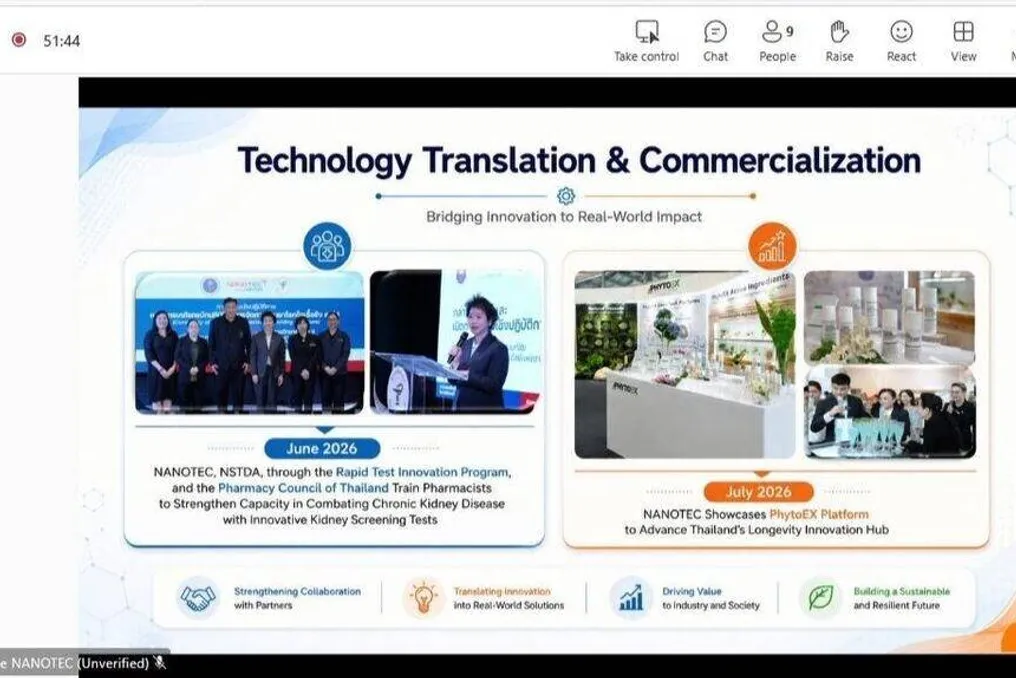
At the Asian Nanoforum (ANF) Summit, held in Hsinchu, Taiwan, on July 16 and 17, Iran put forward three proposals aimed at expanding regional interaction in advanced technologies, human capital development, and international standardization.
Participants and Goal of the Summit
The ANF 2026 Summit gathered representatives from member states such as Japan, South Korea, Iran, Taiwan, Malaysia, the Philippines, Chinese Taipei, and Vietnam. According to the IRNA agency, the Iranian delegation participated in the meeting in an online format. The annual summit aims to study changing technological trends, stimulate scientific and industrial cooperation, and develop joint regional programs. This year, the event was held concurrently with the annual meeting of the Taiwan Society of Nanomedicine.
First Proposal: Micro- and Nanoelectronics
Iran's first proposal focused on strengthening cooperation in the field of micro- and nanoelectronics. The country suggested that universities, research centers, and leading industries of member countries establish a network for implementing joint research projects, exchanging specialists, and holding scientific events. Furthermore, it was proposed to hold a Symposium on Transformational Technologies in 2027 with the participation of summit members. This symposium will cover topics such as neuromorphic computing, intelligent sensors, bioelectronics, and new smart mobility technologies, providing a platform for knowledge exchange and developing technological ties between Asian nations.
Second Proposal: Education and Human Capital
The second proposal concerned education and human capital development. Based on Iran's successful experience in developing and organizing the International Olympiad on Nanotechnology for High School Students (INO-HS), ANF members were invited to actively participate in organizing future editions of this event. As the permanent secretariat of the International Olympiad on Nanotechnology for Students, Iran invited member countries to attend the third edition, scheduled for December 6 to 12 in Chinese Taipei. The goal is to identify top talents, enhance qualifications, and build a network of young leaders in nanotechnology across Asia.
Third Proposal: International ISO Standards
The third proposal emphasized expanding regional cooperation in developing international ISO standards for nanotechnology. Iran proposed three specific topics for the development of these standards: firstly, a standard for technical specifications and performance evaluation methods of graphene and other two-dimensional materials in energy storage systems to establish unified quality assessment criteria; secondly, a standard for specifications and testing methods of thermal insulating nanocoatings, aimed at harmonizing performance and durability assessment methods; and thirdly, a guide on the application of micro- and ultrafine bubble technology in aquaculture, intended to expand the use of this technology to increase productivity and improve water quality in the aquaculture industry.
Nanotechnology in Iran as an Economic Force
These initiatives reflect Iran's approach to improving regional cooperation, developing strategic technologies and human capital, and making a constructive contribution to the creation of international standards. By creating a foundation for joint projects, these endeavors will help strengthen the position of Asian nations in the global nanotechnology ecosystem. Moreover, progress in nanotechnology in Iran goes beyond purely scientific achievement. Over 430 companies operate in the nanotechnology sector in the country, and more than 1960 nanotechnology products have received nanoscale certifications. As reported by IRNA, the development of nanotechnology in the country is measured not only by scientific rankings and published articles but also by the products manufactured and brought to market. The total sales volume of these products exceeds 970 trillion rials (approximately 554 million dollars), indicating that scientific achievements have translated into economic and industrial potential.