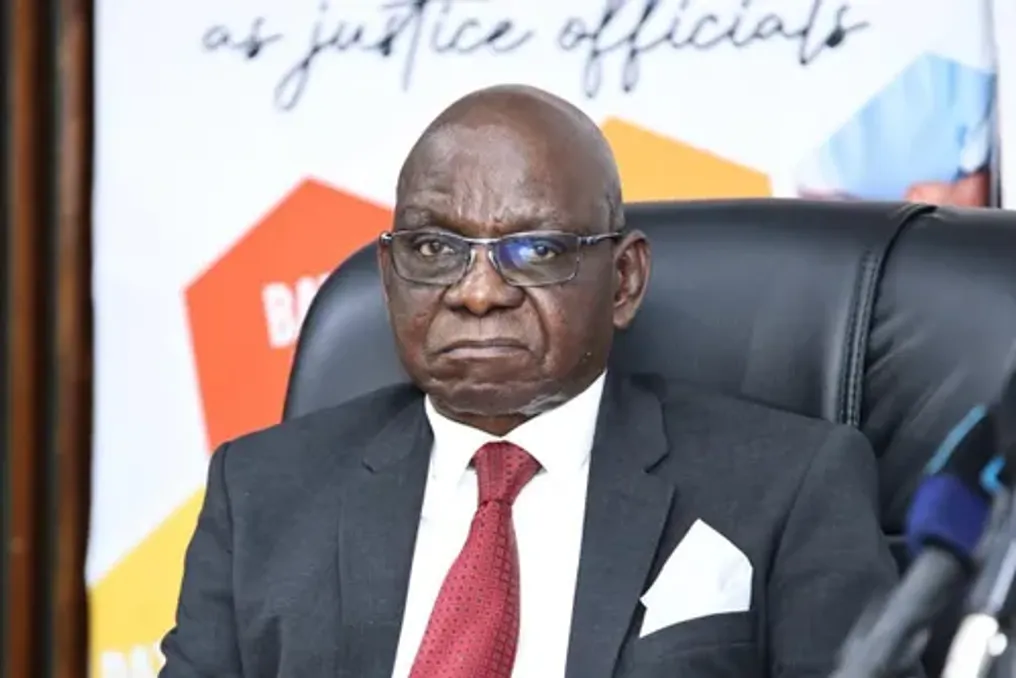
Civil society groups warn that the IDAC Ombudsman, headed by retired judge Takalani Rawlings, may not operate independently because its resources depend on the Ministry.
Basis and Mandate of the Ombudsman
The Minister of Justice and Constitutional Development, Mmamoloko Kubayi, announced the launch of the IDAC Ombudsman's Office on Friday. This office will be led by retired High Court Judge Gauteng, Takalani Joseph Rawlings, who has been appointed for a five-year term. The body is expected to provide independent oversight by investigating complaints against IDAC officials in cases of abuse of power, misconduct, or rights violations.
Kubayi specified that the office was established under Section 22A of the National Prosecuting Authority (NPA) Act 1998 following consultations with the Chief Justice. The office will receive support of 12 million rand and will utilize investigators transferred from the Special Investigations Unit (SIU), as well as additional staff from the Chief Justice's Office.
Context and Public Concerns
The launch of the office coincided with telling testimony before the Madlanga Commission, where witnesses reported serious misconduct by IDAC leadership. Allegations included claims that the head of IDAC, Andrea Johnson, improperly interfered with an assault investigation, and that investigators extorted bribes from local business owners. The Ombudsman was recommended as a proactive accountability level after structural deficiencies were identified by the Zondo Commission.
The anti-corruption organization Corruption Watch stated that until the office is established as a truly independent Chapter 9 institution, which they believe it is not on paper, its autonomy will be questioned until it proves otherwise. Organization representative Janine Erasmus noted that while Rawlings' non-renewable term is a positive step toward preventing biased decisions in a second term, the structure still relies on the ministry for budget and appointments, which prevents it from being considered fully independent.
Erasmus added that Corruption Watch doubts the division's ability to investigate the National Director of Public Prosecutions (NDPP) or the head of IDAC, citing a historical tendency of political interference by the ruling party and its associated structures regarding accountability. She quoted the NPA Amendment Act, Section 22A(13), noting that the Minister is obliged to provide the retired judge with adequate personnel and resources to perform functions, and emphasized the critical importance of the unimpeded execution of these functions.
Expert Opinions and Political Remarks
Kubayi's representative, Palese Rammitlwa, stated that the issues had been referred to the ombudsman's office but could not comment at the time of publication. Lawson Naidu, Executive Secretary of the South African Constitutional Advancement Council (CASAC), emphasized that the true measure of the office's effectiveness lies in its funding, and that the ultimate test is securing adequate resources to fulfill its mandate.
The organization Undoing Tax Abuse (OUTA) considers the creation of an Ombudsman to review complaints against the NPA and IDAC a necessary step forward compared to the current lack of oversight. CEO Wayne Duvenhage stated that the introduction of the Ombudsman mechanism will be an improvement over the current situation without such a body.
Political analyst Zakhhele Ndlovu deemed Kubayi's appointment of the Ombudsman inappropriate, arguing that this process should have been overseen by the Parliamentary Portfolio Committee on Justice. He warned that ministers can be partisan appointees, which jeopardizes guarantees. Governance expert Andre Duvenhage suggested that politics permeates all aspects of South Africa, which could render the office's work impossible without political influence.
Parliamentary Reaction
Meanwhile, the Chairperson of the Parliamentary Portfolio Committee on Justice and Constitutional Development, Khosela Nkola, welcomed the official launch of the IDAC Ombudsman, calling it one of the valuable outcomes of South African democracy. He stated that the establishment of this office marks a historic and outstanding step in strengthening the constitutional shield against any form of human rights violation.