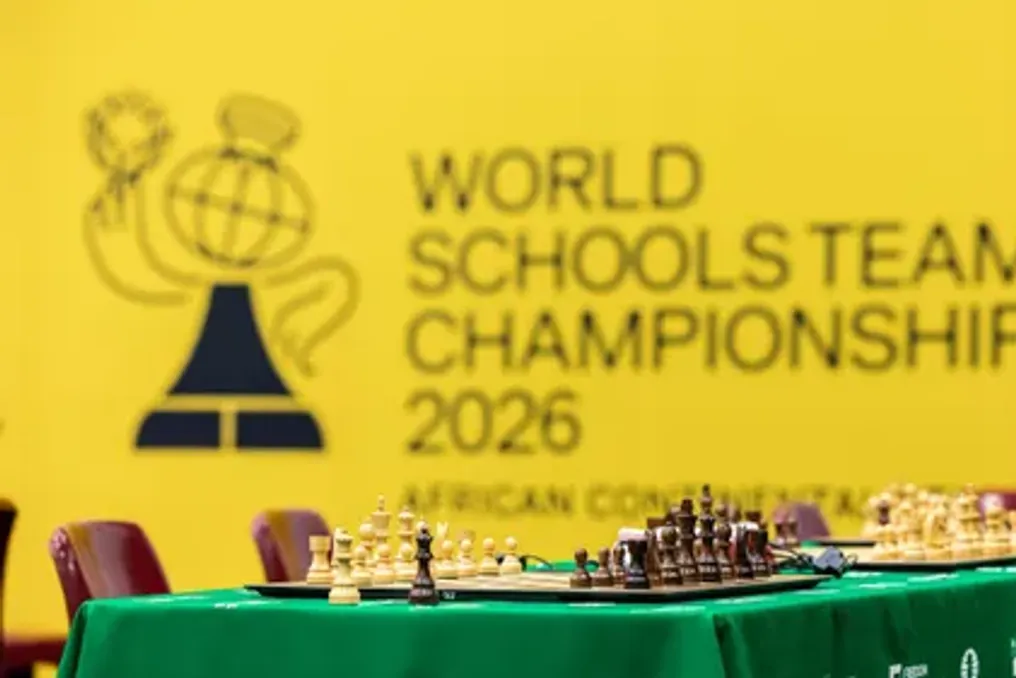
Stellenbosch University participated in the first-ever African qualifier for the World Schools Chess Championship. From July 6 to 11, the event gathered 26 school teams from 22 African countries, showcasing the continent's best young chess talents.
Stellenbosch University participated in the first-ever African qualifier for the World Schools Chess Championship. From July 6 to 11, the event gathered 26 school teams from 22 African countries, showcasing the continent's best young chess talents.
This event marked an important milestone for the International Chess Federation (FIDE) and the International Schools Chess Federation (ISCF), who officially declared 2026 the 'Year of Chess in Education.' To support this educational goal, the African continental stage deliberately deviated from standard practices in international youth sports. Instead of involving elite specialized chess academies, the tournament restricted participation exclusively to school teams from the African continent.
The organizers created this structure to demonstrate that strategic talent can develop within regular classrooms. The tournament provided a platform for 91 unrated players to participate internationally for the first time. A strict regulation was in place throughout the competition, requiring mixed team compositions to ensure diverse participation. Each team consisted of four main players and one reserve, with a mandatory presence of at least one boy and one girl.
The tournament extended beyond the chessboard, focusing on cultural exchange and public outreach. At the opening ceremony, letters from young participants who had taken part in previous stages in Almaty and Washington were presented. These handwritten messages emphasized the theme of 'friendship without borders' and reminded participants that defeat is an integral part of the learning process, especially in chess.
To strengthen camaraderie among rivals outside the tournament hall, a recreation area and interactive cross-country chess quizzes were organized. Invited delegations also participated in a drum masterclass featuring traditional South African sounds. FIDE and ISCF developed a comprehensive educational program featuring Robert Katende, a renowned coach who trained a Ugandan chess prodigy featured in the Disney film 'Queen of Katwe.'
In a masterclass titled 'Chess as a Tool for Life Development,' Katende shared practical lessons on leadership, ambition, and resilience based on his many years of playing experience. The educational program included talks by distinguished figures discussing strategies and social development. Dr. Lindon Boa, a chess historian, gave a lecture linking the game to literacy and critical thinking, and discussed his research on the history of South African chess. Dr. Deniz Boa, a three-time national champion and sports psychologist, conducted a session on mental fortitude titled 'Nurturing Champions: From Talent to Triumph.'
Two-time national champion and International Master Henry Robert Still gave a traditional presentation for young players, while seven-time Olympic participant and International Master Anzel Laubscherr shared life experiences in her presentation 'Chess Beyond Medals.' This educational focus also extended to the local Stellenbosch community. In Paul Roux High School, 50 students from three local schools participated in a support program, playing matches against FIDE President Arkady Dvorkovich, Freedom Holding Corp. CEO Timur Tyurlov, and Katende.
The main partner, Freedom Holding Corp., provides significant support, investing over $15 million, or approximately 275 million Rands, annually. The organizers view this funding not as routine corporate sponsorship but as a direct investment in human potential. Tyurlov told the audience at the closing ceremony that 'the success of any country depends on the success of its children,' emphasizing that instilling a culture of learning and hard work through chess ultimately leads to a healthier future for the nation.
Educators are already expanding this development model across the continent. Tyurlov noted that over 60,000 children are now enrolled in South African school chess programs. For many children from underprivileged areas, mastering the chessboard offers a tangible path to social mobility, global recognition, and international travel. To create the infrastructure leading to this path, ISCF used Kazakhstan as a primary model. In this Central Asian country, teachers are currently teaching chess as a formal subject to 60,000 students in over 1,500 schools.
Tyurlov explained that new technologies are actively leveling the playing field across borders. Expanded digital access allows players to bypass traditional institutional entry and exit barriers into the world of chess and contribute to their countries' development through intellectual skills. To expand this digital access, Freedom Holding acquired the ChessBase software platform in 2026. The company plans to invest 5 million euros, or about 100 million Rands, to integrate its analytical tools into a broader digital chess ecosystem.
Looking ahead, FIDE President Arkady Dvorkovich outlined plans to capture the interest of the new generation by implementing new technologies. He intends to introduce faster time controls and expand short-form streaming content dedicated to chess to make the sport more appealing to a younger audience.
As the global tournament moves to San Jose, Costa Rica, for the American stage, the top three African teams will prepare for the Grand Final in December. There, the continental winners will compete for the world title. The final results of the qualification in Stellenbosch determined the three schools representing the African continent: gold was won by Sr. Miriam Duggan Primary School (Uganda), silver by Moi Nyeri Complex Primary School (Kenya), and bronze by Velgemud Primary School (South Africa).
A meeting was held in the capital dedicated to reforms in the field of adaptive physical culture and sports, as well as the creation of a modern educational environment. The goal of the event was to involve persons with disabilities in the sports and higher education system of the State Sports Academy in Uzbekistan.
Presentations were given at the gathering about the opportunities being created by the State Sports Academy in Uzbekistan for training graduates of special schools. Issues regarding the adaptation of their curriculum, the scientific development of adaptive sports, the improvement of inclusive education, and future plans were also discussed.
During an open dialogue, representatives from special schools and boarding schools across the country carefully listened to the reports and received answers to many questions that interested them. Proposals were put forward during the discussions regarding the education system, the development of adaptive sports, scientific cooperation, personnel training, and the direction of graduates from special schools into higher education institutions.
At the end of the event, a tour of the 'Olympic Village' was organized for specialists who arrived from various regions. The modern classrooms in the academic buildings, thematic rooms equipped for lessons in various subjects, laboratories designed for practical classes, and the created modern working conditions made a positive impression on the participants.
It was noted that the Village's Information and Resource Center possesses an extensive collection on physical culture, sports medicine, pedagogy, psychology, adaptive sports, and other fields. The opportunities created for students and researchers were recognized as a contribution to increasing the country's sports potential.
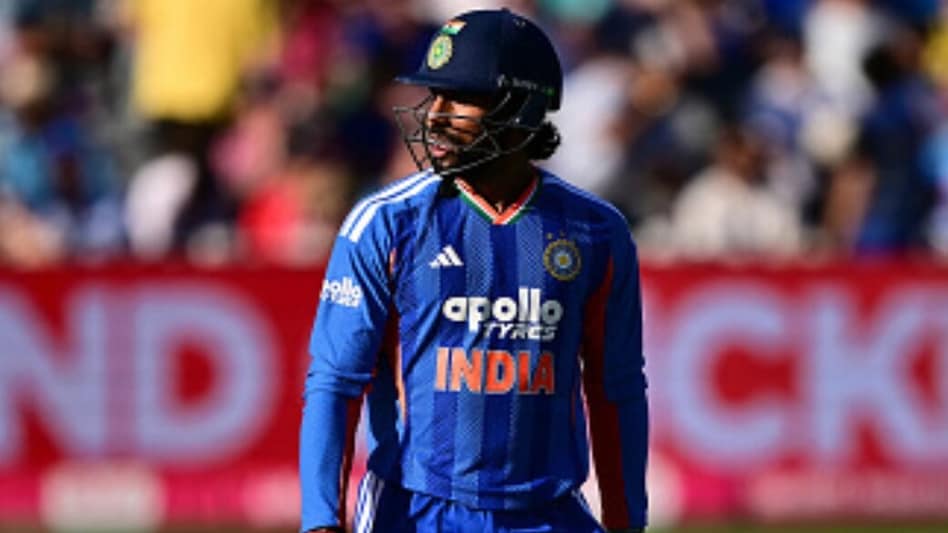
Ahead of the three-match T20 series between India and Zimbabwe, starting on July 23rd in Harare, Indian vice-captain Tilak Verma openly discussed his game, striking tempo, and setbacks during the tour in England and Ireland. He stated that his play always depends on the team's needs and the current match situation, rather than solely on the need to score quick runs.
During the recent tour in England and Ireland, the Indian team did not secure a single T20 victory. During this period, questions arose regarding Tilak's tempo of play and his performance against spinners. Nevertheless, he demonstrated the ability to play aggressively, scoring 53 off 25 balls in a match in Southampton T20.
Tilak noted that playing in different conditions is not easy. In his opinion, if the team requires patience, he will play calmly, and if an attacking game is needed, he will adopt that style as well.
He added that in matches against Ireland and England, four or five wickets were often lost early in the over. Therefore, in his estimation, attempting to hit big shots immediately after coming to the crease was unwise. The primary objective was to stabilize the game, and he followed this principle.
Verma admitted that he is capable of powerful shots from the first delivery, but when playing for the country, responsibility is the highest priority. He stressed that the role of vice-captain was assigned to him thoughtfully, and he strives to justify the trust of the team management by making decisions based on the interests of the entire team.
Regarding the defeats in England and Ireland, he explained that the Indian team had primarily been competing in Asia for the last two years. Stepping onto overseas grounds after a long break was a challenging process. The situation was complicated by facing a strong team like England, which showcased its class at the T20 World Cup. Adapting quickly under such circumstances proved difficult.
Tilak also supported captain Shreyas Iyer, calling him a successful leader who naturally faces high expectations. However, he noted that the challenges for the entire team in foreign conditions were different.
Concerning the series in Zimbabwe, Tilak warned that the home side should not be underestimated. He reminded that Zimbabwe won the first match of the series against India previously. Therefore, the Indian team will take the field fully prepared.
Discussing the pitch conditions in Harare, Tilak mentioned that he discussed the behavior of the ball with players who participated in the previous tour, particularly with young batsman Vaibha Suryawanshi. He noted that the pitches here are good, the ground is large, the weather is cool, and the wind is quite strong. The experience gained during the recent tour in England and Ireland may prove useful for the Indian players on the upcoming tour.
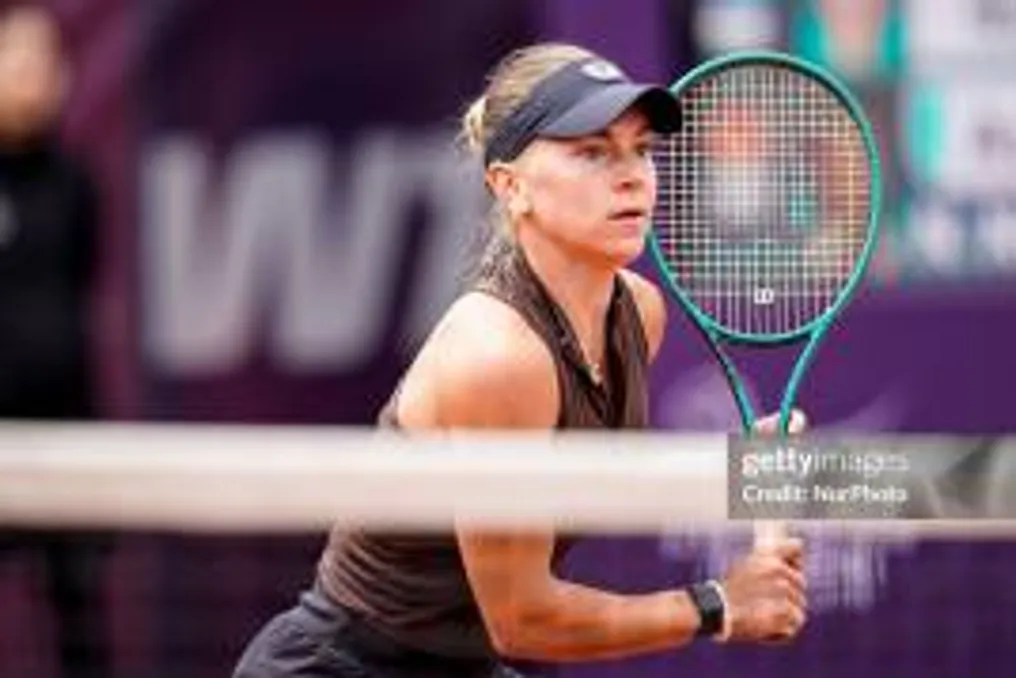
The international women's tennis tournament 'Livesport Prague Open' has started in Prague, Czech Republic. Maria Timofeeva from Uzbekistan is participating in this competition and ranks second in national tennis.
In the first round, Maria Timofeeva played a match against Alexandra Sasnovich, who competed under a neutral flag. The match lasted 1 hour and 45 minutes, during which Maria Timofeeva demonstrated excellent play and won with a score of 6:3, 6:4, thus advancing to the second stage of the competition.
Before the match, Maria Timofeeva's WTA ranking was 84th, while Alexandra Sasnovich held the 133rd position in the ranking.
Now the Uzbek tennis player must take to the court against the winner of the match between Anna Blinkova, competing under a neutral flag, and Sara Beleková, representing the Czech Republic, to contend for the quarterfinals.