Nigeria and Ghana have decided to consolidate their efforts to counter protests against illegal immigration taking place ahead of the African Union Summit, demonstrating a powerful front of solidarity.
Diplomatic Meetings and Concerns
This decision was reached following a bilateral meeting held during the ECOWAS Mid-Summit in Freetown, Sierra Leone. Discussions focused on combating xenophobia and ensuring the protection of African migrants across the continent.
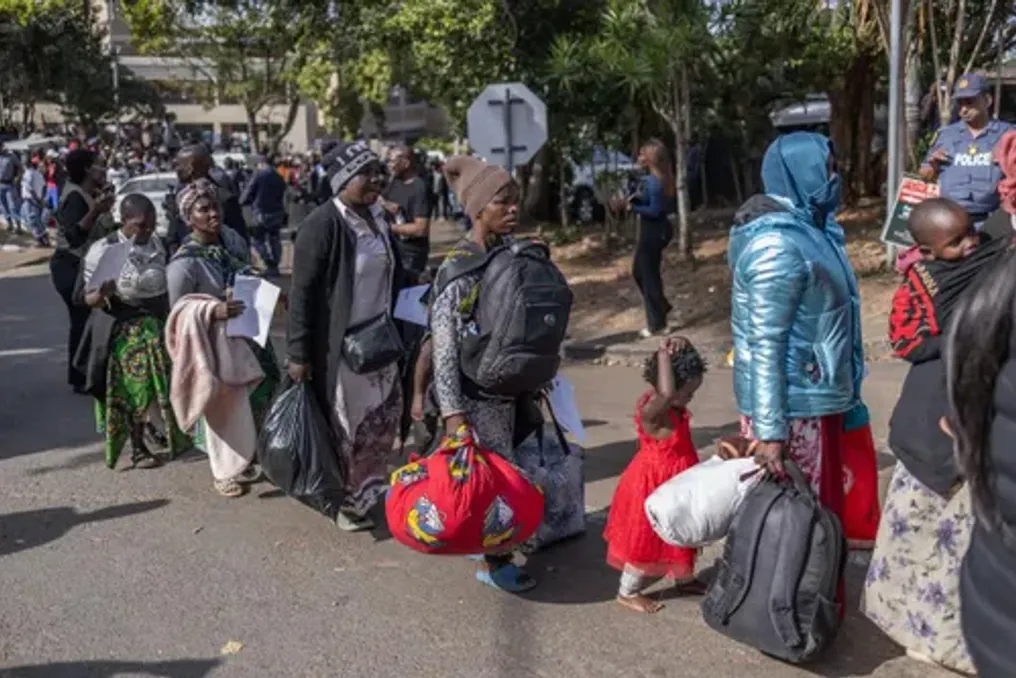
Recent events in South Africa have triggered a wave of protests, as some groups accuse foreign nationals, particularly compatriots, of occupying jobs and resources of local residents, further escalating tensions.
Ministers' Stance
On July 17, 2026, Nigeria's Minister of Foreign Affairs, Ambassador Bola Akinanoloye, met with Ghana's Minister of Foreign Affairs, Samuel Okudzeto Ablakwa. The ministers affirmed the strength of their partnership, called for decisive diplomatic action, and renewed their commitment to achieving restorative justice for transatlantic slavery.
They emphasized the importance of the recent United Nations resolution on this matter. The ministers expressed serious concern over the recent surge in Afrophobic protests and attacks on African citizens in South Africa.
Calls for Legality and Unity
They strongly condemned all forms of xenophobia, Afrophobia, intolerance, and violence, warning that such actions threaten the foundations of Pan-Africanism, regional unity, the ideals of the African Union, and the African Continental Free Trade Area.
The ministers also stressed that migrants accused of crimes should be viewed through the lens of the rule of law, not through mob violence. By standing together at the diplomatic level and advocating for legal protection, they aim to assure African migrants that their safety and rights are paramount.
These commitments should stimulate deeper cooperation between governments and local authorities, paving the way for enhanced security, improved support services, and the creation of a safer environment for migrants facing discrimination or violence. The ministers pledged to work jointly with other African Union member states to strengthen monitoring, establish early warning systems, and employ preventive diplomacy to address future challenges.
They strongly urged all member states to uphold Pan-Africanism, mutual respect, and the free movement of people. Furthermore, they supported current public education and dialogue, confirming their readiness to act jointly through ECOWAS, the African Union, and other international organizations.
Repatriation Operations
In May and June 2026, the Ghana Border Control Agency and the High Commission of Ghana organized voluntary repatriations, processing 963 Ghanaian citizens leaving South Africa under various operations, according to IOL.
Between June 10 and July 15, 2026, Nigeria evacuated and repatriated 1,490 South African citizens. This official evacuation followed an increase in anti-immigration demonstrations and pressure on undocumented foreign nationals.
Notably, the South African Department of Home Affairs officially deported and banned 586 illegal Nigerian citizens from entering the country for five years.
Expert Commentary
The South African government firmly rejects the label of a xenophobic nation. Official statements assert that public protests and government actions are aimed solely at addressing issues of illegal immigration and crime, not at the foreign nationals themselves.
Migration expert Gideon Chitanga from the Centre for African Chinese Studies at the University of Johannesburg urged African countries to refrain from spreading divisive narratives that fuel tension and to support hostile groups or organizations within Africa, specific countries, or communities.
Chitanga noted that the South African government is discussing its efforts to resolve these issues. He advised other African governments to support local initiatives for resolving complex immigration matters in South Africa, to cooperate closely with South African institutions for their lawful resolution, and to coordinate their actions.
Chitanga added that the protests contribute to division and create significant obstacles to continental economic integration, urging leaders to carefully consider whether to foster such division. He concluded that concerted action by African countries to address both domestic and continental socio-economic and security issues would significantly help in solving the problem of illegal immigration.