The President of Uzbekistan, Shavkat Mirziyoyev, reviewed a number of strategic proposals aimed at combating desertification and creating a sustainable 'desert economy.' These initiatives include expanding afforestation, finding new sources of income on saline lands, promoting ecotourism, and launching scientific projects on sustainable natural resource management.
Strategies for Combating Land Degradation
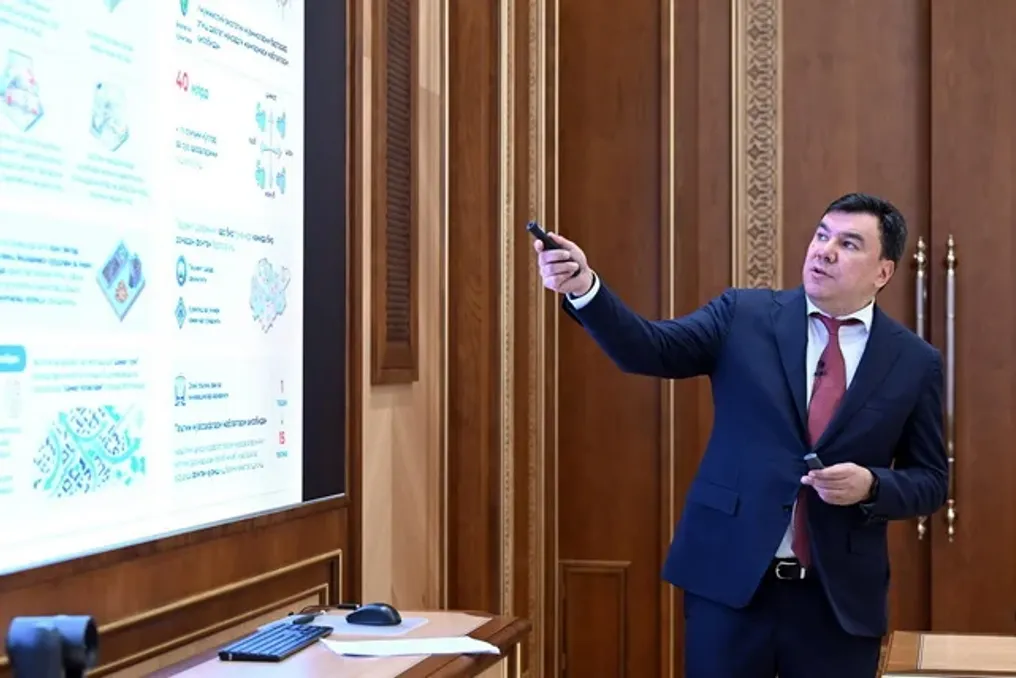
According to the presidential press service, strategies to prevent land degradation were integrated into a broader presentation that also introduced the principles of ecological urban planning within the framework of the 'Green Samarkand' sustainable development model. It was noted that about 80% of Uzbekistan's territory consists of desert and semi-desert zones.
Environmental problems are particularly acute in the western regions of the country, where soil salinization, strong dust storms, and dry winds have intensified due to the shrinking of the Aral Sea. Protective afforestation work continues in the Aral Sea basin to mitigate these consequences.
Reforestation and Green Projects
Halophytic and drought-resistant flora, including Saxaul (Haloxylon), is systematically planted to stabilize desert sands and limit the atmospheric spread of dust and toxic salts. Over the past years, more than two million hectares of protective green cover have been successfully created on the open, dry bed of the Aral Sea. Concurrently, the nationwide project 'Yashil Maqon' (Green Space) has overseen the planting of over one billion trees and shrubs across the country.
Thanks to these joint measures, the overall green cover rate in Uzbekistan has increased from 8% to 14.3% over the last five years. A new phase of anti-desertification initiatives is planned for the period 2026–2030. The state plans to create and restore 1.27 million hectares of forest land, as well as secure 16,000 hectares of protective belts covering desert, foothill, and mountainous areas.
Regional Goals and Economic Model
Planned regional tasks include planting 10,000 hectares of greenery in the Sunikandarya region, constructing an 84-kilometer 'green wall' of protective trees in the border areas of the Syrdarya region, initiating terraced afforestation in high-altitude zones, and testing advanced agricultural technologies on degraded soils.
Significant attention is paid to developing a specialized 'desert economy.' Priority development areas in this field include breeding specialized seeds, cultivating salt-tolerant halophytic crops, supporting optimized livestock farming, and increasing pasture productivity. The model also provides for expanding regional ecotourism and targeted scientific research.
Infrastructure and International Cooperation
As part of the structural plan, special nurseries for desert flora will be built in the Karakalpakstan Republic, and commercial pistachio plantations will be cultivated on the Babatag ridge. The government also discussed the creation of a regional seed and nursery bank specializing in drought-resistant crops.
To expand international cooperation in climate matters, the proposals call for activating the activities of the Central Asian Research Institute for Desertification Control and Green Economy Development, as well as strengthening joint regional efforts under the 'Green Shield' partnership program.