As International Friendship Day approaches, celebrated annually on July 30th, the author examines the significant influence that genuine friendships can have on both local communities and the world as a whole.
As International Friendship Day approaches, celebrated annually on July 30th, the author examines the significant influence that genuine friendships can have on both local communities and the world as a whole.
This international day serves as a reminder that true, lasting, and comprehensive friendships contribute to the creation of more prosperous communities and promote peace. True friendship transcends differences based on race, culture, religion, or social status, forming bonds of trust, mutual understanding, and reciprocal support that enrich both individuals and society as a whole.
In many urban areas, people live near each other without knowing one another. However, simple actions such as making contact, building bridges, and developing friendships among neighbors can deeply enrich daily life, strengthen social cohesion, and create communities where people feel connected and supported.
Around the world, Baháʼí communities contribute to this process by organizing community-building events that unite people in the spirit of service and fellowship. For instance, parents in one neighborhood may regularly gather to discuss the moral, spiritual, and intellectual development of their children. These gatherings not only contribute to the well-being of the younger generation but also deepen relationships between families, fostering trust and cooperation, thereby strengthening the bonds of friendship vital for dynamic and unified communities.
The World Centre for Justice, the international governing body of the Baháʼí Faith, defines a community as 'an all-embracing unit of civilization, consisting of individuals, families, and institutions which are initiators and promoters of systems, agencies, and organizations working together with a common purpose for the benefit of humanity both within and beyond their borders; it is a composition of diverse interacting participants achieving unity in the unceasing striving for spiritual and social progress.' The Centre for Justice also describes 'dynamic communities' as those characterized by 'tolerance and love and directed by a strong sense of purpose and collective will,' providing an environment where the capacities of all components—men, women, youth, and children—develop and their strengths multiply in unified action.
Local gatherings organized by Baháʼí communities serve as a platform for discussing moral education programs for children, youth, and young adults—programs that are currently ignored or not considered a priority in schools. They also provide neighbors with an opportunity to gather for joint prayer, which helps strengthen the spiritual bonds of participants and allows diverse people to unite in worship and find hope even in difficult circumstances.
Friendship in neighborhoods is also strengthened through collaborative work on projects that contribute to both the material and spiritual development of communities. Regarding the importance of moral and spiritual education for children, the World Centre for Justice asserts: 'Our children need to grow spiritually... They cannot be left to wander in a world so fraught with moral dangers,' and emphasizes that 'Children are the most precious treasure a community can possess, for in them lies the promise and guarantee of the future.'
Thus, friendship is a powerful tool for building communities. Sincere, genuine, and comprehensive friendships are necessary for harmony and unity in our communities, as well as for creating a peaceful global society.
After a family secured its right to ancestral land in Constantia through a temporary court injunction, they announced their intention to challenge the violation of the National Heritage Site status after one of the cottages on the property was demolished.
On Monday, police officers were present at the site where the roof of the historic cottage was dismantled. The residents of this cottage claim to have ancestral rights to the land, and they have been granted a court order preventing their eviction.
The family and its representative, Subeiga Benjamin, were at the scene on Monday accompanied by human rights defender Taurik Jenkins and GOOD Party council member Suzette Little. The roof demolition took place at the property located at 2133 Pagasvlei Farm in Constantia.
The roof demolition occurred just days after the Wynberg Magistrate's Court granted Benjamin—representative of the Mattius and Tebus families—a temporary restraining order against returning to the property. Police were also called to the site on Monday. This property is part of various ERFs, which contain historical cottages recognized by Heritage Western Cape because they are over 60 years old.
A family of 25 people, including five minors who share a common ancestor, was evicted from the property on July 11 following a police visit that demanded proof of ownership.
Benjamin emphasized that the obtained injunction was a victory for their families, who faced eviction during apartheid. She reported that they were informed in the morning that the roof of the cottage, which is a National Heritage Site and part of her family's cottages, was being removed.
Michael Harris, identified as the property owner and part of the Richard Harris Family Trust, stated that the cottage is on his land and poses a health hazard. He also reported that the roof had been removed. Jenkins warned the men that dismantling the roof violates the status of a National Heritage Site.
Harris countered by calling the structure a 'health hazard' and stated that he would seek legal advice regarding the temporary court order allowing the family to return to the land. He claimed that the building had been vacant for ten years, was full of mold, and was dangerous to people.
Police on site stated that they could only respond to court orders, referencing the 'unit' where the family resided. They requested that all work cease until a court decision is made and stated that they were acting only as peacekeepers.
Suzette Little, welcoming the court's victory, called for the further return of lands to other families in Cape Town. She noted that the destruction of the historical structure is occurring on the property even after the court issued an order ensuring the family's return to the area. Little stressed that the case will return to court before a final decision on the destruction of the property is made.
Taurik Jenkins confirmed that according to Heritage Western Cape, no permits had been obtained for the alterations. He reminded that an application to demolish the same property was submitted in 2015, which Heritage Western Cape rejected due to the contextual value of the site.
Nigeria and Ghana have decided to consolidate their efforts to counter protests against illegal immigration taking place ahead of the African Union Summit, demonstrating a powerful front of solidarity.
This decision was reached following a bilateral meeting held during the ECOWAS Mid-Summit in Freetown, Sierra Leone. Discussions focused on combating xenophobia and ensuring the protection of African migrants across the continent.
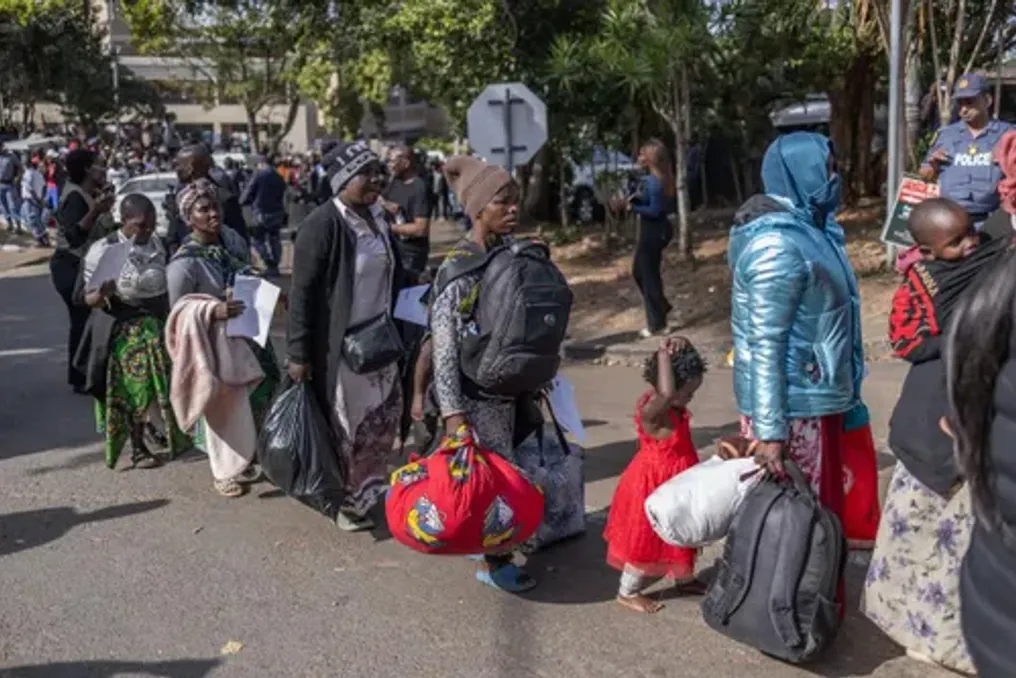
Recent events in South Africa have triggered a wave of protests, as some groups accuse foreign nationals, particularly compatriots, of occupying jobs and resources of local residents, further escalating tensions.
On July 17, 2026, Nigeria's Minister of Foreign Affairs, Ambassador Bola Akinanoloye, met with Ghana's Minister of Foreign Affairs, Samuel Okudzeto Ablakwa. The ministers affirmed the strength of their partnership, called for decisive diplomatic action, and renewed their commitment to achieving restorative justice for transatlantic slavery.
They emphasized the importance of the recent United Nations resolution on this matter. The ministers expressed serious concern over the recent surge in Afrophobic protests and attacks on African citizens in South Africa.
They strongly condemned all forms of xenophobia, Afrophobia, intolerance, and violence, warning that such actions threaten the foundations of Pan-Africanism, regional unity, the ideals of the African Union, and the African Continental Free Trade Area.
The ministers also stressed that migrants accused of crimes should be viewed through the lens of the rule of law, not through mob violence. By standing together at the diplomatic level and advocating for legal protection, they aim to assure African migrants that their safety and rights are paramount.
These commitments should stimulate deeper cooperation between governments and local authorities, paving the way for enhanced security, improved support services, and the creation of a safer environment for migrants facing discrimination or violence. The ministers pledged to work jointly with other African Union member states to strengthen monitoring, establish early warning systems, and employ preventive diplomacy to address future challenges.
They strongly urged all member states to uphold Pan-Africanism, mutual respect, and the free movement of people. Furthermore, they supported current public education and dialogue, confirming their readiness to act jointly through ECOWAS, the African Union, and other international organizations.
In May and June 2026, the Ghana Border Control Agency and the High Commission of Ghana organized voluntary repatriations, processing 963 Ghanaian citizens leaving South Africa under various operations, according to IOL.
Between June 10 and July 15, 2026, Nigeria evacuated and repatriated 1,490 South African citizens. This official evacuation followed an increase in anti-immigration demonstrations and pressure on undocumented foreign nationals.
Notably, the South African Department of Home Affairs officially deported and banned 586 illegal Nigerian citizens from entering the country for five years.
The South African government firmly rejects the label of a xenophobic nation. Official statements assert that public protests and government actions are aimed solely at addressing issues of illegal immigration and crime, not at the foreign nationals themselves.
Migration expert Gideon Chitanga from the Centre for African Chinese Studies at the University of Johannesburg urged African countries to refrain from spreading divisive narratives that fuel tension and to support hostile groups or organizations within Africa, specific countries, or communities.
Chitanga noted that the South African government is discussing its efforts to resolve these issues. He advised other African governments to support local initiatives for resolving complex immigration matters in South Africa, to cooperate closely with South African institutions for their lawful resolution, and to coordinate their actions.
Chitanga added that the protests contribute to division and create significant obstacles to continental economic integration, urging leaders to carefully consider whether to foster such division. He concluded that concerted action by African countries to address both domestic and continental socio-economic and security issues would significantly help in solving the problem of illegal immigration.
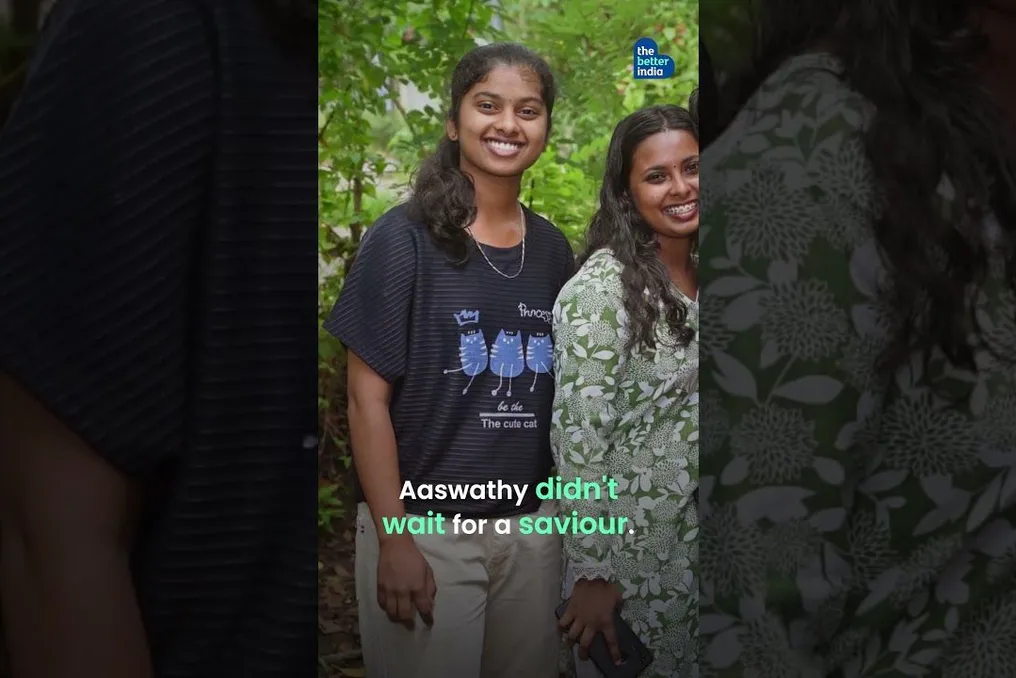
Even before dawn, twenty-year-old Aaswati begins her daily route through the streets of Alappuzha, Kerala. She delivers newspapers to sixty houses every morning.
Her work allows her not only to cover college tuition expenses but also to contribute to her mother's medical treatment. Despite various obstacles, including rain and flooded roads, Aaswati demonstrates resilience, refusing to let despair take over, and carries hope for her family with every trip.
Individuals wishing to support Aaswati's education and her mother's treatment can contact her via email at: aswathysasikumar333@gmail.com. Any act of kindness can help advance her life goals.