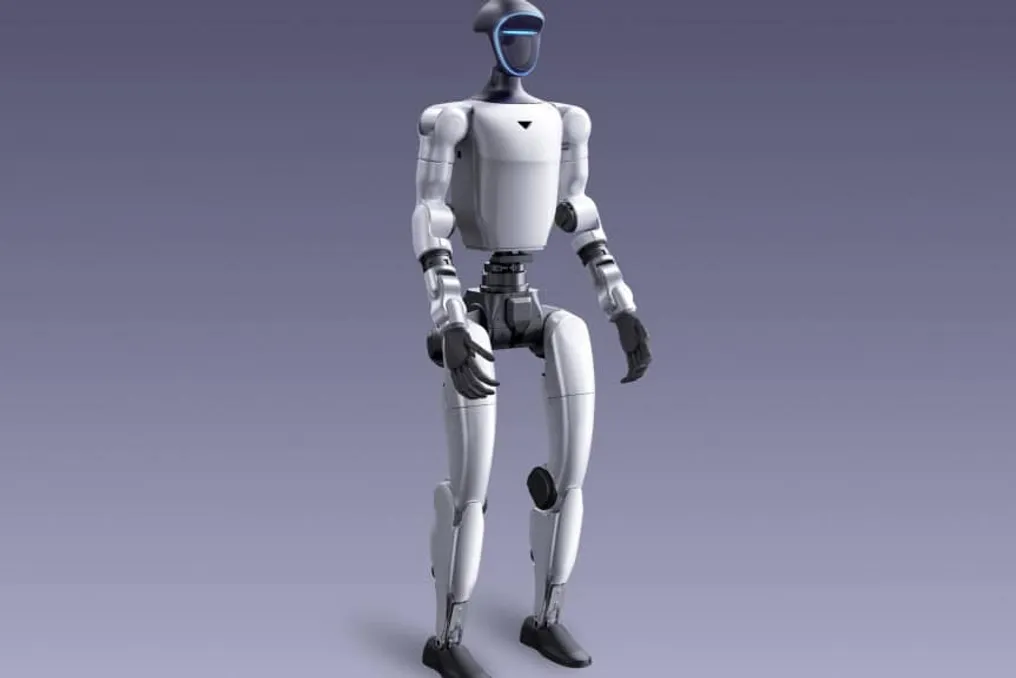
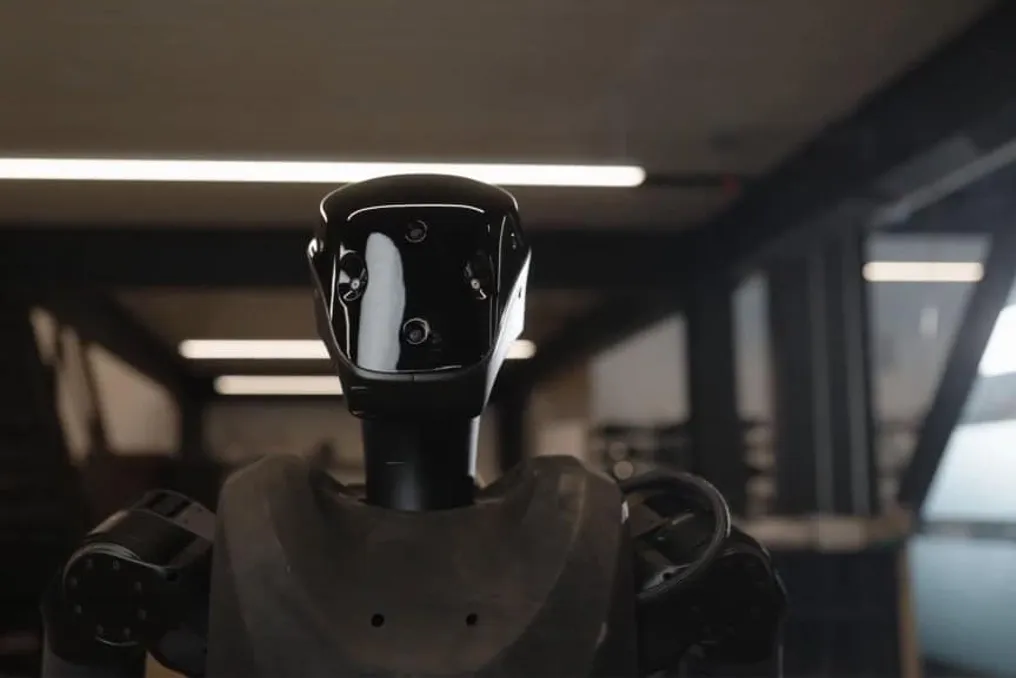
Humanoid robots equipped with artificial intelligence may begin to be evaluated for performing military functions involving weaponry as early as 2027, according to Foundation Future Industries, a company based in the United States. This company has already conducted tests with its devices in Ukrainian territory.
Operational Functions and Risks
The company, which is dedicated to developing humanoid machines for both civilian and military purposes, clarifies that the technology is not intended to replace drones, but rather to operate in land missions where the presence of soldiers poses a high risk, especially in operations requiring high precision.
This technological advancement occurs against a backdrop of intense global debate regarding the use of autonomous weapons and the ethical limits of applying artificial intelligence in conflict scenarios. For Foundation Future Industries, the robots have very specific applications, such as in complex missions that require damage control and structural preservation.
Focus on Precision, Not Mass Destruction
Foundation Future Industries, under the leadership of executive Sankaet Pathak, assesses that humanoids are not suitable for being used as tools of indiscriminate destruction, given that other systems, such as bombs, already fulfill this function more economically.
In a conversation with Euronews, Pathak commented that public opinion tends to associate military robots with scenarios seen in science fiction movies, but he argued that the practical use of these machines follows a distinct operational logic. He stated: 'I think we have this psychological reaction, that [things would be] like in the movie Terminator, but the reality is that, if you really think from a practical point of view, it is not like that.'
According to the executive, the humanoids could be employed in situations that require a more cautious action, minimizing the dangers of damaging infrastructure or harming civilians. He also emphasized that the increased exposure of soldiers in terrestrial environments opens up space for machines to assume certain responsibilities.
Tests and Capabilities of Phantom Robots
The company reported that its Phantom robots have already been tested in Ukraine, focusing primarily on tasks related to the military environment. The assessed uses include material transport, movement of supplies in internal and external areas, site reconnaissance, and assistance in environmental mapping.
Artificial Intelligence and Military Autonomy
The humanoids developed by Foundation use artificial intelligence based on models capable of interpreting the physical environment and anticipating potential future events. Unlike language models, which focus on word prediction, these systems aim to represent scenarios and movements in the real world.
According to Pathak, the development of these so-called world models is crucial for creating more adaptable artificial intelligence systems. However, the company does not disclose which suppliers collaborate in building its technology.
The executive also refuted the idea that a malicious artificial intelligence would opt for a vast army of humanoid robots to attack humanity. For him, more probable threats in an extreme scenario would be represented by drones or nuclear arsenals. He explained: 'If the goal of an artificial intelligence were to destroy humanity, I guarantee it would not send 100 thousand humanoids. I think it would use drones or nuclear arsenals.'
Pathak identified terrorism amplified by artificial intelligence as a more immediate concern, specifically linked to the misuse of publicly accessible models to carry out cyberattacks, promote disinformation campaigns, or adapt commercial drones for offensive purposes.
International Regulation
This debate occurs parallel to discussions by the United Nations on defining specific rules for lethal autonomous weapon systems. The text reports that, currently, there is no treaty dedicated exclusively to combat humanoid robots, and such technologies remain subject to existing international humanitarian law norms.
Improvements in the Next Generation
After the trials conducted in Ukrainian territory, Foundation reformulated its equipment to withstand more rigorous environmental conditions. The subsequent version of the robot, named Phantom 2, will be water and dust resistant, in addition to having greater operational capacity.
The company announced that the load capacity of the first model was about 25 to 30 kilograms, increasing to approximately 80 kilograms in the new version. Furthermore, impact tolerance was increased from a range between 12 and 15 Gs to almost 100 Gs. The new equipment will also be equipped with a 3 kilowatt-hour battery.
Currently, the company rents its Phantom robots to commercial clients for about US$ 100,000 annually per unit, a similar amount charged to military buyers. Among the company's investors are Eric Trump, son of US President Donald Trump, Stripe, and the venture capital firm Define, according to data provided by the company itself.