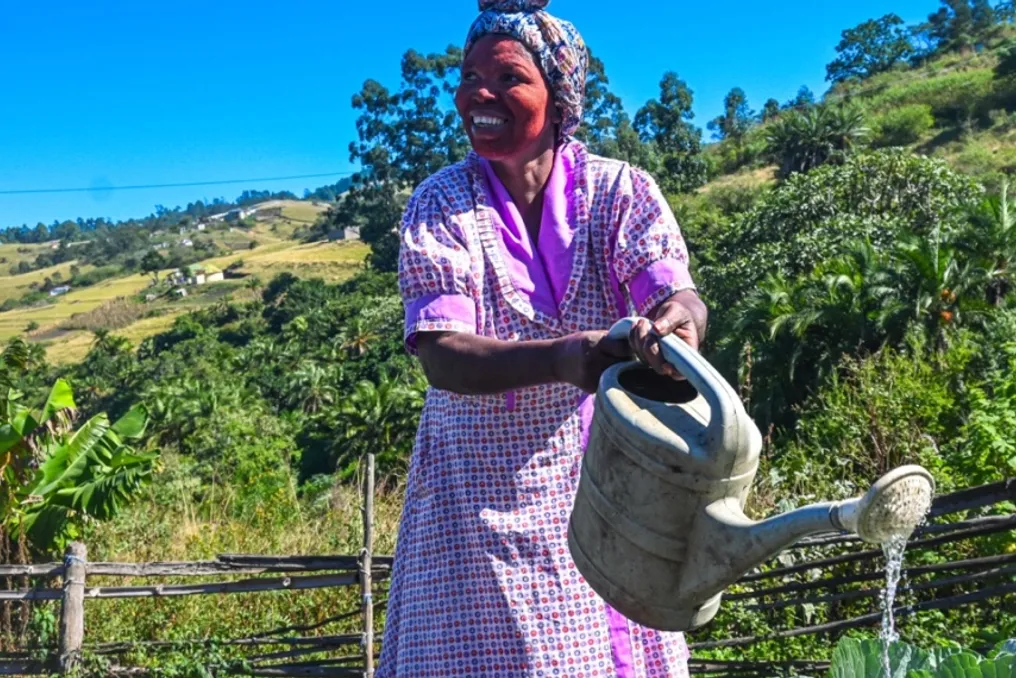
For a long time, buying fresh vegetables was an additional expense that 51-year-old Zandile Singa could not afford. However, today this mother from ePhalazini, located near Mthalume in KwaZulu-Natal, grows a significant portion of her family's food on her own plot. Moreover, when the harvest exceeds the household's needs, she sells the surplus to neighbors.
Financial aid through gardening
In just one week, Singa earned 1250 rand by selling green peppers and chilies. Singa notes that farming has contributed to her gaining independence. She says that the garden provides food for the family, and the surplus allows her to earn money for her daughter's needs, such as school uniforms and stationery, which has significantly improved their household's situation.
Singa's story is relevant in a context where many South African households are facing difficulties due to the rising cost of living. Food inflation, unemployment, and stagnant incomes put immense pressure on family budgets, stimulating growing interest in home food production as a practical way to enhance food security and create small sources of income.
The Thanda Program and Skills
In 2023, Singa joined the Household Gardening Program implemented by the public non-profit organization Thanda. This organization, based in rural KwaZulu-Natal, works with communities to build long-term sustainability through programs focused on early childhood development, child and youth development, as well as food security and economic development.
Thanda's household gardening initiative provides families with knowledge about regenerative agriculture, enabling them to grow nutritious food using accessible and eco-friendly methods. Instead of relying on expensive agricultural resources, participants learn practical techniques such as composting, mulching, seed saving, and natural pest control.
Socio-economic Impact
These acquired skills have already yielded results for Singa. When her recent harvest was threatened by pests, she did not have to buy chemical pesticides. Instead, she applied organic methods, including sawdust and chili-based treatments, which she learned through the program.
Angela Larkin, Executive Director and Co-founder of Thanda, emphasizes that home gardens have become more than just a way to grow vegetables. She argues that gardening is too often viewed solely from an agrarian perspective, whereas its impact is entirely social and economic. When a household grows its own food, it ceases to be completely dependent on money for survival in an unstable economy. Home food production, whether on a rural estate or in a small container garden, offers a practical way to restore self-sufficiency.
Food Security Starts at Home
The Household Gardening Program was launched in 2022 in response to growing concerns about food insecurity in vulnerable communities. According to Thanda, when a household's income no longer covers the cost of a nutritious basket, families first reduce the quality and variety of their diet. This can have serious consequences for children's health and development, especially during pregnancy and the first 1000 days of life.
Larkin insists that ensuring adequate nutrition for children begins long before they start school. She stresses that with stable access to diverse and nutritious food, households better support healthy pregnancies and early childhood development. However, when household budgets are stretched to the limit, families often lack the resources to mitigate market shocks. Thus, home-grown food ceases to be a hobby and becomes a critical necessity for survival.
Since then, the program has trained over 650 home gardeners, and participants have also learned how to grow protein-rich foods alongside vegetables to improve dietary diversity and strengthen household resilience. For Thanda, the work goes beyond helping families produce food; by combining practical skills with community development, the organization aims to strengthen livelihoods, improve nutrition, and create pathways out of poverty that can be sustainable for generations.