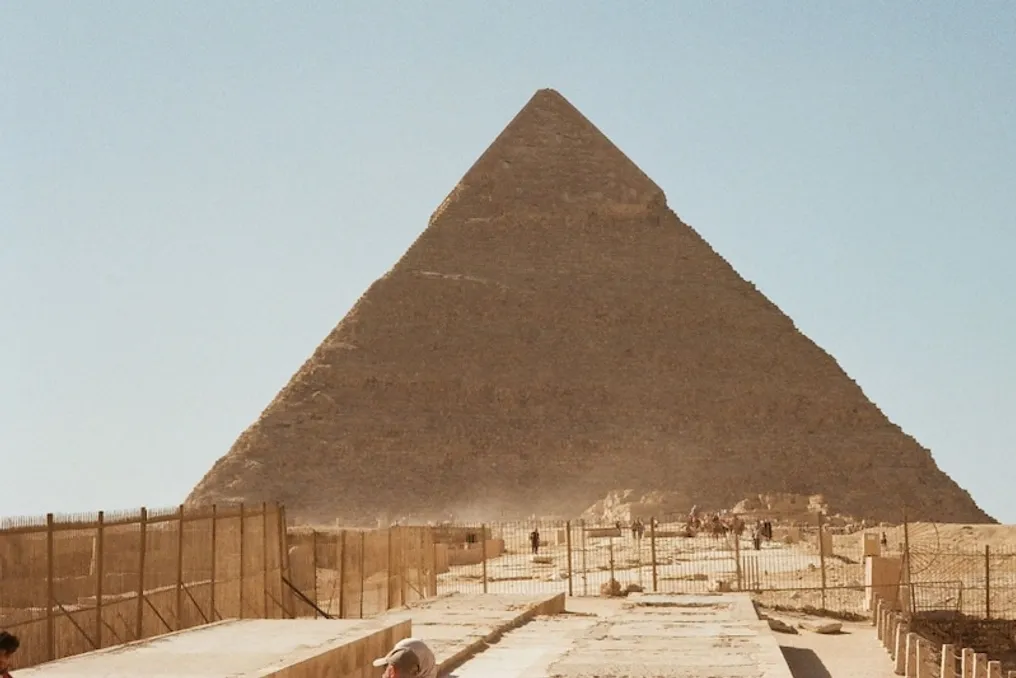
The Great Pyramid of Giza, the most famous of all Egyptian pyramids, was the oldest of the Seven Wonders of the Ancient World and remains the only surviving wonder. For approximately four thousand years, it served as the tallest man-made structure in the world. Currently, there are over fifty pyramids in Egypt, which are monumental monuments to the ancient civilization of the pharaohs.
The Complexity of Pyramid Construction
The complexity of these architectural specimens presents a serious challenge for archaeologists studying Ancient Egypt. The question arises as to how this civilization managed to erect such grandiose and technically precise structures. Similar to Stonehenge, many controversial theories have been put forward when searching for answers to these questions, including the popular conspiracy theory that the pyramids were built by aliens.
Theories on the Origin of Pyramids
According to this conspiracy theory, the pyramids were not the result of long-term construction projects requiring thousands of workers, enormous logistics, an unlimited supply of stone, as well as qualified architects and engineers. Instead, it is suggested that they were created by aliens or that aliens taught humans how to build them. However, the theory of external astronomical intervention is not the only attempt to explain the construction of such majestic monuments. Some conspiracy theorists believe that people from the sunken, highly developed civilization of Atlantis may have participated in the creation of the pyramids, although the mysteries of Atlantis remain unsolved.
Archaeological Evidence Against the Alien Theory
Much about the pyramids, including their internal structure and construction process, remains unknown, which gives rise to many misconceptions and conspiracy theories. Nevertheless, archaeological evidence convincingly indicates that the pyramids of Ancient Egypt were erected not by external forces, but by large groups of Egyptian workers under the direction of an efficient administration and using primitive but effective tools.
According to Professor Joyce Tyldesley, an Egyptologist from the University of Manchester, the Great Pyramid of Giza was built by workers gathered within some system of state service or forced labor. These workers possessed relatively simple but effective tools and were capable of carving large stone blocks, transporting them to the construction site, and gradually erecting the pyramid. Although some aspects of the technology, such as ramps, are still unknown to us, colossal human power was at the core of everything.
The presence of limestone quarries near the location of the Great Pyramid, as well as the discovery of workers' camps, testifies to the scale of this project. Professor Tyldesley notes that there is evidence of how the workers were fed and where they were buried. Understanding the pyramid construction process has significantly improved only in the last 50–70 years, as previously there was a gap in knowledge that allowed conspiracy theories to take root.
The Spread of the Alien Idea
Pyramids have existed for more than four thousand years, whereas the concept of aliens is relatively new in many cultures around the world. Professor Tyldesley believes that this idea truly began to develop after the publication of H.G. Wells' book 'The War of the Worlds' in 1897, which initiated a series of science fiction works. The book 'Edward's Triumph on Mars,' written by American astronomer and writer Garrett P. Service in 1898, had a particular influence. Although this book was fictional and not considered serious, it claimed that the Great Pyramid and the Sphinx were built on Mars, and this idea that someone from outside came to Egypt and built the pyramids became widely spread.
Another significant contribution was the bestseller by Swiss writer Eric von Daniken, published in 1968, titled 'Chariots of the Gods? Unsolved Mysteries of the Past.' This book helped popularize the idea that ancient space travelers visited Earth, were accepted as gods, and had a huge influence on the cultures, religions, technologies, and, certainly, the architecture of ancient civilizations.
It can be concluded that the belief that ancient aliens came to Earth and disseminated their superior knowledge arose, at least initially, as a reaction to the inability to believe that any ancient civilization could independently create such impressive monuments, so credit is attributed to an external force.