India's first high-speed railway, long discussed only in theory, now comprises 357 kilometers of completed viaduct in Gujarat, a tunnel boring machine near Mumbai, and a factory in Surat producing Shinkansen standard rail track.
India's first high-speed railway, long discussed only in theory, now comprises 357 kilometers of completed viaduct in Gujarat, a tunnel boring machine near Mumbai, and a factory in Surat producing Shinkansen standard rail track.
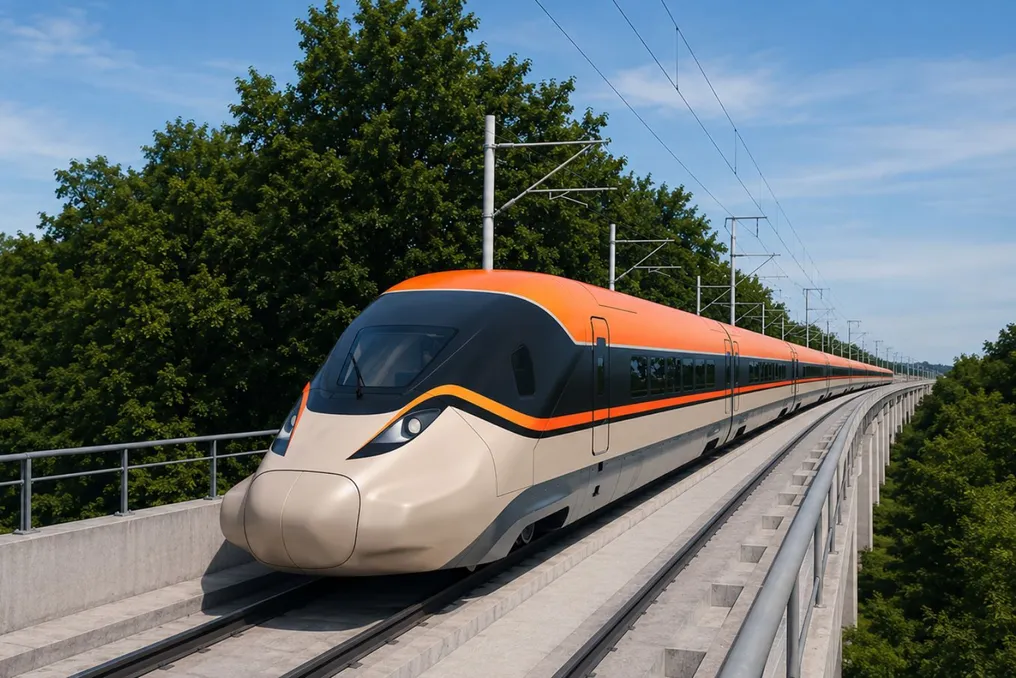
The Mumbai-Ahmedabad High-Speed Rail (MAHSR) corridor, spanning 508 km, passes through Gujarat (348 km), Dadra and Nagar Haveli (4 km), and Maharashtra (156 km), connecting 12 stations and three depots. The project was approved in 2015 and is being implemented with technical assistance from Japan and soft loan financing. It is designed for operation at a speed of 320 km/h, which will reduce the six-hour journey to approximately two hours.
All previously contentious obstacles have been cleared: 1,389.5 hectares of land have been acquired, all permits obtained, and 1,651 utility lines relocated. The main tasks remaining are engineering works and financial matters.
Eight stations are located in Gujarat (Sabarmati, Ahmedabad, Anand-Nadiad, Vadodara, Bharuch, Surat, Bilimora, Vapi), and four are in Maharashtra (Boisar, Virar, Thane, BKC), explaining the accelerated pace of work in Gujarat. Each station in Gujarat features unique architectural elements: Sabarmati is adorned with Gandhi's chakra motifs, Ahmedabad with kite images, Anand-Nadiad references the White Revolution, and Vadodara is stylized after a banyan tree. The Surat station in Antroli is built around a diamond.
A key structural decision is the height: over 90 percent of the route, specifically 465 km, is being constructed on viaducts. To accelerate construction, NHSRCL imported the method, not the structure itself. Using the full-span erection method, entire 40-meter beams are cast at sites along the route and lifted into place, instead of being assembled in segments in the air. Each such beam weighs about 970 tons, making it the heaviest beam in Indian construction history. Cranes and carriers for these beams are currently being manufactured in India. NHSRCL claims this method operates ten times faster than segmentary techniques used in metro systems.
As of July 13, the construction of 357 km of viaduct was completed, including 212 km of concrete track, 199 km of support masts, and over 600,000 noise barriers. Of the 200 km of slab track produced, 88 km has already been laid and injected. Installation of turnouts near stations and depots has begun.
The route includes 25 bridges over rivers, 17 of which are already built. Major crossings over the Sabarmati, Narmada, Tapi, and Vaitharna rivers remain; the Vaitharna, reaching an altitude of 2,320 meters, will be the highest bridge on the line. Where the route intersects highways, canals, and railways, 28 steel bridges are being erected, 14 of which are ready. NHSRCL estimates the steel requirement at approximately 65,000 tons.
An invisible but important innovation is the J-slab ballastless track, a Japanese development that ensures Shinkansen ride quality and is being introduced in India for the first time. Pre-fabricated slabs are placed on a poured concrete layer that fixes the track position at 320 km/h.
Land acquisition slowed down work in Maharashtra until 2021. This delay is being compensated for, and the full-span erection method is also being applied there. Eight mountain tunnels are being built—seven in Palghar and one in Valsad, four of which have passed the excavation stage.
The most challenging section is the 21-kilometer tunnel between BKC and Shilphata, which includes India's first underwater railway tunnel—a passage of about 7 km under the Thane Creek. Sixteen kilometers will be bored by a TBM equipped with the largest cutter head ever used in India—a 350-ton assembly lowered in Vihroli this month. Excavation work towards BKC has started. The remaining 4.88 km, bored using the New Austrian Tunneling Method, are fully excavated, and lining is currently underway.
At the very end of the corridor, at a depth of 32 meters, BKC is being formed—the corridor's only underground station and the first in India where slab pouring is taking place. Constructing this station required excavating 18.7 million cubic meters of earth in the country's densest financial district.
The launch will be phased. Railway Minister Ashwini Vaishnaw stated that the Surat-Bilimora section will open on August 15, 2027, and the full 508 km corridor is planned to be commissioned by the end of 2029. Previously, the Surat-Vapi option was mentioned in official statements.
Financial figures have also changed. From the initially approved cost of 1.08 lakh crore rupees, NHSRCL is finalizing a revised estimate approaching 1.98 lakh crore rupees, representing an increase of approximately 83 percent, mainly due to time lost on land acquisition. Chairman of the Railway Board, Satish Kumar, reported in early 2026 that approval had not yet been received. By the end of November 2025, approximately 85,801 crore rupees had been spent, corresponding to 56 percent physical progress.
Additional complications relate to compensation payments. This month, the chief project executive of NHSRCL filed a lawsuit in the Gujarat High Court against the state's land acquisition authority, arguing that the revised estimates, which have increased nearly tenfold in some cases, could significantly raise land costs.
Engineering risks persist where they always have: the tunnels in Maharashtra and system integration, which transforms completed civil works into a functioning railway. The rolling stock issue is also pressing: the line will feature the Japanese Shinkansen E10 alongside a train built in India, with BEML targeting the launch of the first domestic train in 2027.
The main takeaway is that MAHSR is a massive technology transfer. India has not just purchased a high-speed train; it is learning to cast beams independently, build cranes, pour track slabs, and bore tunnels. This acquired capability will remain after the project is complete and will determine the speed of future corridor constructions. Two more routes—Mumbai-Pune and Pune-Hyderabad—have been approved under the 2026 budget, which will be built by specialists who have mastered this profession on the current section.
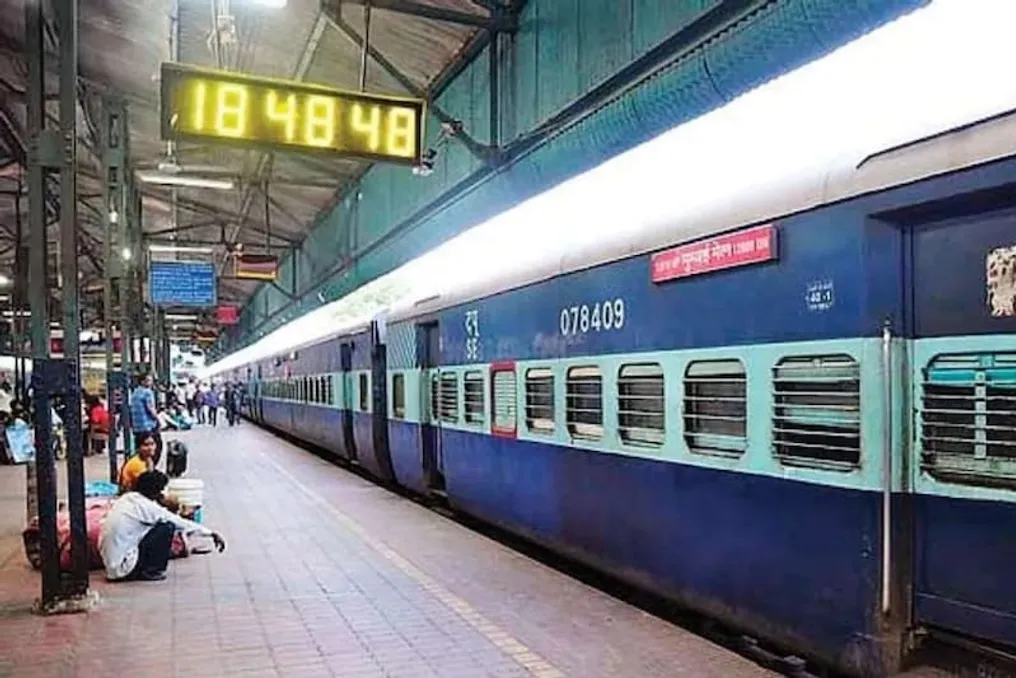
To improve passenger service and in response to growing demand, Indian Railways has extended the operational period of several special trains. Specifically, it was decided to increase the validity period of 18 special trains passing through the Kota railway division from July to September 2026.
According to Saurabh Jaina, Senior Manager of Commercial Affairs of the Kota railway division, additional runs have been added to these 18 special trains to reduce wagon load during journeys, considering the constant growth in passenger numbers.
Most of these special trains will operate from August to September. Passengers can purchase tickets for these trains through the official IRCTC website or at PRS counters. Among these weekly special trains are routes connecting with the states of Madhya Pradesh, Gujarat, Maharashtra, and Uttar Pradesh.
The operating time for the following trains has been increased:
According to railway officials, the extension of the operating period for these special trains will bring relief to thousands of passengers traveling through the Kota division. The addition of extra runs will help reduce pressure on waiting lists and increase the likelihood of getting confirmed tickets during holidays and vacations. The railway company also urged passengers to check the train schedule and booking status before traveling.