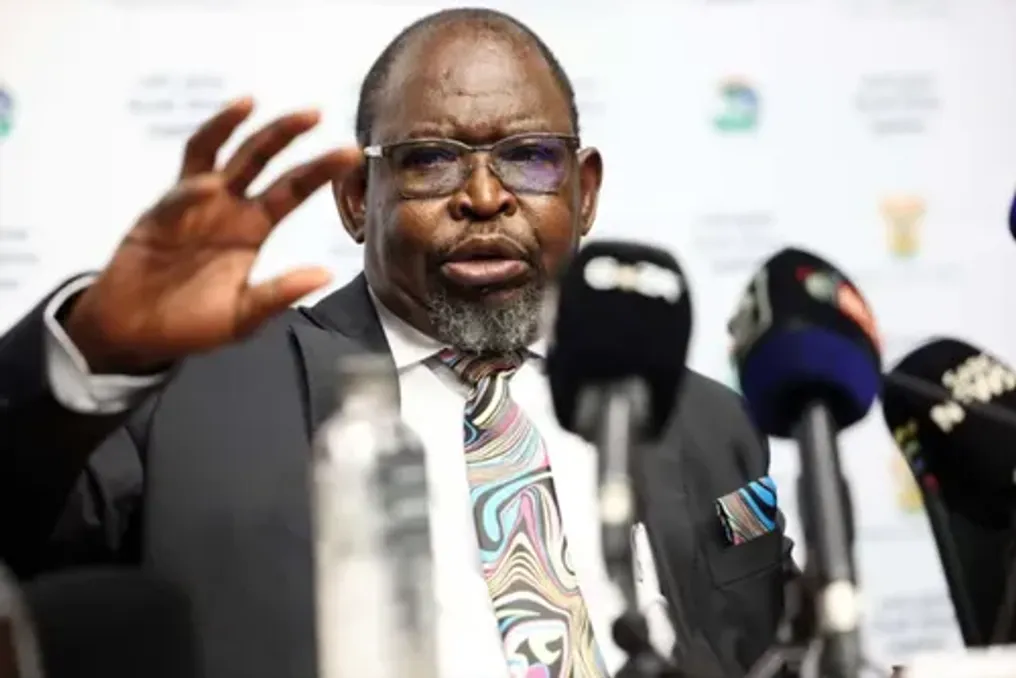
The South African financial regulator issued a statement regarding the temporary withholding of the equitable share transfer for July. On July 7, 2026, Finance Minister Enoch Godongwana confirmed that the National Treasury has suspended payments of this largest unconditional grant to local authorities, including Johannesburg and about 70 other municipalities.
Scale of Financial Problems
Reports indicate that the exact number of affected municipalities ranges from 69 to 75, which points to chaotic municipal reporting. However, the scale of the problem is undisputed: nearly a third of South Africa's 257 municipalities are effectively under financial scrutiny.
Mechanism for Payment Suspension
This decision was not a sudden attack but the result of a methodical escalation. In December 2025, a warning letter was sent demanding quarterly reports on Unauthorised, Irregular, fruitless and wasteful expenditure (UIFWE). Subsequently, on June 19, 2026, the Mayor of Johannesburg, Dada Morelo, was given only seven days to explain why the city's transfer should not be stopped, citing debts of R1.2 billion to Rand Water and R3.7 billion to Eskom. Despite Morelo submitting a response to the council, the Treasury deemed it insufficient.
The mechanism applied, stipulated in Section 216 of the Constitution in conjunction with Section 38 of the Municipal Finance Management Act (MFMA), exists precisely for such situations: it allows the national budget to cease payments to municipalities that consistently mismanage public funds, rather than rewarding inefficiency with new funds every quarter.
Johannesburg's Issues
The inclusion of Johannesburg in the list is the main news, but it is the least unexpected aspect of the situation. The metropolis presented an adjusted budget for 2025/26 without funding, meaning projected expenditures exceed realistic revenues. This is comparable to a company forecasting expenses it does not plan to cover.
Furthermore, the city resisted Treasury pressure regarding the cancellation of a R10 billion wage agreement with the South African municipal workers' union (Samwu), which the Treasury deems illegal, while simultaneously increasing its management staff by approximately 700 positions. Ironically, this year the city received a loan of R3.8 billion from the German development bank KfW, funds that were injected even when the metropolis could not pay its creditors within the legally mandated 30 days. This contrast between the inflow of foreign financial development and unpaid debts to domestic suppliers illustrates a governance failure that money alone cannot fix.
Overall Crisis and Regional Differences
The comparative picture raises serious concern. According to the Consolidated Local Government Report for 2024/25, prepared by the Auditor-General, municipalities across the country have accumulated R145.21 billion in irregular expenditure and about R24 billion in fruitless and wasteful expenditure.
The Free State province, often overlooked amidst the political drama in Gauteng, actually leads the Treasury's retention list, affecting 16 of its municipalities, including Mangaung, the provincial capital. North West holds similar positions. Conversely, the Western Cape has the fewest municipalities on the list, consistent with its historically stronger audit results under local government led by the DA. This provincial disparity indicates that the crisis is related not so much to the competence of any single mayor, but to entrenched administrative cultures, which analysts have long compared to Eskom, where accountability gradually erodes until a crisis forces intervention.
Corrective Measures, Not Punishment
The Treasury insists that this is a corrective, short-term measure, not a punishment, and expects there will be no direct impact on service delivery, as municipalities retain other revenue sources such as tariffs and fees. To restore transfers, municipalities must submit signed debt repayment plans to creditors and written commitments from mayors never to adopt unjustified budgets starting from 2026/27.
However, the deeper risk lies in systemic contagion: municipalities failing to pay debts threaten the solvency of Eskom and water utilities, which in turn limits national infrastructure investment. SALGA, representing municipalities, has so far offered only a reserved reaction, promising to 'communicate its position in due course,' which is a telling silence given the magnitude of the stakes.
The Future Test
Section 216 is a blunt instrument for the Treasury; the sharper question is whether the follow-up management prescribed by the MFMA, through municipal Public Accounts Committees investigating UIFWE, will occur. Historically, South African municipalities have treated funding threats as a matter for negotiation, not an existential threat. Whether the Johannesburg council can finally realize that its R97 billion budget must be genuinely funded, and not just politically justified, will determine if this freeze becomes a turning point or just another entry in the worn cycle of warnings, bluffing, and subsequent recovery.