Fifteen years later, Norway solemnly opened a new memorial dedicated to the 77 victims of the terrorist attack that occurred on July 22, 2011, shortly before the 15th anniversary of this bloody event in the country's history.
Fifteen years later, Norway solemnly opened a new memorial dedicated to the 77 victims of the terrorist attack that occurred on July 22, 2011, shortly before the 15th anniversary of this bloody event in the country's history.
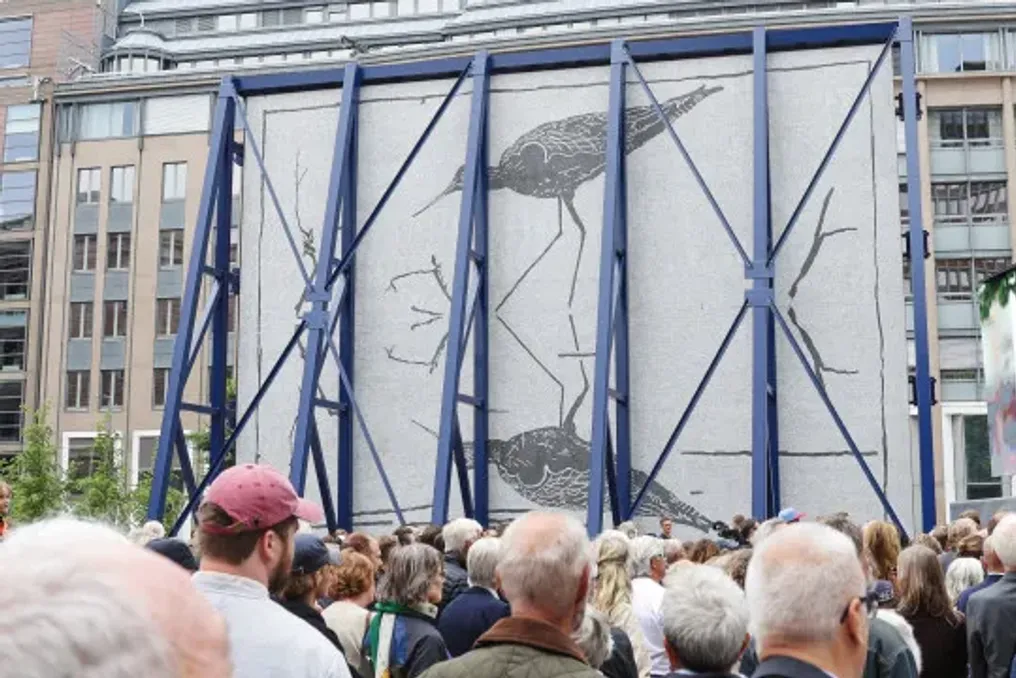
Relatives and survivors gathered in Oslo on Sunday to witness the opening of the memorial. It depicts a local bird from the island of Utøya, where 69 people died, most of whom were teenagers, according to the BBC agency.
Among those present at the ceremony were Norwegian Crown Prince Haakon, Minister of Digitalization and Public Administration Kari Anne Thaug, and Minister of Education Kari Nessa Nordtun.
On July 22, 2011, Norwegian Anders Breivik carried out an explosion in Oslo, killing eight people. He then went to a youth camp of a center-left political party on Utøya, where, disguised as a police officer, he pursued and shot 69 people, mostly teenagers.
The memorial, named 'Sustentando', was created by Norwegian artist Mathias Faldbakken. It is a monumental stone mosaic 12 meters high, framed by a steel structure on which the names and ages of all 77 victims are engraved. The memorial is located in the Government Quarter, near the site of the first of the two attacks.
According to the artist, the memorial has a dual purpose: to honor the memory of the victims and to engage the public in an act of democratic resistance against the far-right ideologies that inspired the attack.
Mette Stamneshagen, responsible for the support group for victims and survivors, stated to the AFP agency: 'July 22, 2011, was a brutal attack not only on individuals but also on our democracy.'
Haakon also visited the new July 22 Center—Norway's national educational center dedicated to these attacks. Breivik, who never showed remorse for the attacks and presented them as a crusade against multiculturalism in Norway, was sentenced to a maximum term of 21 years. However, a rarely used clause in the Norwegian judicial system was applied, allowing him to be held indefinitely if he continues to pose a threat to society.
In 2024, the terrorist accused the Norwegian state for violating human rights twice while being held in prison. While kept separate from other inmates for about 12 years, he accused the state of violating two articles of the European Convention on Human Rights: one prohibiting 'inhuman' or 'degrading' treatment, and another guaranteeing the right to correspondence.
As reported by France-Presse (AFP) at the time, Breivik is held under special conditions in the maximum security unit of Ringerike prison, on the shore of Lake Utøya. The 47-year-old extremist has three private rooms—a living room, a study, and a gym—on the top floor, and on the ground floor, which he shares (but never simultaneously) with another inmate, there is a kitchen, a lounge with a gaming console, a dining room, and a visitor's room. Many believe that Breivik's interaction with the courts is an attempt to draw attention to his case or return to the international arena, but the Norwegian state has rejected his claims.
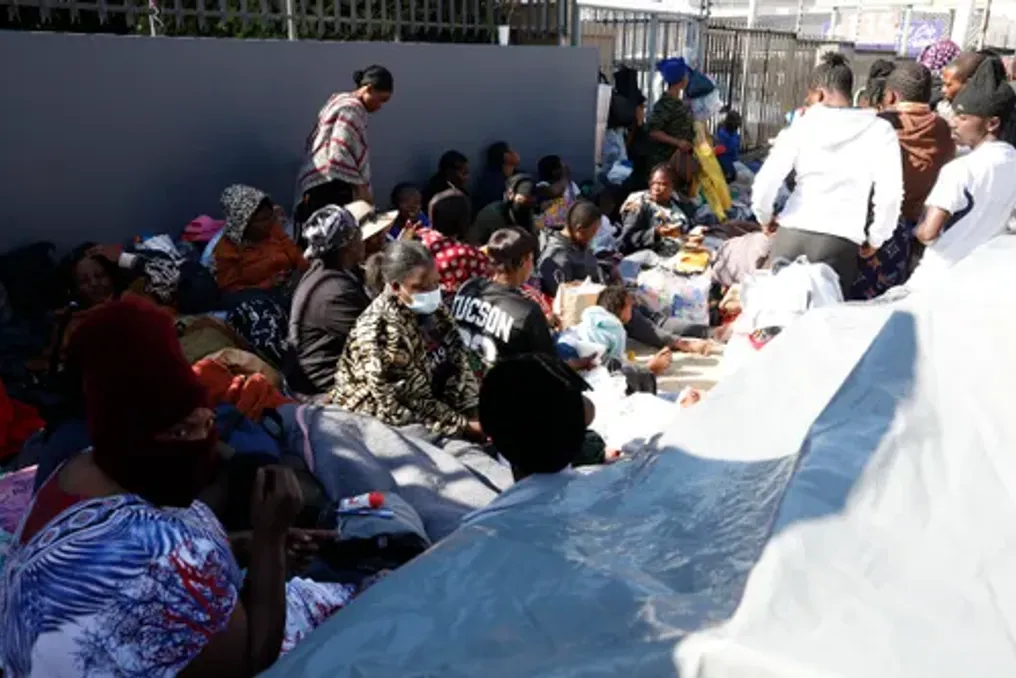
The tense situation near the Ministry of Internal Affairs Refugee Reception Centre in Durban has reached a deadlock after the national government confirmed that it will not implement a separate reintegration program for the group of displaced refugees who have been in the nearby camp since mid-May.
Refugees claim they attempted to return to their former communities but were forced back onto the streets. Bishop among the refugees, Raphael Bahceбва, reported that they were advised to reintegrate, but 186 people remained outside the centre as they have no other place to live. Bahceбва noted: 'Our people are afraid to return.'
Yeselen Govender, a representative of the Siyafana Sonke Action Campaign, stated that local communities are not ready to accept the refugees. She emphasized that the refugees themselves have not undergone psychosocial counseling to overcome the trauma experienced over the past year, casting doubt on the possibility of reintegration under such conditions. Govender also pointed out that government officials offering options are aware of the unrealistic nature of these options.
Deputy Government Press Secretary William Baloyi stated that the Department of Internal Affairs previously checked the status of refugees and asylum seekers living outside the Refugee Reception Centre on Che Guevara Street and confirmed their legal stay in the Republic according to the Refugee Act. Baloyi clarified that the government constantly urged these people to return to their former residences, but they refused. Furthermore, they rejected the offer to stay at the Lindela Repatriation Centre, which is the only Department of Internal Affairs facility with the necessary infrastructure for temporary safe accommodation.
Baloyi added that the Interdepartmental Migration Committee is not developing a separate reintegration program for individuals who voluntarily rejected the options available from the government. He also noted that the occupation of public spaces and sidewalks falls under the jurisdiction of the eThekwini municipality, which is responsible for enforcing its bylaws and taking action against individuals illegally occupying municipal property, provided such actions are lawful.
The Director of Marketing and Communications for the eThekwini municipality, Mandla Nsele, refuted claims that Mayor Cyril Shabha had committed to providing housing for people whose camps are near Che Guevara Street. Nsele categorically stated that the mayor never made such promises, and any contrary statements are false and misleading. He reminded that in June, people who passed the Department of Internal Affairs check and whose documentation was in order were offered two options: reintegration into their home communities or referral to the Lindela Repatriation Centre. The city's position remains unchanged and is guided by applicable legislative and political frameworks.
Meta, the parent company of Facebook, has announced the launch of a new feature designed to enhance child safety and inform parents. This feature will operate in conjunction with Meta AI.
The system is intended to prevent cases of suicide and self-harm among young people. If teenagers begin discussing topics related to self-harm or suicide with the Meta AI chatbot, the Meta AI safety feature is activated. Subsequently, a corresponding notification is sent to the parents via the Meta account.
Meta's new tool is designed to scan conversations between teenagers and the Meta AI chatbot. If the system detects signs that a child may harm themselves or commit suicide, parents receive a message on their Meta account. Meta emphasized that this feature was developed not only to inform parents but also to ensure privacy compliance.
The feature is already available in several countries, including the USA, the UK, Australia, and Canada, and for users of Instagram Parents Supervision. The release of this new feature is expected in other countries by the end of the year. Experts note that in some cases, teenagers treat AI as a friend, and some children discuss self-harm and suicide with AI, which is why the company implemented these precautions.
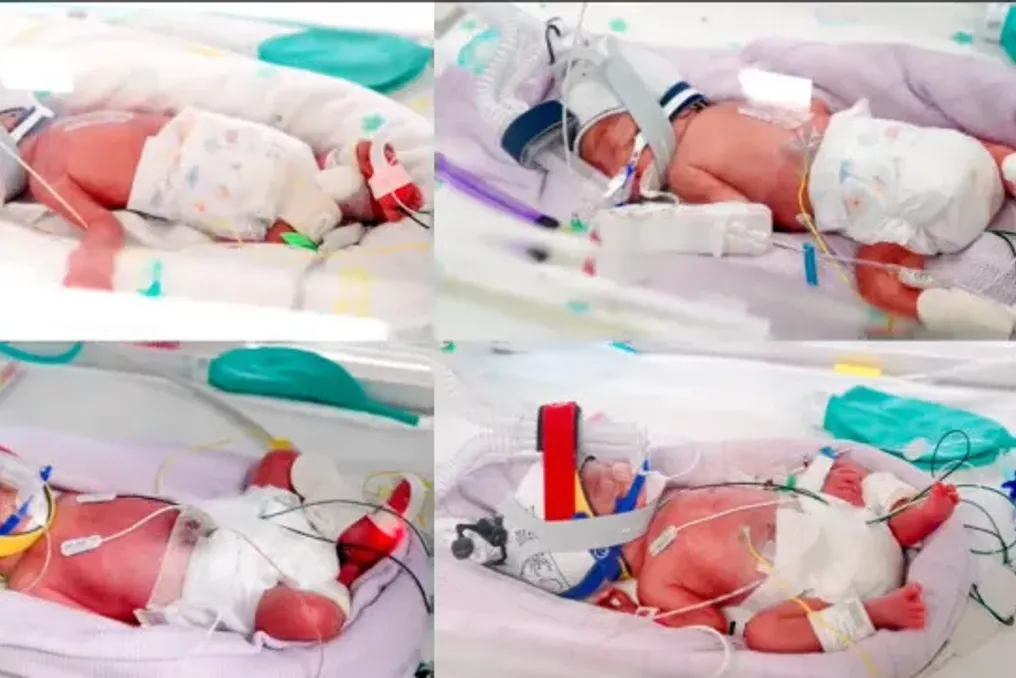
A woman from Australia gave birth to quadruplets who turned out to be identical. This naturally occurring case was described by doctors as one of the rarest in the world.
The children shared a placenta and developed from a single fertilized egg. Jenitar Na'amoa gave birth to four daughters—Emily, Harriet, Alex, and Katherine—via C-section at 28 weeks and four days gestation last week at Royal Brisbane and Women's Hospital, according to ABC.
Jenitar and her husband, Jortam, were already raising four children aged between 1 and 10 years and stated that they did not plan on having more children. They were surprised by the news of the new pregnancy.
The babies are in intensive care, and according to the hospital, they are 'recovering exceptionally well.' About 20 people were present in the ward during the birth, including an obstetrician and assistant, anesthesiologists, midwives, a surgical nurse, and four neonatal teams to care for each child. At birth, Emily weighed 1025 grams, Harriet weighed 1121 grams, Alex weighed 1120 grams, and Katherine was the heaviest, weighing 1151 grams.
Alex Bendal, a specialist in maternal and fetal medicine and an obstetrician, monitored Jenitar since the beginning of the pregnancy. She explained that it was a pregnancy with 'very, very high risk' and extremely rare. She noted that with a shared placenta, there is a high risk of complications in any pregnancy, especially a multiple one, which usually involves twins, not quadruplets. Alex Bendal emphasized: 'The fact that we have four beautiful and healthy babies born at 28 weeks and four days is incredible.'
Despite the risks, the doctor reported that Jenitar 'approached everything with great calm from day one.' Monozygotic quadruplets occur when a single fertilized egg splits into four separate embryos in the early stages of development. Estimates suggest this happens approximately 'once in 15 million pregnancies.' A shared placenta is an unprecedented phenomenon, and the doctor called this event 'one of the rarest births in the world.'
The parents created a fundraiser on the GoFundMe platform. In their appeal, they wrote: 'Our precious miracles have arrived safely, and while our hearts are overflowing with gratitude, the reality of caring for four newborns simultaneously has brought challenges we never imagined.' The funds are being raised to purchase a larger vehicle capable of holding 'at least 10 or 12 seats,' as well as to cover medical expenses and provide necessary items for the babies.