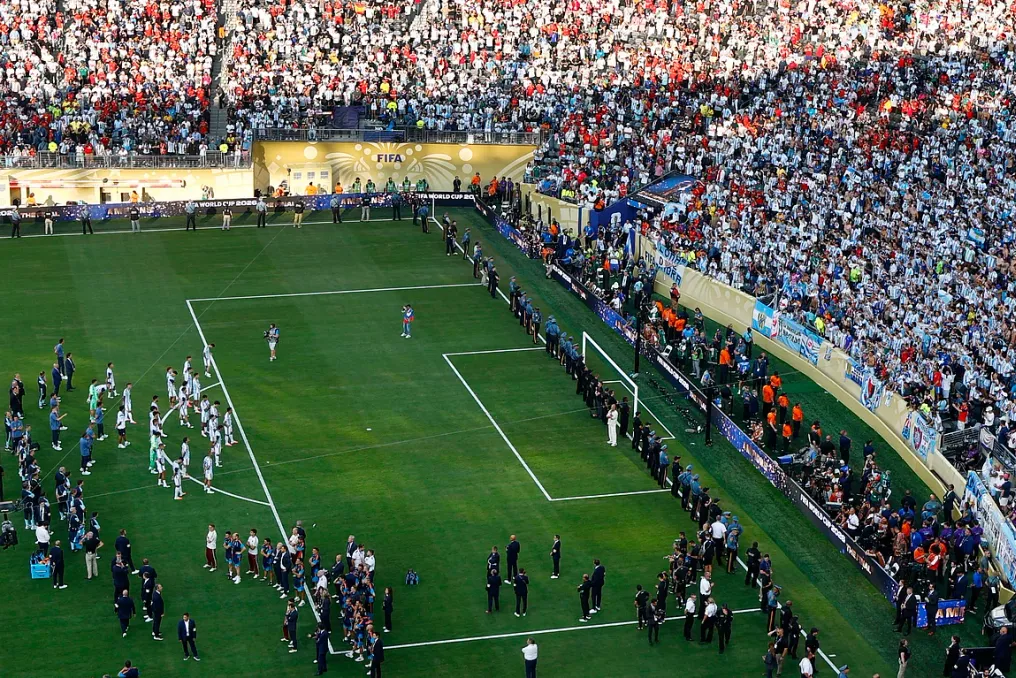
After the Spanish heroes, who won the World Cup title, took the podium, the Argentine rivals looked dejected and turned away. This was the culmination of a tense, irritating, and unpleasant game by Argentina, which took to the field with a shortage of players and started fights in bars after the final whistle.
} , {
Similar stories
Popular
Post-match behavior
Although scuffles during a battle can happen, ignoring the Spanish triumph was perceived as a demonstration of disrespect to the winners of the most prestigious sporting event in the world. This game matched the general image of Argentina, which offered nothing substantial or stylistically bright over 120 minutes.
Stylistic confrontation between teams
Before the match, many speculated that Argentina would have to break the structure of the polished Spanish team, which gained confidence and authority as it advanced through the tournament. Spain is the antithesis of Argentina: they are a systemic, organized, and surgically precise team. If Spain maintains composure, Argentina plays hot: it is an emotional, often chaotic team whose performances fluctuate greatly during matches. The team has never seemed so vulnerable while rarely losing.
Tactics and start of the match
The pre-match scenario was clear, albeit somewhat simplified: Spain would play with their head, and Argentina with their heart. However, this underestimates the steel and determination of Spain, who are now both European and world champions, as well as Argentina's ability to cope under pressure and deliver results when pressure mounts. Argentina tried to draw the Spaniards into their game, as they did against England in the semi-final in Atlanta. Then Argentina sought to provoke, push, and irritate; Enzo Fernández early put the ball on Elliot Anderson's head, and Leandro Paredes grabbed Jude Bellingham's ankle.
Game development and errors
The team's performance during the national anthem almost resembled a referendum on each player's patriotism. It was a frightening spectacle, similar to the haka of the New Zealand rugby team. The irony is that Argentina ultimately overcame England not through a clever elbow or an unpleasant bite, but through concentration on football and comprehensive superiority over England in the last 25 minutes. If Argentina tried to destabilize the English, the start of the final against Spain was more cautious. Moreover, Argentina was unusually passive in both attack and in using 'dark arts'. Their immersion in anarchy in this final was a slow process, not an instant explosion.
Spain's strategy and refereeing
Spain's insight lay in refusing to engage in empty talk. They calmed the game down, putting the Argentines on their swing and freely redistributing the ball. It was akin to a sedative that dulled Argentine provocations. Spain won this game not by succumbing to provocations, but simply because they played better. Spanish central defender Imerik Laporte stated before the game that his team knew what to expect. He told reporters: 'In the last few matches we saw things that really surprised us, incidents that were ignored. Especially with Argentina, who is a team that leaves many small messages with its challenges.'
Laporte's diagnosis proved correct. The referees showed leniency towards the Argentine players throughout this tournament, and this repeated here. Referee Slavka Vincic perhaps hoped to keep 22 players on the field by adopting a soft approach. However, this only allowed the Argentine players to avoid punishment. Alexis MacAllister's early rough play on Dani Olmo was poorly calculated and harsh. Then Nicolas Talaffico, a poor defender against the great forward Lamine Yamal, tried to foul the Spanish winger in four different ways, but most unpleasantly he hit his shins with spikes on Yamal's calf. Both went unpunished. Leandro Paredes, who came on in the second half, took on the role of the hidden villain, pushing Dani Olmo to the ground, unleashing anger at the official referee, and looking simultaneously distrustful and offended at any whistle against his team.
Emotional intensity and star reactions
For most of the second half, Argentina played with great effort but little inspiration. Even Lionel Messi, who so often acted as a savior, was a secondary participant. As fatigue set in, Argentina lost self-control. Enzo Fernández's first yellow card was for dissent, although he was lucky not to be immediately sent off, as he sarcastically applauded the referee's yellow card. The technical staff and substitutes of Spain rushed from the bench to protest. They also realized the significance of the moment, passing the initiative to Spain. From there, the Argentines became even more desperate. Messi engaged in a verbal spat with Marc Cucurella, and the Spanish player momentarily covered his mouth. This could be a violation if used to conceal insults during a confrontation, but Messi's reaction, turning and raising his hand to ask the referee for intervention, resembled the behavior of a child telling stories to a teacher.
Final and post-match incidents
At the final whistle, some Argentine players shook hands with the Spaniards. Messi fell to the floor and then stood alone. Eventually, he cried. But others disgraced themselves. They displayed some unsightly traits in the victory over England, particularly Cristian Romero, who incited the English players after Argentina's goals, and substitute player Valentin Barco, who ran across the field in front of his opponents—a lack of sportsmanship that provoked a post-match blow to the head from Jude Bellingham. This time the situation was more tense. When the Spanish players were celebrating, Argentine defender Nahuel Molina seemed to try to grab Rodri's arm. Rodri clashed with Molina, who stood opposite the Manchester City midfielder. Then Eric Garcia of Spain jumped to protect his teammate. Paredes quickly appeared, grabbed Garcia by the neck for a short time, and pushed him to the ground. Paredes also targeted Gavi. Nicolas Otamendi, the Argentine defender, was captured on DAZN video in Spain saying to Rodri that he and Laporte 'had been crying all week' and should speak less. Argentina coach Lionel Scaloni tried to intervene. In his immediate post-match interview, he said: 'We were magnificent in winning, and we need to be magnificent in losing. We showed today that we know how to lose. We lost the game, and we accept it.'
Expert reaction and legacy
Others were less impressed. Former German international Toni Kroos wrote that Spain ensured that 'football won', while his former German teammate Thomas Hitzlsperger tweeted that 'Paredes, Fernández, Otamendi, this whole bunch' are 'disgusting athletes... Messi is a genius on the pitch; most of his teammates are bandits without the sense of beautiful game - viva España.'
It must be acknowledged that the unity of this Argentine team and the deep sense of commitment inspired by their national flag was often their distinguishing feature, enhanced by Messi's genius. This camaraderie among the Argentine players, who often relax together, led the team to the 2022 World Cup and the 2024 Copa America. This helped overcome deficits against Egypt and England in this summer tournament. These Argentinians play with almost manic patriotic intensity; they play for the flag, but are also bound by an almost religious submission to their greatest player, Messi. Their fans provided the electricity of this tournament, traveling in huge groups, turning Kansas City, Atlanta, Miami, and Dallas into oceans of blue and white. The connection with the fans is obvious. Former Argentine striker Gabriel Batistuta told Telemundo: 'One of the things people used to complain about in previous national teams was the style of play that didn't resonate with Argentines. This team did exactly what any fan would ask for—played with heart.'
Argentina did not come to make friends. They came to win matches. However, this time they crossed the line, directing aggression to their own detriment. Scaloni admitted: 'Today we couldn't compete head-to-head when it came to football.'
Before the trophy celebration, the Spaniards offered an olive branch, paying tribute to the Argentine players. However, when it came time to recognize the winners, the Argentines turned inward. They gathered in front of the goal, focusing on their own fans, who physically bowed to Messi. When Rodri received his Golden Ball for Player of the Tournament, the Argentine fans drowned it out with songs in honor of Messi.
The start of the 13th round of the Uzbekistan Super League was marked by the commencement of three scheduled matches. Today, players of the national championship will take to the field for more encounters.
Match 'Bukhara' versus 'Bunyodkor'
The 'Bukhara' team will meet with the 'Bunyodkor' club at the 'Navoiy Yoshlar SM' stadium. Both teams suffered defeats in the previous 12th round. In that match, the hosts from the Fergana region, the 'Neftchi' club, fell victim to a comeback after two goals were scored in the final minutes. Meanwhile, 'Kaldirgochlar' won against 'Nasaf' at their arena with a score of 3:1.
Currently, 'Bukhara' is in third place in the standings with 20 points, while 'Bunyodkor' holds fifth position with 19 points. The match between these two teams is scheduled for 20:00.
Fixture 'Pakhtakor' versus 'Khorazm'
'Pakhtakor', one of the main favorites of the Super League, will host the 'Khorazm' team in the 13th round. The Tashkent club remains the main rival of 'Neftchi' this season, trailing them by 4 points. In the last round, the 'lions' lost valuable points playing at home against 'Lokomotiv'. 'Khorazm', on the other hand, has not suffered any defeats in the last four Super League matches. Their last match took place on April 18, when they narrowly defeated 'Mashal'. Previously, in Jizzakh, they lost to 'Sogdion' with a score of 2:0.
'Pakhtakor' is in second place after 12 rounds with 27 points, while 'Khorazm' is in 12th place with 13 points. This match will begin at 20:00 at the central 'Pakhtakor' stadium in Tashkent.
Match 'Sogdion' versus 'Neftchi'
The current champion of the Uzbekistan Super League, the 'Neftchi' club from the Fergana region, will travel to Jizzakh to play against the 'Sogdion' team. 'Sogdion' is preparing for the confrontation with the champion. The Fergana players expect a serious test this season, as the Jizzakh club is actively showing activity in the summer transfer market and aims to offer the 'bulls' serious competition.
In the previous round, 'Neftchi' won against 'Bukhara', who was becoming a discovery of the championship, at home. The 'bulls' also beat 'Khorazm' on their grounds. According to the standings, 'Neftchi' leads with 31 points. 'Sogdion' is in 14th place with 12 points. This match is also scheduled for 20:00.
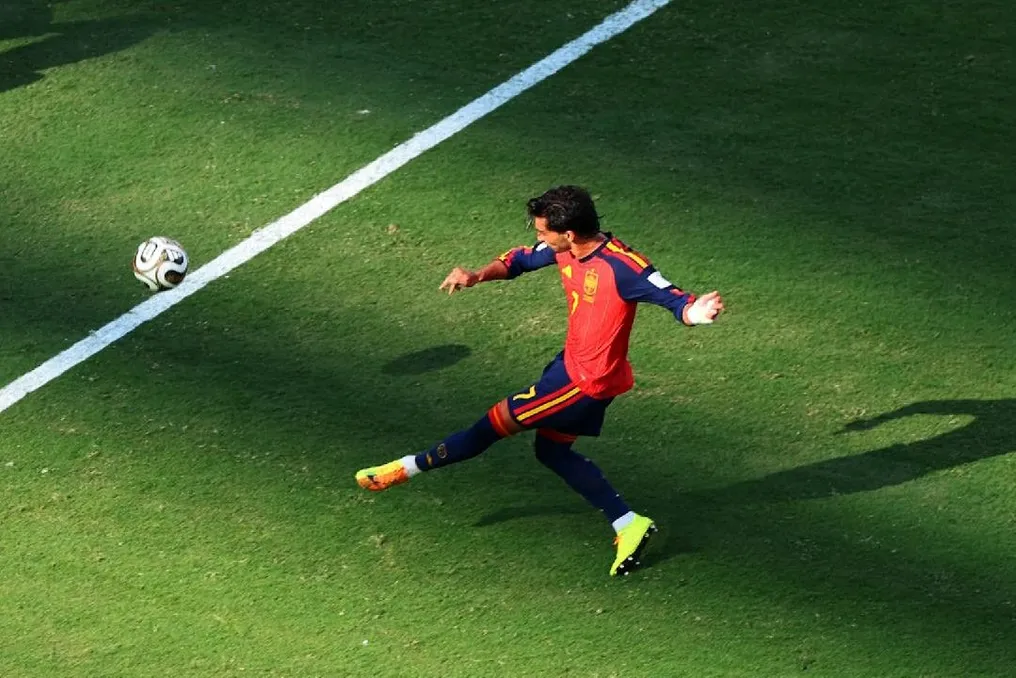
Spain won the FIFA World Cup, securing its second title after defeating the reigning champion Argentina in the 2026 final held at MetLife Stadium.
Match Progression and Decisive Goal
Despite both countries' fans arriving at the match confident of victory, the Spanish team dominated throughout the game. Argentina failed to land a single shot during regular time, and the situation worsened after Enzo Fernández was sent off late in the match.
The decisive goal was scored by Ferran Torres in extra time. This victory concluded the tournament, during which Spain's defense conceded only one goal.
Tournament Scale
This victory marked the conclusion of the expanded World Cup, which featured 48 teams, 104 matches, and achieved record attendance.
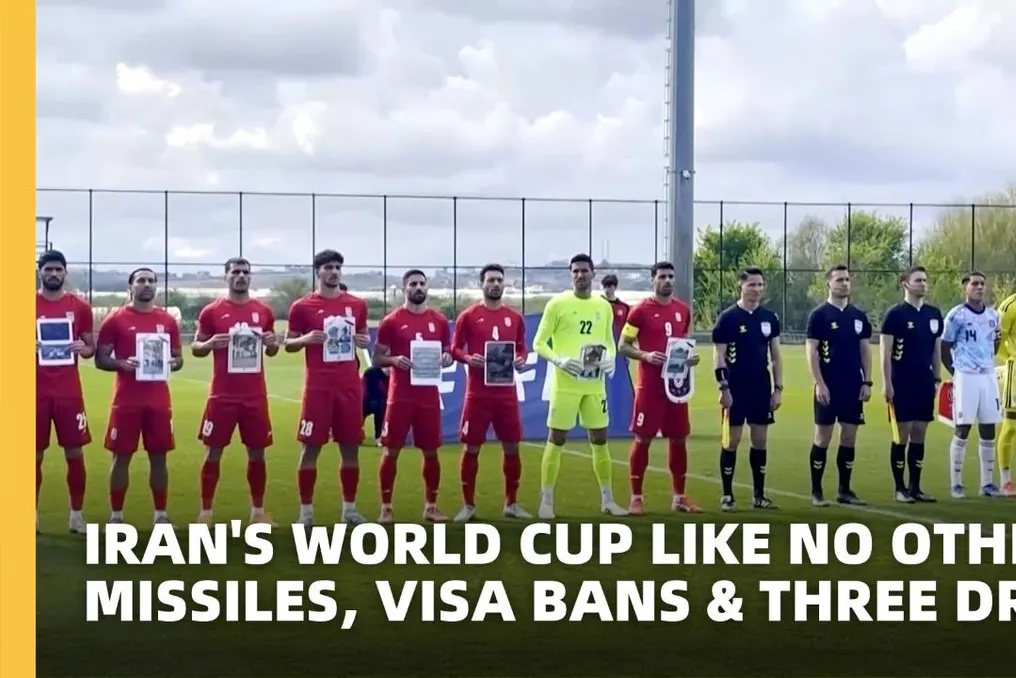
Iran concluded its participation in the 2026 World Cup without any losses; however, its main difficulties were not the football matches but administrative barriers.
Administrative Obstacles
The team faced visa bans, restrictions on overnight stays, and limitations on daily cross-border travel on match days. More than a dozen staff members were denied entry to the United States.
Coach's Comment
The technical coach of Iran noted that the situation was similar to holding two completely different World Cups simultaneously.