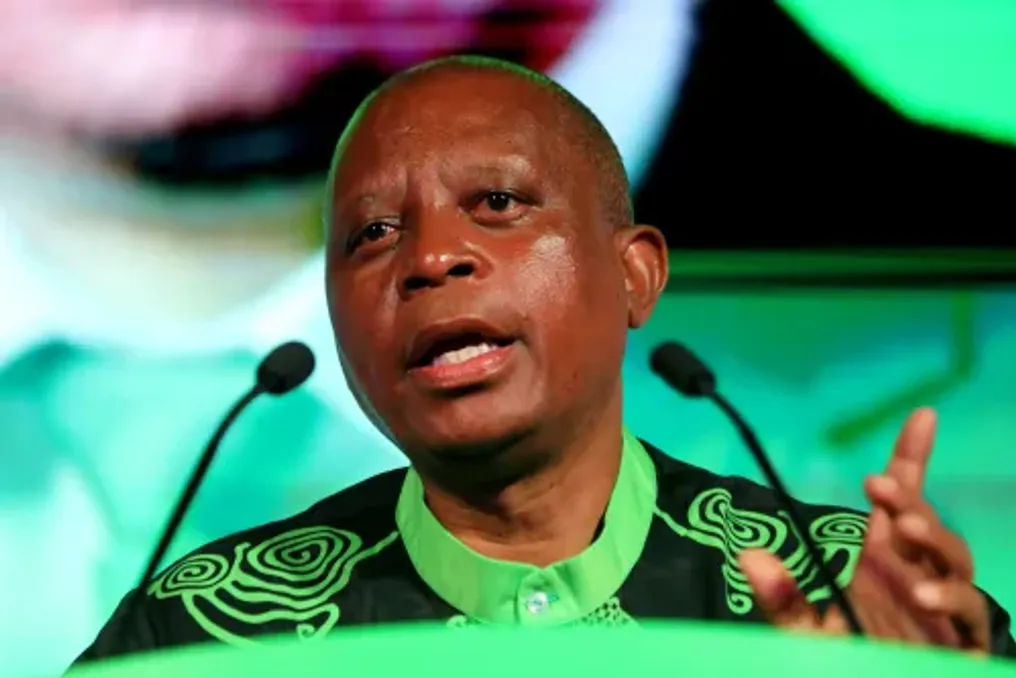
Herman Mashaba, leader of the ActionSA party, stated that undocumented foreign nationals who find themselves in difficult situations after deportation should receive assistance from their home countries, not from South Africa.
Herman Mashaba, leader of the ActionSA party, stated that undocumented foreign nationals who find themselves in difficult situations after deportation should receive assistance from their home countries, not from South Africa.
Mashaba emphasized that if his party gains power, it will deport all illegally present foreigners in the country back to their home countries. He made these remarks during a recent interview with the publication IOL.
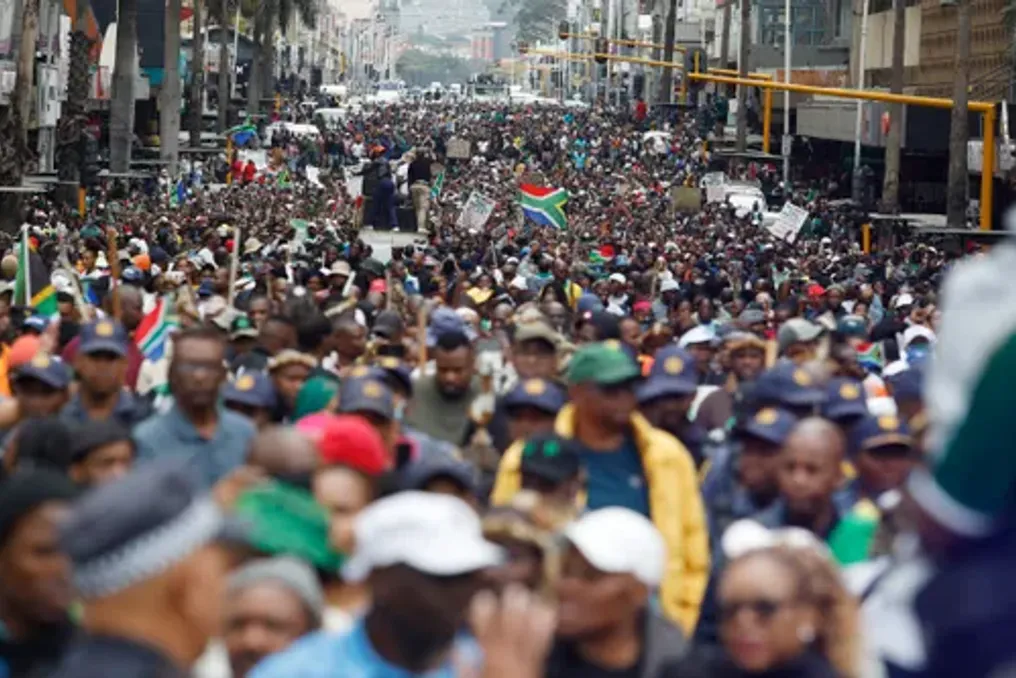
These statements came amid growing protests against illegal immigration across South Africa, with some groups demanding that undocumented foreigners leave the country. Hundreds of migrants continue to arrive at the repatriation center as authorities conduct deportations and voluntary returns through the Musina Repatriation Centre.
The increase in arrivals is linked to the closure of the Durban Repatriation Centre and occurs against a backdrop of intensified calls from anti-immigration organizations to expel illegal immigrants from South Africa. Some foreigners have already been deported or voluntarily returned to countries such as Mozambique and Malawi, while tensions surrounding illegal immigration continue to rise. Others remain without the means to return home, which, in Mashaba's view, is not a problem for South Africa.
He stated directly in the IOL interview: 'It is not a South African problem. Let it be the problem of those countries. It is not our problem.' Mashaba added that South Africa should not serve as a refuge for criminals, as people who entered the country illegally are criminals. He noted that no one can expect South Africa to take on or allow other countries to offload their problems onto it. Therefore, if South Africa sends them to Musina or elsewhere, it becomes the problem of the respective country.
Mashaba reiterated that this is not South Africa's responsibility. He called on South Africans and the global community to know that the country faces not only illegal migrants from Africa but also illegal immigrants from distant places such as Pakistan, Bangladesh, India, China, and many other countries. Mashaba, who has long made strong statements on immigration issues, insists on the complete deportation of all illegal immigrants if his party gains a mandate to govern. He stated that they would ensure that people illegally in the country, as well as those who illegally obtained South African citizenship, are held accountable. He intends to fight for the revocation of these citizenships and ensure their return, aiming for mass deportations, as he believes this is the only way to restore dignity to South Africans.
He also stated that he is unconcerned by criticism seeking to promote illegality and chaos in South Africa, emphasizing that the country cannot be built on chaos and can only develop when everyone respects the rule of law.
Independent political analyst Gudnauf Mashego commented that Mashaba is campaigning on an issue that goes beyond the scope of local government authority. Mashego noted that Mashaba is running in local elections, and the local government does not have the right to set immigration policy. He also speculated that even at the national level, his chances of winning are slim, so his statements do not carry much weight.
In Mashego's opinion, immigration will remain an important electoral issue because many voters are unaware of the limits of local government authority. Local elections are scheduled for November 4, 2026. The analyst observed that Mashaba seems to be trying to preempt the political narrative, believing that Patriotic Alliance (PA) leader Gethon McKenzie successfully mobilized support for his 'Abahambe' campaign before the previous elections. Mashego also mentioned that the uMkhonto weSizwe party is also aiming to use this topic.
Mashego concluded that while such a strategy may attract political support, the parties will ultimately fail because immigration policy is determined by the national government, not municipalities. He stressed that the right to establish immigration policy belongs to the national government, and that South Africa will never have one political party with an absolute majority, but rather governments of national unity.
Political analyst Solly Rashilo believes that immigration has become one of the defining political issues of the country. He noted that the surge in anti-immigration protests, with a 'deadline' of June 30th, concerns over violence, and record deportations of over 53,000 people reflect deep public dissatisfaction with unemployment, crime, and pressure on public services. Rashilo added that many political parties are using this issue, putting additional pressure on the African National Congress (ANC), which leads the Government of National Unity (GNU). He warned that while the topic resonates as a substitute for signs of governance failures, it carries the risk of accusations of xenophobia and will remain relevant during the elections.
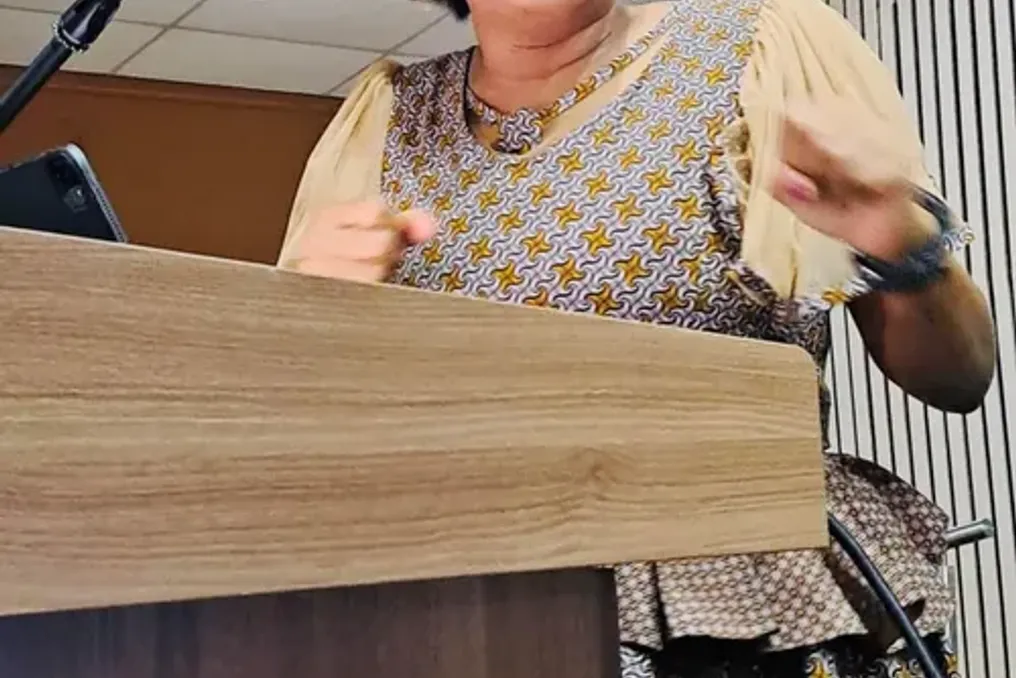
Limpopo Premier, Dr. Fofie Ramatuba, called on community members to stop providing illegal housing and to assist law enforcement in combating crime. She blamed South African citizens for allowing undocumented foreigners to reside in the province by renting out rooms in backyards and providing unauthorized accommodation.
These statements were made by Ramatuba on Friday morning during a press briefing held after an operation targeting illegal immigrants in Polokwane. Present at the briefing were the acting Provincial Police Commissioner of Limpopo, Lieutenant General Jan Schapers, representatives from the Department of Home Affairs, and staff from the Department of Health.
The Premier's comments came amid growing protests against illegal immigration across the country, during which some groups demanded the deportation of undocumented foreign nationals from South Africa. Ramatuba stated that the province would focus on addressing its own issues and would expand operational activities in rural areas.
She emphasized that authorities would engage with traditional leaders in rural settlements to address issues related to the residence of unregistered people in villages. Ramatuba noted the necessity of holding meetings and dialogues with these leaders to ascertain who is living in the village without official recognition.
The Premier accused some South African citizens of providing housing to illegal immigrants while simultaneously benefiting from state housing under the RDP programme. She stated: 'I can tell you that the people who facilitate criminal activity by hiding criminals in their backyards are our own citizens of African descent.' She cited an example where RDP housing was given to a family, but instead of improving the children's lives, additional rooms were built in the backyard, with illegal connections to electricity and water to accommodate illegal immigrants.
Ramatuba confirmed the arrest of 339 suspects during the operation, including an individual suspected of murder and several individuals accused of house burglaries. She reported that one of the arrested individuals was a 'hard criminal sought for murder and a series of house robberies across the province,' and he resided in a backyard room provided by a South African citizen.
The Premier criticized South African citizens who participate in anti-immigration protests while themselves allowing illegal people to remain in the country. She pointed out that such citizens might oppose President Cyril Ramaphosa's actions while ignoring the fact that they themselves are harboring individuals sought by law enforcement.
The operation involved 478 raids, leading to 339 arrests. Additionally, non-compliant spaza shops were shut down, and some owners were arrested. Ramatuba also expressed concern over the illegal tobacco trade, which, she said, harms the economy and leads to job losses because it is supported by South African citizens.
The Premier urged communities to report any criminal activity, assuring that operations would continue throughout the province. She also suggested that some organizers of anti-immigration protests receive 'protection payments' from undocumented foreigners so that they avoid attacks on their homes or businesses.
Ramatuba strongly stressed that foreigners entering South Africa are obliged to comply with immigration laws and possess proper documentation. She added that illegal immigration has placed a strain on public services, including healthcare, as authorities often did not know the status of people seeking assistance.
Lieutenant General Schapers stated that the operation would be expanded to other Limpopo districts. He acknowledged the constitutional right of citizens to protest but strongly urged that these demonstrations take place within the law. Schapers stated that staying in the country without proper documents is illegal, and that their mandate is active, and they will 'leave no stone unturned.' He concluded by emphasizing the seriousness of intentions regarding the safety and economic growth of the Limpopo province.
Amid ongoing calls to deport undocumented foreigners in certain parts of South Africa, it is important to remember that not everyone crossing the country's borders is a voluntary migrant. Many are refugees or asylum seekers who have fled wars, persecution, political violence, or other serious threats to their lives and freedom, and they are protected by both international and South African law.
South Africa is a signatory to the 1951 UN Refugee Convention, its 1967 Protocol, and the 1969 Organization of African Unity Refugee Convention. These obligations are integrated into domestic law through the Refugee Act, which defines the criteria for obtaining protection and the rights available to these individuals.
The UN High Commissioner for Refugees (UNHCR) distinguishes between migrants and refugees primarily based on the reasons for their departure. Migrants generally move voluntarily, often for work, education, or family reasons, and can safely return home if they wish. Refugees, however, are forced to leave their countries due to persecution, armed conflict, violence, or events that seriously disrupt public order. Unlike migrants, returning home could endanger their life or freedom. An asylum seeker is a person who has applied for refugee status whose case has not yet been processed.
According to the Department of Home Affairs, an individual seeking protection must apply for asylum at the Refugee Reception Office. While the application is being considered, the applicant receives temporary asylum seeker permission under Section 22, which legalizes their stay in South Africa. If the application is successfully processed, they are granted recognized refugee status according to a Section 24 permit.
Even while asylum seekers await a final decision on their applications, they are guaranteed a number of important legal protections. According to UNHCR South Africa, applicants have the right to legally remain in South Africa during the processing period, to renew their permit while an appeal or review is pending, and to be protected from unlawful arrest, detention, or deportation. They can enjoy constitutional rights available to all in South Africa, with the exception of rights reserved exclusively for citizens, such as the right to vote. However, asylum seekers do not receive automatic work permits. Following amendments to the Refugee Act, they must submit a request for approval allowing them to work during the asylum application process. This permit is assessed individually and may include special conditions.
After obtaining refugee status, recognized refugees possess broader legal guarantees. UNHCR indicates that recognized refugees can legally reside in South Africa, apply for a refugee identity document and a refugee travel document, seek employment, study, and access public services, provided general legal requirements are met. Furthermore, after fulfilling the requirements set out in the Refugee Act, recognized refugees may apply for permanent residency.
It is important to note that the legal protection afforded to refugees and asylum seekers does not exempt them from complying with South African laws. UNHCR emphasizes that they are obliged to abide by the country's laws, maintain the validity of their permits, notify authorities of any change of address, and carry all documentation. Failure to comply with these rules may result in legal consequences, and refugee status can be revoked in cases provided for by law.
The South African Human Rights Commission previously highlighted that the Constitution protects the right to healthcare for 'all', including refugees and asylum seekers. The Commission stated that South Africa's constitutional obligations, alongside international refugee law, require state health facilities to provide equal access to healthcare regardless of nationality or refugee status. South Africa continues to host one of the largest populations of refugees and asylum seekers in the region, many of whom have fled conflicts and instability in African countries. According to UNHCR, these individuals often face difficulties such as documentation delays, xenophobia, and barriers to accessing services.
The decision to stay in South Africa has become extremely risky for many migrants due to growing political hostility and a changing legal landscape, creating an atmosphere of intense fear and uncertainty.
Pressure has reached a critical point with the emergence of the 'March and March' movement—a nationwide campaign against immigrants that has set an unofficial deadline of June 30, 2026, for all undocumented foreigners to leave.
One anonymous 28-year-old citizen from Zambia spoke about the support she received during recent unrest. When the June 30th closure occurred, her South African neighbor hid her children in her home while protesters marched through their neighborhood. For her, this act represents the 'real South Africa,' which strongly contrasts with the aggressive images of protesters often shown on television.
She also noted that while politicians may blame migrants for economic problems, such as job shortages, the people they interact with in daily life truly understand their character. A 34-year-old citizen from Zimbabwe, who wished to remain anonymous, explained that returning home is impossible for him because there are no employment opportunities there, and he came here seeking a better life.
He emphasized that his attempts to legalize his status did not receive proper assistance from the Department of Home Affairs (DHA). He also stated that crime should not be attributed to any specific nationality.
For those who have decided to stay, the situation is not just a fight against bureaucracy, but a struggle for survival against coordinated efforts aimed at making their existence impossible. However, the current climate has allowed some employers to exploit xenophobic sentiments, leading to reports of unfair dismissals and illegal 'pseudo-layoffs' among migrant workers.
A 30-year-old citizen from Mozambique, who preferred to remain anonymous, stated: 'I am not a criminal, and I am not depriving anyone of a livelihood.' She clarified that her only 'crime' is selling vegetables to support her family back home. She vowed to stay at all costs until her status is legalized, claiming that assistance from the Department of Home Affairs is unavailable.
She also dispelled the common misconception that they arrived without any documents, which is untrue. An anonymous 40-year-old citizen from Zimbabwe noted that people perceive them as criminals but ignore the thousands of rands they spend maintaining legal documentation in a fundamentally flawed system. He added that the Department of Home Affairs suffers from terrible queues and even more serious corruption, and that being undocumented is not a choice, but a consequence of the system itself. Nevertheless, his life has taken root here, and he intends to stay, even if it means living in the shadows.
Ultimately, belonging is not a piece of paper issued by the government; it is an act of sheer will. Migrants who have chosen to stay are redefining the very fabric of the communities in which they live, proving that home is built not where you started, but where you stand your ground.
While political discussions and border debates continue within echo chambers, these people quietly continue their lives, embodying their beliefs in the schools, workplaces, and streets of the country they have come to call home.